Catering for small office meetings is the organized provision of ready-to-serve food and drinks for compact workplace groups, typically 6–25 people. It keeps agendas on time, covers dietary needs, and reduces decision fatigue. For Toronto teams, Shawarma Moose delivers authentic Turkish flavors through reliable delivery or fast pickup—ideal when you need meeting-ready food without the scramble.
By Shawarma Moose • Last updated: 2026-04-21
Quick Summary
Keep small office catering simple: lock headcount 24–48 hours ahead, choose a fast-serve format (build-your-own bar or platters), schedule delivery 20–30 minutes early, label allergens clearly, and plan a 10-minute cleanup. Shawarma Moose streamlines each step for Toronto offices.
This complete guide shows you how to plan catering for small office meetings with less effort and more impact. You’ll get definitions, why it matters, step-by-step workflows, menu formats, best practices, tools, timelines, local Toronto tips, and real examples based on what we deliver every week.
- What catering for small office meetings includes
- Why on-site food improves focus and timing
- Step-by-step planning templates and checklists
- Menu types that scale to 8–20 attendees fast
- Dietary, labeling, and food-safety guardrails
What is catering for small office meetings?
Catering for small office meetings is a streamlined food service for teams of about 6–25 people. It focuses on fast setup, inclusive options, and easy cleanup—delivered or picked up to sync with your agenda, so discussions start and stay on time.
In practice, compact spreads that travel well are best. Portable mains like shawarma and crisp salads serve quickly, while labeled sauces and sides help everyone customize. At Shawarma Moose, “small” means right-sized platters, clear ingredient labels, and halal, vegan, and gluten-free options ready to go.
- Group size sweet spot: 6–25 attendees across 1–2 tables
- Menu profile: build-your-own wraps or bowls, hearty salads, mezze dips
- Service style: delivery drop-off or quick pickup to match security rules
- Accessories: compostable plates, cutlery, napkins, serving tongs
For deeper menu inspiration tied to office tastes, browse our in-house playbook on corporate catering menu ideas and see how teams mix proteins, grains, and salads to satisfy varied preferences.
Why small-meeting catering matters
On-site catering keeps short meetings on schedule, improves participation, and respects dietary needs. Food ready at the table eliminates offsite delays, reduces “what should we order?” debates, and supports an inclusive culture with labeled, build-your-own choices.
The reality: 60–90-minute sessions run tighter when food is prearranged. Teams avoid the 20–30 minutes often lost to choosing restaurants or queueing. Thoughtful spreads also sustain energy—balancing protein, fiber, and hydration to prevent the mid-afternoon slump.
- Time saved: pre-set menus bypass indecision and payment coordination
- Energy sustained: proteins + veg keep focus over 60–90 minutes
- Inclusion signaled: labeled halal, vegan, and gluten-free options
- Less mess: right-size packaging plus a 10-minute cleanup routine
How small-meeting catering works (step-by-step)
Define headcount and dietary needs, choose a menu style, lock the delivery/pickup time, prep the room, and assign cleanup. For small groups, schedule arrival 20–30 minutes early and budget 10–12 minutes to set up so the meeting starts on time.
- Confirm headcount: aim for a final number 24–48 hours ahead.
- Capture dietary needs: allergies, vegan/vegetarian, halal, gluten-free.
- Select menu format: build-your-own bar, mixed platters, or boxed meals.
- Schedule logistics: delivery window or pickup plus building access notes.
- Prep the space: table, sanitizer wipes, trash/recycling, and serving flow.
- Label clearly: mark proteins, sauces, and common allergens.
- Keep food-safe: hot above 140°F; cold below 40°F; refrigerate within 2 hours.
- Plan cleanup: assign two people for a 10-minute reset.
We detail room flow and serving order in our event catering planning guide. The same principles work for boardrooms—shorter lines, fewer bottlenecks, better conversations.
Menu types and formats that work
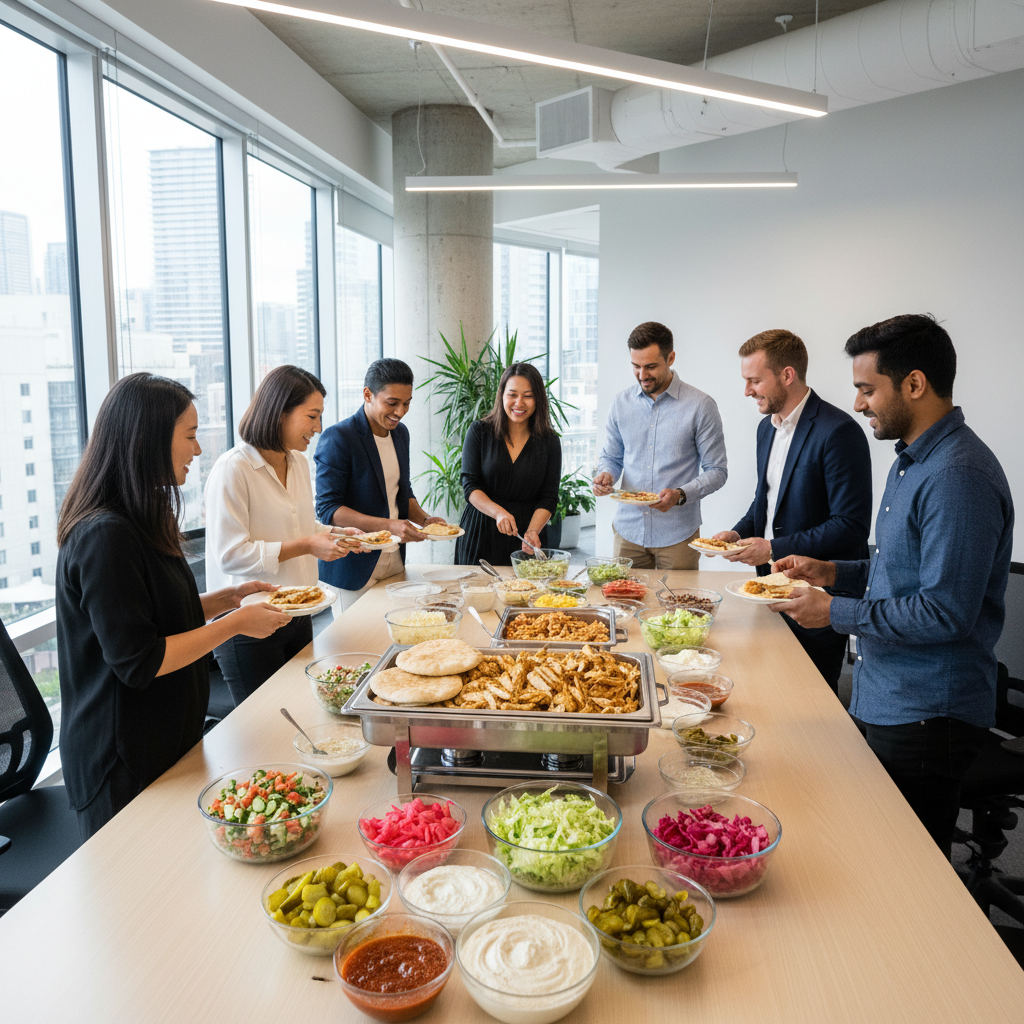
For small office meetings, build-your-own bars and mixed platters serve fastest and reduce waste. Boxed meals win when seating is tight. A shawarma bar with salads, dips, and labeled sauces balances speed, flavor, and dietary coverage.
Popular service styles
- Build-your-own bar: pita, proteins, toppings, and sauces; fastest for 8–20.
- Mixed platters: pre-sliced wraps with salads and dips; great for 6–12.
- Boxed meals: grab-and-go for rooms with limited surface area.
Quick comparison
| Format | Best for | Setup time | Dietary coverage | Waste control |
|---|---|---|---|---|
| Build-your-own bar | 8–20 attendees | 10–12 minutes | Excellent (custom) | High (right-size portions) |
| Mixed platters | 6–12 attendees | 6–8 minutes | Good (pre-labeled) | Medium |
| Boxed meals | Tight seating, travel | 2–3 minutes | Good (one-per-person) | High |
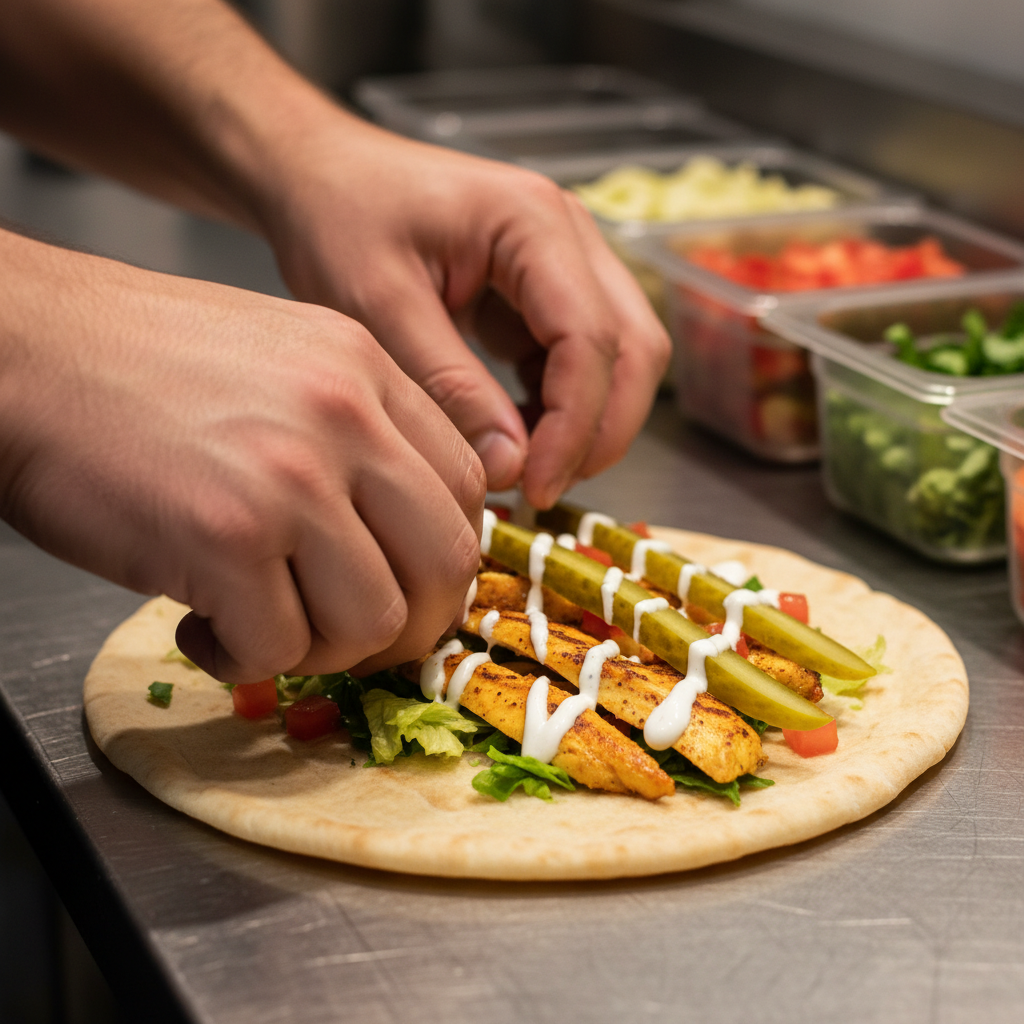
At Shawarma Moose, a compact shawarma bar typically includes warm pita, marinated chicken or falafel, crisp salads, pickles, rice, and sauces like garlic, tahini, and hot pepper—balanced, fast, and familiar. For a deeper dive into buffet logistics, review our notes on buffet-style office catering.
Portioning, dietary needs, and food-safety best practices
Plan 1.25–1.5 mains per person at lunch, add two sides, and provide vegan and gluten-free options. Label allergens, keep hot foods above 140°F and cold below 40°F, and refrigerate leftovers within two hours to maintain safety.
Practical portion cues
- Mains: 1.25–1.5 wraps or bowls per person at lunch; 1 each for light sessions.
- Salads/dips: two sides per person provide variety without overload.
- Beverages: one still water plus one flavored option per attendee.
Dietary inclusion
- Offer a vegan protein (e.g., falafel) alongside chicken or beef.
- Provide a gluten-free base (salad or rice bowl) and label sauces.
- Use clear labels for allergens like sesame and dairy.
Food-safety rules are straightforward: the “danger zone” is 40°F–140°F. Keep hot foods hot and cold foods cold, and limit room-temperature exposure. Book delivery 20–30 minutes before the meeting, share access notes, and stage a clean table. Save your favorite configurations for repeat orders.
Lightweight toolkit
- Headcount template: name, attendance, dietary notes, box vs. buffet.
- Room prep list: sanitizer wipes, liners, plates, tongs, napkins.
- Ordering checklist: date, arrival window, contact, building notes.
- Post-meeting routine: pack leftovers, wipe surfaces, remove trash.
How pricing typically works (without numbers)
Small-meeting catering is usually scoped by headcount, format (buffet, platters, or boxes), and add-ons like beverages or desserts. Right-sizing portions and choosing travel-friendly items help control waste while maintaining variety and satisfaction.
- Headcount tiers: portions scale in 2–4 person increments to reduce excess.
- Format effects: build-your-own bars often reduce waste; boxes cap portions.
- Menu mix: proteins + hearty salads satisfy without overspending on extras.
- Logistics: delivery windows and access details prevent last-minute delays.
To think through scope and portion balancing (not pricing), review our Toronto catering scope calculator—it helps estimate quantities and formats based on group size and agenda length, without listing dollar amounts.
Real examples and case notes
For 10–18-person meetings, a compact shawarma bar with labeled proteins and sauces serves in under 12 minutes and keeps discussion flowing. Toronto teams use this format for standups, lunch-and-learns, and boardroom reviews with consistent feedback on speed and variety.
We see three common scenarios:
- Project standup (10–12 people): build-your-own bar, one vegan tray, two salads, and a light dessert. Setup in 8–10 minutes.
- Client review (6–8 people): mixed wraps, mezze platter, and sparkling water. Minimal table footprint for presentation gear.
- Lunch-and-learn (14–18 people): shawarma bar with rice bowls, falafel, and labeled sauces; flows well over a 60-minute agenda.
Because Shawarma Moose supports delivery and pickup across Toronto, teams can tailor drop-off to building access and security needs, then return to the agenda without losing momentum. Our team can align portions to your headcount, flag allergens, and recommend a timeline based on your agenda. We’ll help you lock logistics in minutes.