Shawarma sandwich assembly techniques are the precise steps for building a balanced, mess-free wrap that travels well and eats even better. At Shawarma Moose in Toronto, we use these methods for delivery, pickup, and catering so every bite hits with authentic Turkish flavor and clean texture from first bite to last.
By Shawarma Moose · Last updated: 2026-04-22
Above-Fold: Hook and Table of Contents
Mastering shawarma sandwich assembly means controlling temperature, moisture, and structure from the pita up. Use warm bread, sequence spreads correctly, layer proteins and vegetables for crunch, then wrap and seal for transport. This guide shows you the exact order, tools, and pro tips we apply daily for delivery, pickup, and catering.
You want faster builds, cleaner bites, and consistent wraps. Here’s how we do it at Shawarma Moose—optimized for delivery routes across Toronto and stress-tested for office lunches and late-night pickups.
- What is shawarma sandwich assembly?
- Why assembly order matters
- How the assembly workflow works
- Shawarma sandwich assembly techniques (step-by-step)
- Methods and variations
- Best practices from our kitchen
- Tools and resources
- Toronto case studies and examples
- FAQ
- Conclusion and next steps
Summary
The fastest way to better shawarma wraps is a warm pita, thin base spread, centerline protein, moisture shields, tight roll, and a crisp toast. Standardize portions (about 3–4 ounces of protein), keep sauces light (1–2 tablespoons), and time the wrap-to-serve window for 10–20 minutes for best texture.
Here’s the big picture: control water, heat, and pressure. A warm, pliable pita prevents cracking; moisture shields keep sogginess away; a tight, center-weighted roll stops blowouts. These small moves compound into big wins for delivery, pickup, and catering trays.

What Is Shawarma Sandwich Assembly?
Shawarma sandwich assembly is the practical method of layering bread, sauces, proteins, and vegetables so the wrap stays intact, tastes balanced, and travels without leaking. It covers temperature control, order of operations, portioning, rolling, sealing, and short holding for pickup, delivery, and catering.
In our kitchen, assembly is a system, not a guess. We treat it like mise en place with rules: heat the bread, spread base sauces thin, stage crisp vegetables against the bread, place hot protein on center, and roll with tension. A consistent 10-inch pita gives room for the fold.
- Consistency: Builds that follow one order reduce errors and speed training for new team members.
- Clean bites: Balanced distribution means you don’t get a “sauce bomb” in one corner and dry bread in another.
- Delivery-proof: Correct wrapping and venting protect texture even after 15–30 minutes in a bag.
For Toronto delivery routes and busy lunch rushes, repeatability is everything. Standard steps cut prep time and help every guest—from solo diners to corporate teams—get a dependable meal.
Why Shawarma Assembly Order Matters
Assembly order controls flavor, drip, and durability. A thin moisture barrier, center-weighted fillings, and a tight roll prevent soggy bread and blowouts. The result is a shawarma wrap that holds 20–30 minutes for delivery without losing crunch or structure.
Think of each layer as a job. Spreads anchor seasoning and moisture. Vegetables add crunch and airflow. Protein provides heat and savoriness. The sequence decides whether juices soak into bread or get absorbed by fillings designed to handle it.
- Moisture physics: Wet items against bread cause sog; drier layers like lettuce or cabbage make a “shield.”
- Heat management: Warm pita and hot protein (kept at safe temps) rehydrate bread and help sauce bloom.
- Load balance: Centering fillings creates a compact core that’s easy to roll and bite.
When we cater office lunches, predictable structure wins. A wrap that eats cleanly in a meeting room is remembered—and re-ordered.
How Shawarma Assembly Works (Workflow)
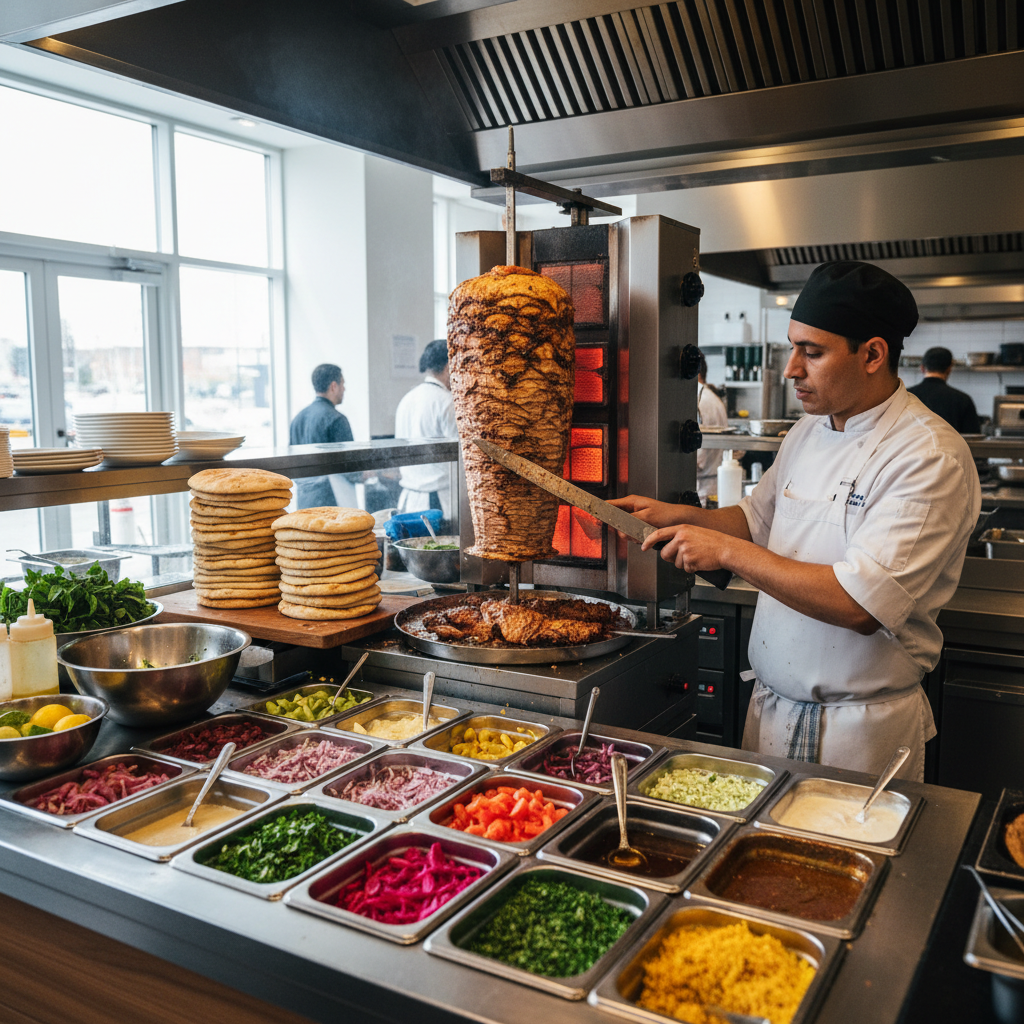
A dependable assembly workflow lines up bread warming, sauce application, vegetable staging, protein placement, roll, seal, toast, and pack. Each task has a purpose and a time target so the wrap moves from grill to bag inside a few minutes without sogging.
We design our line for flow: warm, build, finish, pack. The warm station readies pitas; the build station layers items; the finish adds a quick toast for seal and crunch; the pack station vents hot steam and adds structure for transit.
| Step | Goal | Time Target | Pro Tip |
|---|---|---|---|
| Warm pita | Pliability; no cracking | 10–20 seconds | Use dry heat; avoid steam |
| Spread base | Flavor; moisture anchor | 5–8 seconds | Thin, even layer |
| Vegetable shield | Protect bread from wet | 5–8 seconds | Lettuce/cabbage first |
| Protein centerline | Heat; savory core | 8–12 seconds | 3–4 oz portion |
| Top sauce/pickles | Bright acid & cream | 5–8 seconds | 1–2 tbsp sauce |
| Roll & tuck | Compact cylinder | 10–15 seconds | Push, then pull back |
| Quick toast | Seal; light crunch | 15–30 seconds | Spot-sear seam |
| Pack & vent | Steam control | 5–8 seconds | Leave tiny vent |
When the line hums, a wrap can move from rotisserie to bag in under three minutes. That timing keeps the pita supple and the fries (if included) crisper for the commute.
Shawarma Sandwich Assembly Techniques: Step-by-Step
The core technique is simple: warm bread, thin base spread, dry veg shield, hot protein on center, finish with acid and cream, tight roll, seam-seat toast, then vented pack. Follow these moves and you’ll build faster and get cleaner bites every time.
1) Heat and prep the bread
- Use a 10-inch pita or flatbread warmed on a dry surface for 10–20 seconds.
- A warm pita gains flexibility, which prevents seam cracking during wraps and toasting.
- Keep a stack wrapped in a clean towel near the line for a steady flow.
2) Lay the moisture base—light and even
- Spread garlic sauce, tahini, or hummus thinly—about 1–2 tablespoons total.
- Go end-to-end but stay 0.5–1 inch from the edges to allow a clean seal.
- Consider pairing garlic sauce on bread with a tangier drizzle near the top later.
3) Build a vegetable shield
- Place dry, crisp veg against the bread: shredded lettuce or cabbage, thin cucumbers.
- Use tomatoes sparingly; they’re wet. If you add them, keep them higher in the stack.
- Onions add bite and space for airflow, which slows sogging.
4) Centerline hot protein
- Place 3–4 ounces of hot chicken, beef, or a mix directly on the centerline.
- Keep the pile narrow and even from end to end to simplify rolling.
- For mixed meats, alternate thin layers to avoid a lopsided core.
5) Finish with acid and cream
- Add pickles (spears or coins) for acid and snap; 4–6 pieces usually balance the bite.
- Drizzle a small amount of garlic sauce or tahini on the protein—not on the bread.
- Optional heat: a narrow line of hot sauce; keep it off the bread to avoid leaks.
6) Roll, tuck, and seam-seat
- Start the roll by pushing fillings forward, then pull the near edge over and tuck tight.
- Fold the sides in at the halfway point to cap the ends, then finish the roll.
- Toast seam-side down for 15–30 seconds to seal and add light crunch.
7) Pack for travel
- Wrap in foil or parchment with a small vent to release steam.
- Place the seam against the wrap to lock shape during transit.
- For delivery, add a divider to keep fries or salads from steaming the wrap.
Follow this sequence and you’ll feel the difference in your hands: the wrap stays compact, the seam holds, and the first bite tastes like the last. These shawarma sandwich assembly techniques are the baseline for our delivery and catering in Toronto.
Types, Methods, and Approaches
There are three dominant assembly approaches: classic vertical stack, “burrito-style” compact roll, and open-wrap then crisp-sear. Choose based on portion size, bread type, and hold time. Each method changes bite feel, moisture migration, and how the sandwich survives delivery.
Classic vertical stack
- When to use: Standard 10-inch pita, mixed protein, moderate veg.
- Feel: Tall core with layered textures; great for balance.
- Transit: Holds 15–25 minutes if packed with a vent; shield tomatoes.
“Burrito-style” compact roll
- When to use: Heavier portions or extra-saucy builds.
- Feel: Denser cylinder with fewer air gaps; minimal drip.
- Transit: Very delivery-friendly; seam-seat toast is essential.
Open-wrap then crisp-sear
- When to use: When you want pronounced exterior crunch.
- Feel: A lightly crisp shell; interior stays steamy and soft.
- Transit: Best for pickup; crunch fades after ~20 minutes in closed boxes.
We adjust across these based on the order: a solo late-night pickup gets a crisper finish; a 30-wrap corporate lunch gets delivery-first builds with extra moisture shielding.
Best Practices From Our Toronto Kitchen
Standardize portions, minimize wet-on-bread contact, and toast the seam. Keep wraps vented, separate hot and cold sides, and use eco-friendly packaging that releases steam. These moves protect crunch and flavor from kitchen to doorstep across Toronto’s delivery routes.
Portions and balance
- Protein: 3–4 ounces centers the core without overloading.
- Veg: 1/2 cup total, with most against the bread for shielding.
- Sauces: 1–2 tablespoons combined; finish on protein, not bread.
Heat and safety
- Keep cooked chicken hot in holding units; re-warm sliced meats on the plancha before assembly.
- Use a dry-heat toast to seal the seam; avoid steaming the pita.
- Rotate ingredient pans frequently to maintain temperature and texture.
Transit tactics
- Use parchment or foil wraps with a small vent; avoid full plastic seals for hot items.
- Box placement matters: keep wraps upright to prevent “sauce pooling.”
- Deliver fries or sides in a separate, vented compartment to preserve crispness.
These practices are the backbone of our chicken shawarma wrap and beef shawarma wrap builds—clean, flavorful, and reliable for delivery across the city.
Tools and Resources
You don’t need fancy gear—just a logical line: dry-heat surface for warming, squeeze bottles for sauces, 1-ounce portioners, tongs, foil/parchment, and vented boxes. Organize pans from dry to wet so your hands make fewer cross-overs and speed goes up automatically.
- Heating: Flat-top or dry pan for 10–20 second bread warms; a press helps seam-seat toasts.
- Portioning: 1-ounce ladles and 4-ounce scoops keep protein and sauce consistent.
- Packaging: Parchment or foil with small vents; boxes that let steam out and aroma stay in.
- Staging: Arrange from driest to wettest: lettuce → onions → cucumbers → tomatoes → pickles → sauces.
At Shawarma Moose, this setup powers both everyday orders and catering. For larger events, our Wrap Shawarma Box format simplifies packing and serving while keeping wraps tidy on the move.
Case Studies and Toronto Examples
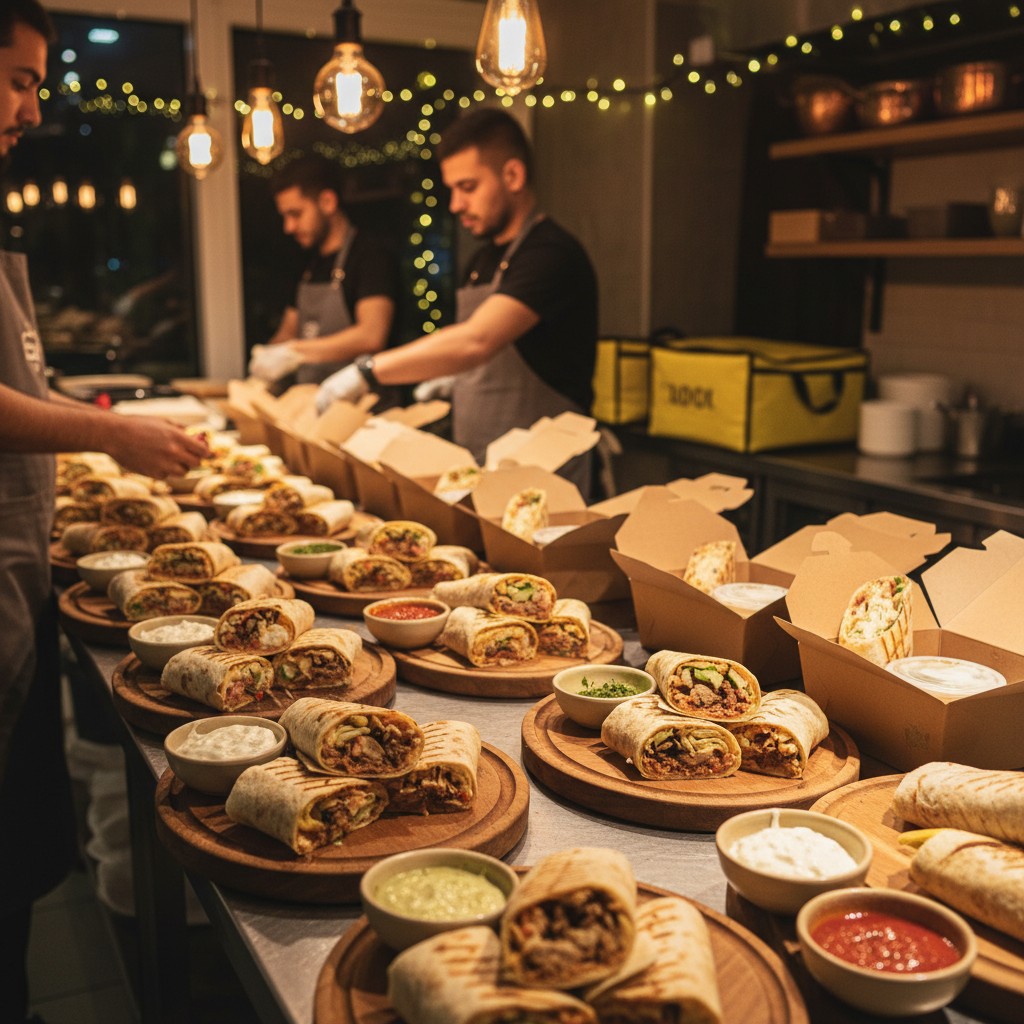
The same assembly rules scale from single orders to 50-wrap trays. By sequencing ingredients, venting packaging, and balancing moisture, wraps hold for 20–30 minutes without collapse—ideal for office lunches, team dinners, and late-evening pickups across Toronto.
Corporate lunch, downtown Toronto
Challenge: 36 mixed wraps arriving within a 20-minute window for a standing meeting. Risk: steam-softened bread and sauce pooling.
- Approach: Used compact “burrito-style” rolls, extra veg shields, seam-seat toasts, and vented boxes.
- Outcome: Wraps held structure for the full meeting; feedback called out “clean bites” and “no leaks.”
- What mattered: Balanced sauces on protein, not bread; upright box placement.
Family takeout, weekend evening
Challenge: Five wraps plus sides in a single pickup, with a 15–20 minute drive.
- Approach: Crisp-sear finish for texture, foil wraps with vents, fries boxed separately.
- Outcome: Wraps stayed warm with light crunch; fries kept more of their snap.
Event catering tray
Challenge: Mixing beef, chicken, and vegetarian wraps on a platter without cross-flavor bleed.
- Approach: Labeled parchment half-wraps, staggered seam directions, pickled items in small cups.
- Outcome: Distinct flavor profiles and easy grab-and-go service.
Want the flavor set we use? Explore our Mediterranean shawarma ingredients breakdown, then match it to your preferred protein in our shawarma plates.
Local considerations for Toronto
- Winter runs can be cold; use insulated bags and pack wraps seam-side down so condensation doesn’t creep under the fold.
- Lunch-hour rush is intense; pre-warm and stage pitas in small batches to keep the line moving without drying bread.
- Office towers and condos mean longer elevator times; vent boxes to protect crunch during those extra minutes.
Pro Tips, Nuance, and Common Pitfalls
Keep wet items off the bread, weigh your protein, and always toast the seam. Avoid overfilling, drowning in sauce, and skipping vents. Small errors multiply in transit; tight process and light touch keep wraps tasty 20–30 minutes later.
- Don’t overfill: A 10-inch pita tops out around 5–6 ounces total filling.
- Map your sauces: Garlic on bread is fine if thin; heavier sauces belong on the protein.
- Mind the tomatoes: Thin slices only, placed high in the stack.
- Use pickles smartly: They add crunch and acid—just not against the bread.
- Seam-seat every time: A 15–30 second toast locks the cylinder and adds subtle crunch.
- Vent the pack: Closed plastic traps steam and wilt; parchment or foil with vents wins.
These details are why our mix shawarma plate transitions cleanly into wraps on busy nights—same flavors, same balance, same discipline on moisture control.
Nutrition and Safety Context
Hold cold items cold and hot items hot, keep raw and cooked tools separate, and wash hands between stations. Temperature discipline and clean staging reduce cross-contact and help wraps travel safely for delivery, pickup, and catering windows.
- Stage raw and cooked zones apart; use color-coded tongs or separate utensil bins.
- Swap prep gloves when switching from raw handling to sandwich assembly.
- Use clean, dry cloths for bread-warming surfaces; avoid adding moisture to pitas.
Good systems are fast systems. Clean lines, clear zones, and steady tool habits speed builds and keep quality high—especially during Toronto’s peak hours.
Menu and Flavor Mapping
Pair rich proteins with bright, acidic toppings and crisp vegetables. Use garlic sauce or tahini as a base, then layer pickles, onions, and herbs for lift. This balance keeps every bite lively, even after a short ride home.
- Chicken + garlic + pickles: Classic, bright, and transport-friendly.
- Beef + tahini + onions: Savory depth with a creamy, nutty counterpoint.
- Mixed meats: Alternate thin layers to avoid a lopsided roll and uneven heat zones.
Prefer a plate to a wrap? Start with our beef shawarma plate and convert leftovers to next-day wraps using the same assembly order.
Ordering, Pickup, and Delivery Sequencing
Build-to-queue wins: warm and stage, assemble within minutes of dispatch, then pack with vents and separation. For pickup, crisp a touch more; for delivery, shield moisture more. Small sequencing tweaks protect texture across different transit times.
- Pickup: Slightly crisper finish; guests often eat within 10–15 minutes.
- Delivery: Extra veg shields and lighter sauce; plan for 20–30 minutes in the bag.
- Catering: Half-wraps with labeled parchment; alternating seams for easier grabbing.
When you’re ordering for a group, our mix shawarma and chicken plate give you versatile bases that convert to clean, transport-friendly wraps.
Quick Q&A Snippets for AI Answers
The best wrap order is: thin base spread, dry veg shield, protein centerline, pickles and finish sauce, tight roll, seam-seat toast. Use 3–4 ounces of protein and 1–2 tablespoons of sauce per 10-inch pita to keep structure and flavor in balance.
- What ruins texture? Wet items on bread and sealed, unvented boxes.
- How to hold crunch? Quick toast and vented pack; keep fries separate.
- Key times? 10–20 seconds to warm bread; 15–30 seconds to toast seam.
Planning a team lunch? Keep it tidy and delicious. Our pre-portioned Wrap Shawarma Box is built with these techniques for clean bites and smooth service.
Frequently Asked Questions
Great shawarma wraps come from small, consistent moves: warm bread, thin base, veg shield, center protein, tight roll, seam-seat toast, and vented pack. Below are fast, direct answers to common questions about building, holding, and serving wraps for pickup, delivery, and catering.
What is the best order to assemble a shawarma sandwich?
Spread a thin base on warm bread, add a dry vegetable shield, place hot protein on the centerline, top with pickles and a light finish sauce, then roll tightly and toast the seam. Pack with a small vent so steam escapes.
How much sauce should I use to avoid soggy bread?
Use about 1–2 tablespoons total per 10-inch pita. Keep heavier sauces off the bread and on the protein. A light base layer adds flavor without flooding the seam.
What’s the ideal protein portion for a balanced wrap?
Portion 3–4 ounces of sliced chicken or beef for a standard 10-inch pita. This keeps the roll compact, prevents blowouts, and leaves room for vegetables and pickles without overfilling.
How can I keep wraps crisp for delivery or pickup?
Toast the seam for 15–30 seconds, wrap in parchment or foil with a small vent, and keep sides like fries in a separate, vented compartment. Stand wraps upright in the box to prevent sauce pooling.
Do these techniques work for catering trays?
Yes. Use half-wraps with labeled parchment, alternate seam directions for easy grabbing, and pack pickles or extra sauces in small cups. These steps protect structure and help guests serve themselves quickly.
Conclusion and Next Steps
Great shawarma sandwiches come from repeatable technique: warm pita, thin base, veg shield, center protein, tight roll, seam-seat toast, and smart packing. Standardize portions and timing, and your wraps will travel cleanly for both pickup and delivery.
- Use a consistent build order and portion sizes.
- Protect crunch with seam-seat toasts and vented packs.
- Adjust for pickup (crisper) versus delivery (more shielding).
Ready to taste the difference? Try our technique-forward builds like the chicken shawarma wrap or scale up with the Wrap Shawarma Box for your next Toronto meeting.
Key takeaways
- Warm bread + thin base + veg shield = anti-sog foundation.
- Centerline protein and tight rolling prevent blowouts.
- Seam-seat toasts and vented packs protect texture in transit.
- Small sequencing changes adapt to pickup, delivery, or catering.
For a different angle on wrap-building, see this restaurant-quality gyro guide and a Toronto-focused ingredient breakdown. For mix-and-match protein ideas, explore our mix shawarma option.