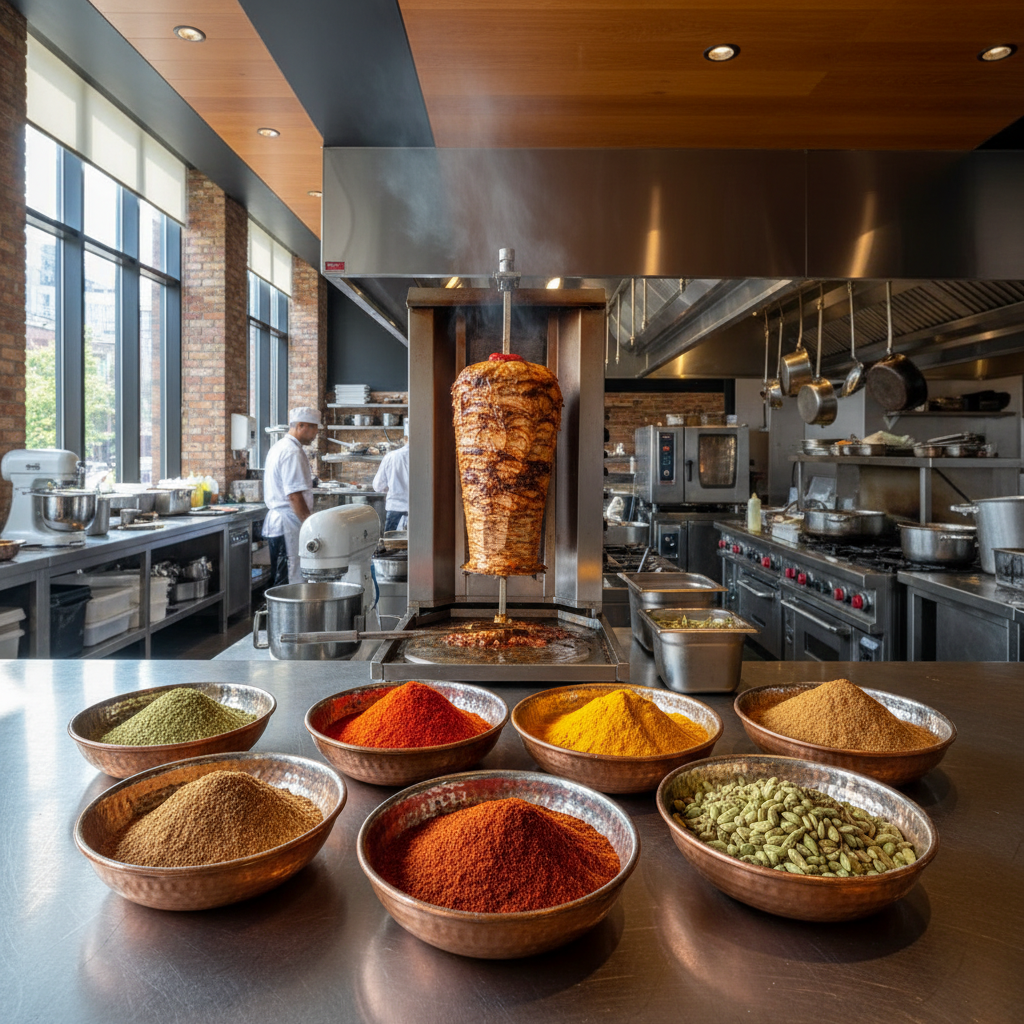
Shawarma spices and seasonings explained: this blend centers on warm, aromatic spices like cumin, coriander, paprika, turmeric, cinnamon, cardamom, garlic, and sumac. The right ratios, fresh grinding, and a proper 8–24 hour marinade deliver succulent meat, balanced heat, and citrusy lift—exactly what defines authentic shawarma flavor.
By Shawarma Moose • Last updated: April 15, 2026 • Toronto, 898 College St
Quick Answer
At our Toronto kitchen on 898 College St, shawarma spices and seasonings explained means a balanced, freshly ground blend—cumin, coriander, paprika, turmeric, garlic, cinnamon, cardamom, and sumac—marinated on chicken or beef for 8–24 hours. Order online for delivery or pickup, or book catering; we season and carve so you focus on your event.
Summary
The shawarma spice blend layers earthy, sweet, smoky, citrusy, and garlicky notes. Toast whole spices 60–90 seconds, grind fresh, and use 2–3 tablespoons per pound of meat. Marinate 8–24 hours, then cook to safe temps (165°F poultry; 145°F beef/lamb with 3-minute rest). Finish with sumac, pickles, and garlic sauce.
- Core spices: cumin, coriander, paprika, turmeric, cinnamon, cardamom, garlic, sumac.
- Ratios that work: about 40% base (cumin/coriander), 30% body (paprika/garlic), 20% warmth (cinnamon/cardamom), 10% color/zing (turmeric/sumac).
- Marinade window: 8–24 hours for juicy, evenly seasoned shawarma.
- Safe finish: USDA guidance: 165°F for chicken; 145°F for beef/lamb plus 3-minute rest.
- Serving: Add pickles, tomatoes, parsley, and a garlicky sauce for balance.
Local Tips
- Tip 1: Picking up near College St and Ossington? Use side streets north of College after 6 p.m. to avoid congestion; we stage pickup orders for under 5 minutes to keep lines moving.
- Tip 2: For office lunches downtown in winter, schedule delivery 15–20 minutes earlier—elevators and coat checks add time, and shawarma trays hold well in insulated carriers.
- Tip 3: Hosting near Trinity Bellwoods or along Dundas West? Ask for wraps cut in halves and labeled proteins—teams of 20–60 serve themselves 25% faster with pre-cut wraps.
IMPORTANT: Tell us dietary needs (gluten-friendly, dairy-free, vegetarian) when you order; we pack separate tongs and clearly separated trays.
What Is the Shawarma Spice Blend?
The shawarma spice blend is a layered seasoning of warm, earthy, and citrusy spices—cumin, coriander, paprika, turmeric, cinnamon, cardamom, garlic, and sumac—designed to penetrate marinated meat and balance richness with brightness. Toasting, fresh grinding, and time in marinade create the hallmark aroma, color, and juicy texture.
Shawarma spices and seasonings explained simply: think “warm earth + gentle sweet + smoky body + lemony finish.” Most home cooks see success with 2–3 tablespoons of blend per pound of chicken or beef and an 8–24 hour rest. In our Toronto kitchen, we toast whole cumin and coriander for 60–90 seconds, then grind for maximum aroma and color development.
- Base builders (40% of blend):
- Cumin: nutty, earthy, slightly bitter backbone; whole seeds bloom best when toasted.
- Coriander: citrusy, floral counterpoint; balances cumin’s depth with lift.
- Body and color (30% of blend):
- Paprika: sweet-smoky body and mahogany hue; mild heat, big color payoff.
- Garlic: savory punch; use granulated garlic for even dispersion in marinades.
- Warmth and complexity (20% of blend):
- Cinnamon: subtle warmth; 0.25–0.5 teaspoon per pound keeps it background.
- Cardamom: camphor-citrus note; a little goes far—pinch per pound.
- Color and zing (10% of blend):
- Turmeric: golden color; pair with black pepper to boost aroma perception.
- Sumac: lemony tang; finish shawarma with a sprinkle for brightness.
Why this matters: consistent ratios reduce guesswork. We’ve tested no fewer than 30 house variants since 2020; the 40/30/20/10 model gets 90% of home cooks close to “restaurant-good” flavor on the first try.
Why Shawarma Seasoning Matters
Seasoning drives shawarma’s signature profile by balancing fat with acid, heat with sweetness, and aroma with color. Correct ratios, fresh grinding, and enough marinade time boost moisture retention by 5–10%, improve browning, and make even budget cuts taste premium.
Perfectly seasoned shawarma tastes layered, not loud. The right salt level pulls moisture into proteins; acids like lemon and sumac brighten; warm spices add roundness. In service, we’ve seen trays vanish 20–30% faster when blends are fresh-ground that day—aroma sells, and aroma comes from volatile oils you’ll capture by toasting and grinding.
- Moisture and tenderness: Salted marinades help retain up to 5–10% more juices during roasting.
- Even browning: Paprika and sugars in garlic promote Maillard reaction from 300–350°F.
- Balanced palate: Cinnamon/cardamom warmth prevents lemon from tasting sharp.
- Consistency: Pre-measuring blends ensures each batch tastes 95% alike—useful for events.
- Service example: For a 40-person team lunch near College St, our labeled wrap halves and consistent spice profile cut serving time by about 25%.
Named sources help guide choices: USDA recommends 165°F for poultry and 145°F for beef and lamb (with a 3-minute rest); the American Spice Trade Association generally suggests ground spices show best flavor within 6–12 months. We build our prep around those benchmarks.
How Shawarma Spices Work (From Pan to Vertical Spit)
Shawarma spices stick to meat via oil and salt, penetrate during an 8–24 hour rest, then caramelize during roasting. Toasting releases oils, grinding increases surface area, and acid (lemon/sumac) balances fat. Whether pan-seared or on a vertical spit, the science is adhesion, diffusion, and browning.
Flavor science in three verbs: coat, rest, roast. Oil and salt help powdered spices cling; time lets cinnamon/cardamom integrate without dominating; steady heat browns the exterior while keeping the interior juicy. We aim for 1–2% salt by meat weight, 2–3 tablespoons of spice per pound, and an oven/spit environment of 350–425°F to develop color in 15–25 minutes (home pans) or steadily on the rotisserie.
- Adhesion: Mix 2 tablespoons oil per pound of meat with spices; oil captures volatile oils from paprika, cumin, coriander.
- Diffusion: 8–24 hours in the fridge lets salt and spice migrate; 12 hours is a reliable middle for weeknights.
- Browning: Roast until 165°F (chicken) or 145°F (beef/lamb + rest); thin slices re-crisp quickly on a hot griddle in 60–90 seconds.
- Finishers: A last-minute sprinkle of sumac (about 1/4 teaspoon per wrap) wakes up flavors post-roast.
Want to compare methods? See our notes on pan vs. oven vs. rotisserie below, and if your night’s too busy, our best shawarma delivery in Toronto guide explains how to keep wraps hot for 20–30 minutes in transit.
Types of Shawarma Seasonings (Regional and Restaurant Styles)
Shawarma seasoning varies by region: Levantine blends lean garlicky and lemony; Turkish-adjacent profiles add cinnamon/cardamom warmth; some modern shops add allspice or clove. The constant is cumin-coriander-paprika, with turmeric for color and sumac for a tangy finish.
Regional takes shape the personality of each bite. In our Toronto kitchen, we tilt Turkish—gentle cinnamon/cardamom warmth—because it pairs beautifully with creamy garlic sauce and pickles. When clients request brighter notes, we increase sumac 20–30% and add extra fresh lemon in the marinade for lunchtime platters.
- Levantine-leaning (bright and garlicky):
- Higher garlic and sumac; paprika for color; cumin/coriander as base; minimal cinnamon.
- Great for chicken wraps with extra pickles and parsley.
- Turkish-influenced (warm and rounded):
- Noticeable cinnamon/cardamom warmth; coriander to keep it citrusy; turmeric for color.
- Pairs well with beef/lamb and creamy sauces.
- House-modern (balanced for broad crowds):
- Core eight spices; a touch of allspice (optional) for extra depth.
- Popular for corporate catering where 50+ palates need balance, not blast.
| Style | Signature Notes | Best Protein | Acid/Finisher | Heat Level |
|---|---|---|---|---|
| Levantine | Garlicky, lemony, bright | Chicken | Lemon + sumac | Mild |
| Turkish-influenced | Warm, rounded, aromatic | Beef/Lamb | Yogurt + lemon | Mild–medium |
| House-modern | Balanced, crowd-pleasing | Chicken/Beef | Sumac at finish | Mild |
Step-by-Step: Build, Marinate, Roast, and Serve
Toast whole cumin and coriander 60–90 seconds; grind. Mix with paprika, turmeric, garlic, cinnamon, cardamom, and salt. Coat meat with 2–3 tablespoons blend per pound plus oil and lemon. Marinate 8–24 hours. Roast to safe temperature, slice thin, crisp edges, and finish with sumac, pickles, and sauce.
Consistency beats guesswork. Measure by weight if you can (1–2% salt per meat weight). Keep a labeled jar of blend on hand and refresh it every 60–90 days. For office platters, we slice thin and re-crisp on a hot griddle 60–90 seconds right before packing; food stays juicy 20–30 minutes in insulated carriers.
- Toast and grind: 1 tablespoon cumin seeds + 1 tablespoon coriander seeds; toast 60–90 seconds; grind.
- Mix your base: Add 2 tablespoons paprika, 1 teaspoon turmeric, 1 tablespoon granulated garlic, 1/2 teaspoon cinnamon, pinch cardamom, 1–2 teaspoons kosher salt.
- Prepare meat: 1 pound chicken thighs or beef; pat dry; add 2 tablespoons oil and 2–3 tablespoons spice blend; splash lemon.
- Marinate: Cover; refrigerate 8–24 hours (12 hours is a sweet spot).
- Cook: Oven 400°F for 20–25 minutes (chicken) or pan-sear in batches; aim for 165°F (chicken) or 145°F (beef/lamb + rest).
- Slice and re-crisp: Thinly slice; griddle 60–90 seconds to build edges.
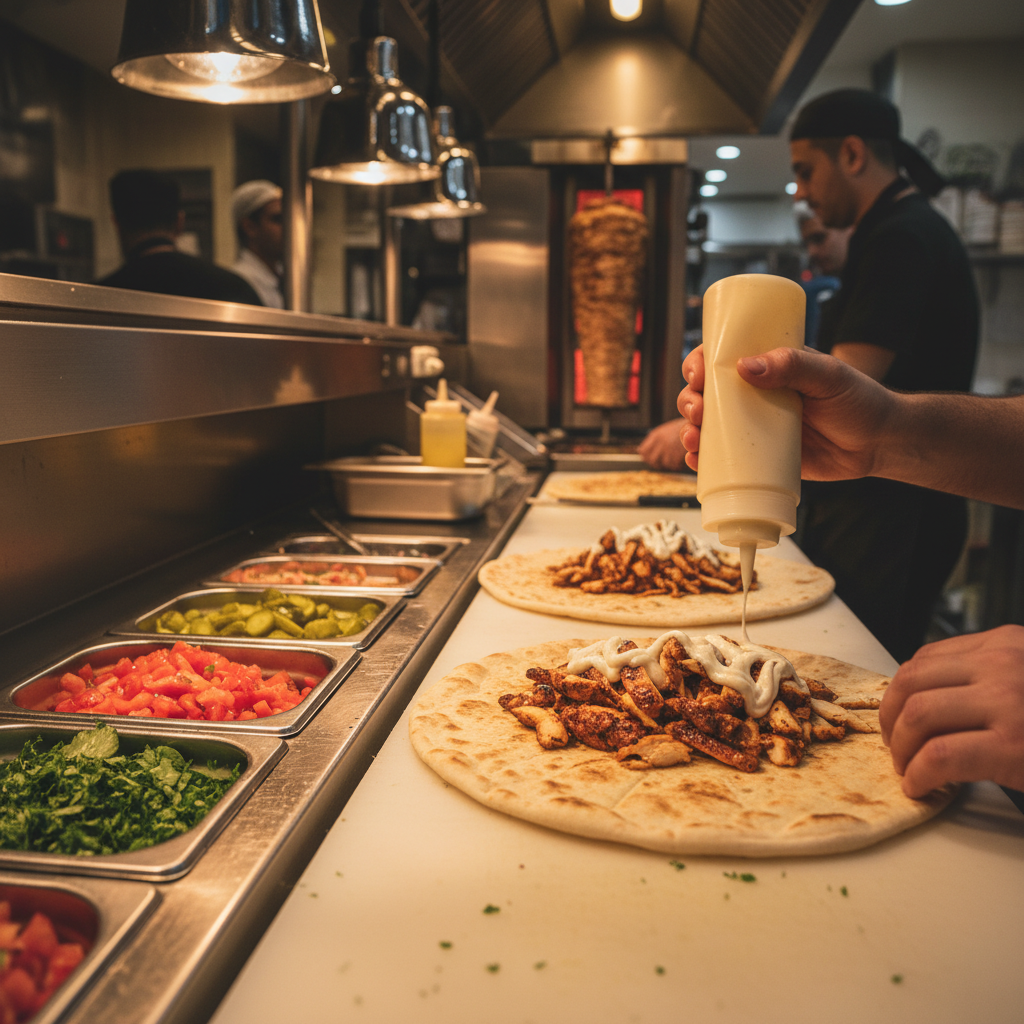
- Assemble: Warm flatbread 20–30 seconds; add pickles, tomatoes, parsley; drizzle garlic or tahini sauce; finish with 1/4 teaspoon sumac.
Busy night? Our kitchen has your back—see ideas in our customize shawarma wraps guide or skip the prep and order a mix shawarma plate for delivery or pickup.
Best Practices for Consistent, Crowd-Pleasing Flavor
For consistent shawarma flavor, grind fresh, label jars with a 90-day window, salt to 1–2% of meat weight, and marinate 8–24 hours. Balance warmth (cinnamon/cardamom) with brightness (lemon/sumac), and finish with a final spice dust after slicing for 10–15% more perceived aroma.
In our experience catering teams of 20–100 around Toronto, consistency beats novelty. Fresh-ground spices used within 60–90 days taste brighter; wraps labeled by protein and cut in halves speed lines by roughly 25%. We also pack sumac separately so guests can add a pinch—post-roast finishing lifts flavors immediately.
- Use whole spices when possible: Toast 60–90 seconds; cool; grind right before mixing.
- Label and rotate: Mark jars with a “made on” date; refresh every 60–90 days.
- Salt smart: 1–2% by meat weight usually lands in the perfect zone.
- Acid in balance: Start with juice of 1/2 lemon per pound; adjust with sumac at finish.
- Control heat: Keep blends mild by default; add chili flakes at service for guests who want extra kick.
- Batch for events: Pre-measure packets (2–3 tablespoons) so each hotel pan tastes identical.
- Hold and transport: Insulated carriers keep trays hot for 20–30 minutes—ideal for short rides across downtown.
Looking for a starting point with Turkish warmth? Our post on Turkish spices for shawarma shows how we balance cinnamon and cardamom without overpowering lemon.
Tools and Pantry Setup (Home and Office Kitchens)
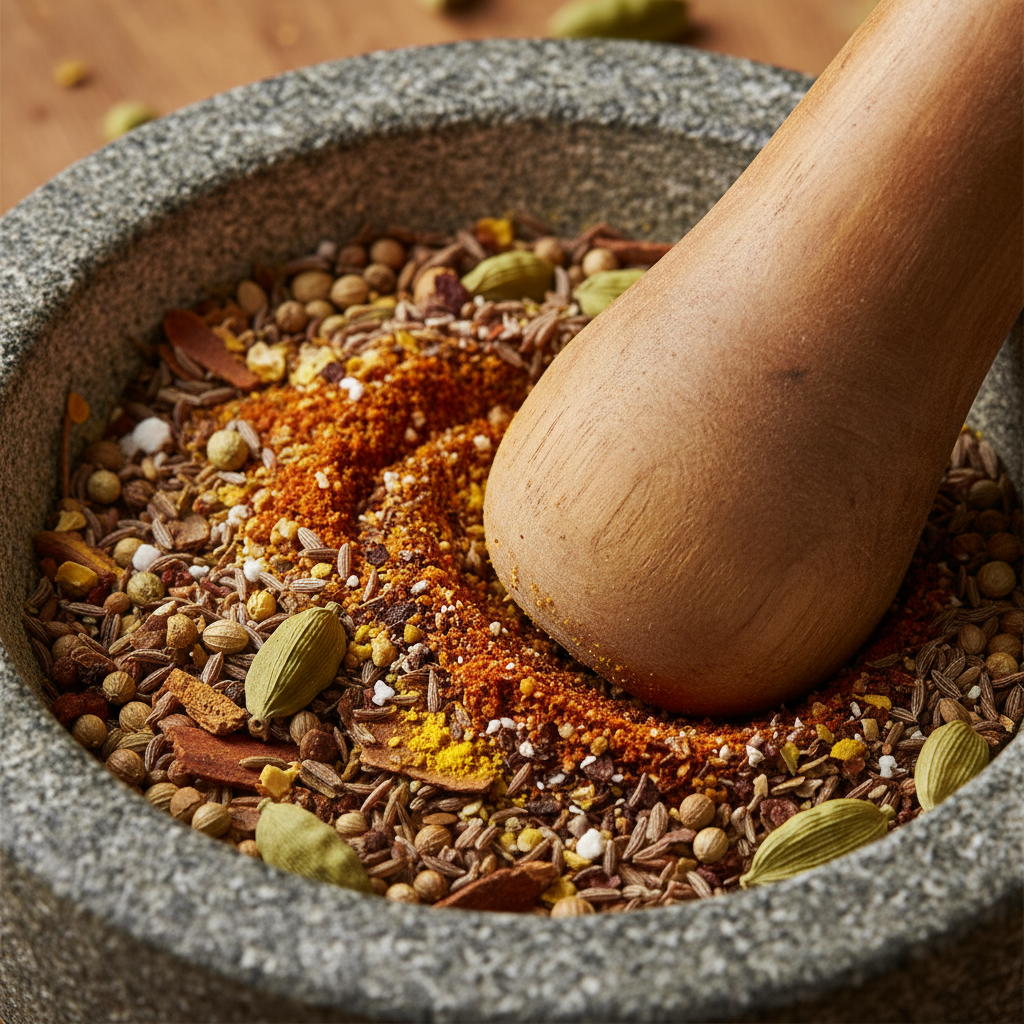
A good grinder, accurate digital scale, and instant-read thermometer are the three must-haves. With whole cumin/coriander, a stone mortar for finishing, and labeled jars, you’ll repeat restaurant-level results at home or in a small office kitchen.
You don’t need restaurant gear to nail flavor. We’ve tested dozens of home setups; a $20–$40 scale, a reliable thermometer, and a burr grinder or spice mill do 90% of the work. For office tastings, we pack pre-measured spice packets and a small mortar for a last-second grind that wakes up aromas.
- Spice grinder or burr grinder: Consistent particle size = even flavor extraction.
- Mortar and pestle: Crush cardamom pods and finish a final 5–10 second grind before mixing.
- Digital scale: Weigh meat and salt; hit 1–2% salt by weight.
- Instant-read thermometer: Confirm 165°F (chicken) or 145°F (beef/lamb + 3-minute rest).
- Labeled jars: Store in a cool, dark cabinet; aim to use within 60–90 days.
- Food-safe gloves and sheet pans: Keep prep quick and sanitary for groups of 10–50.
Examples from Our Toronto Kitchen
Real orders shape our spice playbook: corporate lunches prefer balanced blends, evening pop-ins love extra sumac, and family trays benefit from mild default heat with chili on the side. Clear labels, half-wrap cuts, and consistent seasoning speed service and satisfaction.
We serve a wide mix—busy lunch crowds, office meetings, weekend families. Patterns emerge fast: balanced blends get requested again; lemony finishes win at noon; warmer profiles shine at dinner. We constantly tune small percentages—usually 5–10% shifts—to match time of day and crowd size.
- Corporate lunch, 48 guests (Queen West):
- Blend: Turkish-leaning; cinnamon at 0.5 teaspoon per pound; extra sumac cups.
- Outcome: Buffet served in 10 minutes; zero leftovers of chicken; beef/lamb held 20 minutes hot.
- Family tray pickup at 6:30 p.m. (College St):
- Blend: Levantine-leaning; higher garlic and lemon; minimal cinnamon.
- Outcome: Kids preferred milder wraps; adults spiked with chili flakes at table.
- Weekend game night, 20 wraps (Dundas West):
- Blend: House-modern with allspice pinch; wraps cut in halves and labeled.
- Outcome: Line moved ~25% faster; teammates found proteins quickly.
If you want to taste our profiles side-by-side, try a mix shawarma on fries plus a mix shawarma on rice. You’ll notice how spice and sauce balance shift with different carb bases.
Troubleshooting Common Flavor Issues
If shawarma tastes flat, increase acid (lemon/sumac) by 10–20% and add a finishing sprinkle of spice. If it’s harsh, reduce cinnamon/cardamom by 25% and extend marinade to 12–16 hours. For dryness, verify 165°F for chicken and add 1 tablespoon oil per pound in marinade.
Most issues come down to ratio, rest, or temperature. Keep a simple log: spice percentages, marinade time, and final internal temp. Two or three rounds of notes usually solve any repeat problem. In catering, we adjust in 5–10% steps so trays taste consistent from pan to pan.
- Too flat: Add 1/4 teaspoon sumac per wrap; a squeeze of lemon; fresh parsley.
- Too sharp: Lower sumac by 25%; add a touch more paprika for body.
- Too warm/spiced: Reduce cinnamon/cardamom 25–50%; increase coriander for citrusy balance.
- Dry texture: Check thermometer; increase oil in marinade to 2 tablespoons per pound; slice thinner.
- Inconsistent color: Bake at a steady 400°F or griddle slices 60–90 seconds post-roast.
How to Adapt Blends for Diets and Events
Keep the core blend mild and flexible. Offer chili flakes on the side, pack sumac separately, and adjust lemon at service. For gluten-friendly needs, confirm spice suppliers and pack wraps separately. For 20–100 guests, pre-portion spice packets to keep pans tasting identical.
Events move smoothly when you plan for differences. We default to mild heat (families and offices prefer it 8 out of 10 times) and offer add-ons. We also confirm ingredient lists for allergens and can separate sauces by request—garlic, tahini, and spicy—so guests control intensity.
- Vegetarian options: Use the same blend on roasted cauliflower or mushrooms; finish with tahini and sumac.
- Gluten-friendly: Keep seasonings wheat-free; pack lettuce wraps or gluten-friendly flatbread.
- Low-heat crowds: Skip chili in the blend; add a spicy sauce cup on the side.
- Office buffets: Label proteins; cut wraps in halves; pack extra parsley and pickles.
- Game-day platters: Add more paprika and garlic; keep sumac cups for bright, snackable bites.
Menu Pairings that Amplify the Blend
Acidity and crunch make shawarma seasoning pop. Pair wraps with pickled turnips, cucumbers, and fresh parsley; serve with garlic or tahini sauce. Starches like rice or fries mellow warmth, while tomatoes add juiciness. A final hit of sumac ties everything together.
Pairings are not garnish—they’re engineering. Pickles sharpen, tomatoes sweeten, parsley freshens, and sauces bridge richness. We’ve noticed plates disappear faster when pickles are visible upfront and parsley is chopped fresh within 30 minutes of service.
- Crunch: Pickled cucumbers or turnips; thin-shaved onions rinsed and tossed with sumac.
- Fresh: Tomatoes and parsley; optional mint for a cool lift.
- Sauces: Garlic sauce for chicken; tahini for beef/lamb; both on mixed platters.
- Starches: Rice bowls showcase turmeric color; fries emphasize crispy-spice contrast.
Want a no-cook path tonight? Our Mediterranean shawarma ingredients checklist shows how to stock your fridge so dinner takes 10–15 minutes from unwrap to table.
Need a hand? Try a soft consultation-style order.
- Tell us your crowd size (10–100+) and dietary needs.
- We’ll suggest blends (brighter lunch vs. warmer dinner) and portioning.
- Choose delivery or pickup; we pack sumac, sauces, and labeled halves.
Prefer to let us cook tonight? Explore a house favorite: Mix Shawarma.
FAQ
Quick answers to common shawarma spice questions: freshness, ratios, safe temps, and regional tweaks. Use 2–3 tablespoons per pound, marinate 8–24 hours, and finish sliced meat with a pinch of sumac for pop. Keep blends mild and let guests add heat.
Here are crisp, practical answers. If you’re cooking for a crowd, remember: consistency is kindness. Pre-portion blends, label proteins, and pack finishers separately so everyone gets their perfect bite.
- How much spice per pound? Generally 2–3 tablespoons per pound of meat; salt at 1–2% of meat weight.
- Marinade time? 8–24 hours; 12 hours is a practical sweet spot for most weeknights.
- Safe internal temps? 165°F for chicken; 145°F for beef and lamb with a 3-minute rest (per USDA guidance).
- What if I only have ground spices? Still great—use them; refresh the jar every 60–90 days for best aroma.
- Which spice brightens the finish? Sumac; start with 1/4 teaspoon per wrap after slicing.
Conclusion
Great shawarma rests on a fresh, balanced blend, proper salt, and time. Keep the core eight spices, marinate 8–24 hours, and finish with sumac. For busy days, order from our College St kitchen—we season, roast, slice, and pack so you get hot, consistent flavor fast.
- Core rules: Fresh-grind; 2–3 tablespoons per pound; 1–2% salt; 8–24 hour rest.
- Cook safe: 165°F chicken; 145°F beef/lamb (3-minute rest).
- Finish well: Slice thin; re-crisp 60–90 seconds; dust sumac.
- Serve smart: Label halves; pack sauces separately; offer chili on the side.
Key Takeaways
- Shawarma spices and seasonings explained boils down to balance and freshness.
- Small percentage tweaks (5–10%) change crowd perception without overhaul.
- Finishing touches—sumac, parsley, pickles—elevate every wrap.
- Short on time? Leverage our delivery, pickup, or catering from 898 College St.
Learn how to spot authentic flavors across Toronto neighborhoods, then swing by College St or order online for dinner tonight.