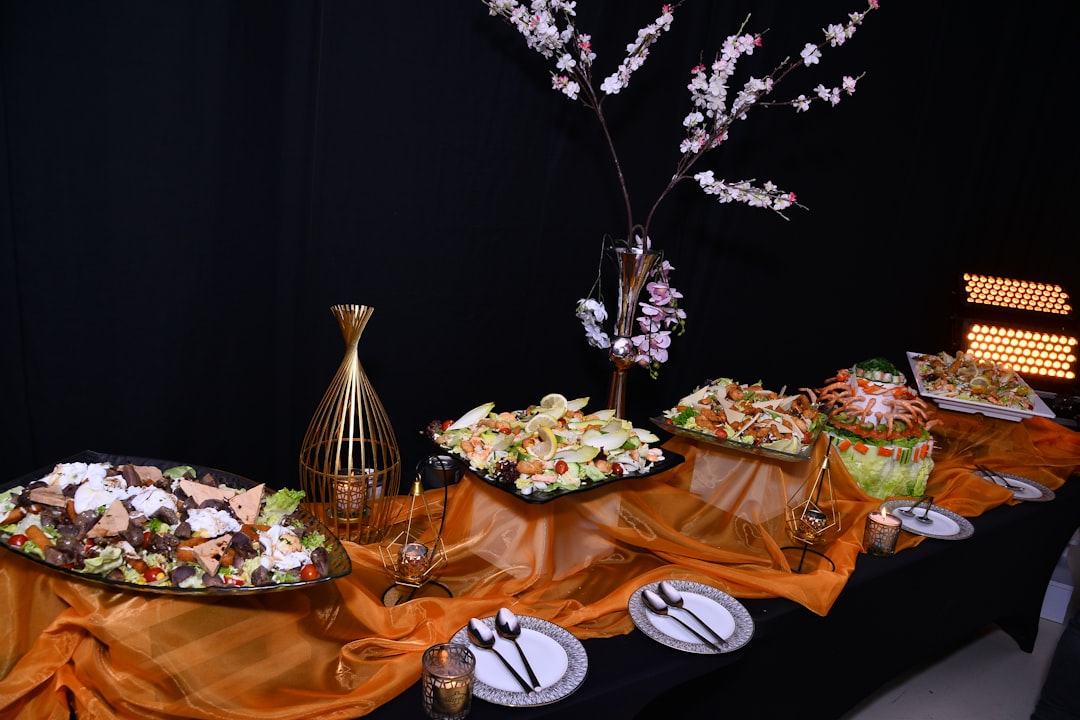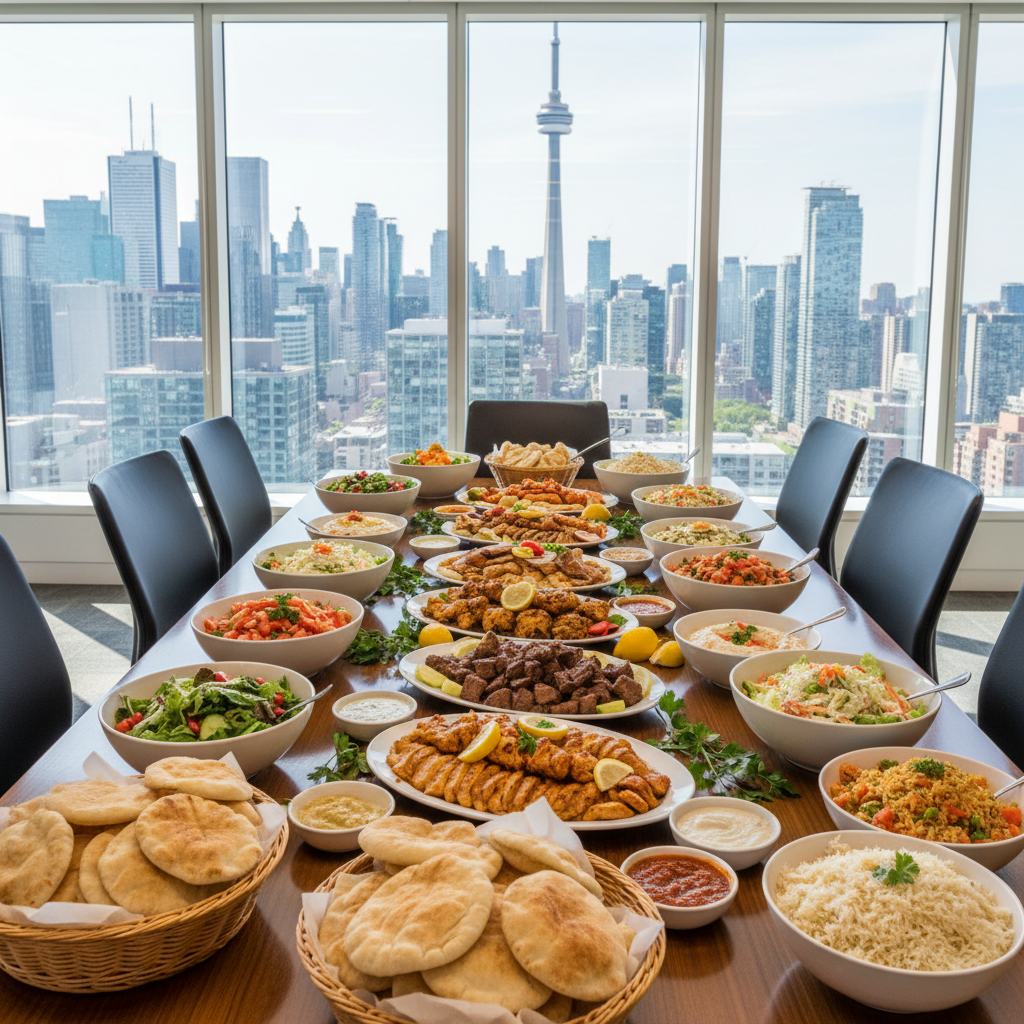
Office lunch catering tips are the practical ways to plan menu variety, portions, timing buffers, dietary accommodations, and delivery logistics so every guest eats well without delays or waste. For Toronto offices, build-your-own shawarma bars with labeled sides, early deliveries, and confirmed dock or elevator access keep meetings running on time and inclusive.
By Vinay Sandhu • Last updated: April 14, 2026
Quick Answer
For fast, crowd-pleasing office lunch catering in Toronto, set a build-your-own shawarma spread with clear labels and portion guides. Schedule delivery to 898 College St or your office 15–30 minutes early and confirm access details. These office lunch catering tips reduce lines, prevent cross-contact, and keep sessions on schedule.
At a Glance
- Lock headcount and diets 24 hours ahead; add a 5–10% buffer for drop-ins.
- Choose a format that fits the room: build-your-own buffet, boxed bowls, or a hybrid layout.
- Deliver 15–30 minutes early; assign a handoff lead to meet the driver.
- Label allergens and provide halal, vegan, vegetarian, and gluten-free options with separate utensils.
- Keep hot foods above 140°F and cold foods below 40°F; plan to serve within 90 minutes.
Table of Contents
What Is Office Lunch Catering?
Office lunch catering is a coordinated meal service planned around headcount, diets, and meeting timing. The best setups balance speed, variety, and inclusivity. In Toronto, Mediterranean build-your-own spreads—shawarma proteins, rice, salads, warm pita, and sauces—serve quickly, minimize waste, and cover halal, vegan, vegetarian, and gluten-free needs with clear labeling.
- Working definition
- Pre-arranged menus and portions designed to serve a group within a set time window.
- Delivery or pickup from 898 College St, then buffet or boxed distribution.
- Room flow, labels, and utensil placement engineered to move people fast.
- Core menu building blocks
- Proteins: chicken shawarma, beef, falafel (vegan).
- Grains: seasoned rice, bulgur.
- Salads: fattoush, tabbouleh; add chopped greens for volume.
- Sauces: garlic, tahini, and mild-to-hot pepper sauces.
- Warm pita or gluten-free alternatives.
- Operational essentials
- Clear, prominent labels for diets and allergens.
- Separate utensils per diet zone to avoid cross-contact.
- Delivery buffers to absorb elevator and traffic delays.
Here’s the thing: great office lunches are designed for motion. When trays are arranged in a logical order and labels are unmissable, people finish plating in under a minute—and your agenda stays intact.
Why Office Lunch Catering Matters
Thoughtful office lunches raise participation and protect meeting time. Punctual, diet-inclusive meals reduce decision fatigue and keep people focused. A repeatable system—menu variety, clear labels, utensil separation, and early delivery—consistently improves satisfaction and trims downtime.
- Morale and inclusion
- Food is a signal of care. Offering halal, vegan, vegetarian, and gluten-free options helps everyone feel welcome.
- Build-your-own formats let guests customize flavors and portions without awkward requests.
- Focus and efficiency
- Balanced plates (protein + complex carbs + greens) stabilize energy for afternoon sessions.
- When delivery buffers are planned, teams commonly shave several minutes from overrun per agenda block.
- Reliability and repeatability
- Early deliveries and labeled containers reduce confusion and bottlenecks in high-rise buildings.
- Consistent process design turns one good lunch into a reliable monthly playbook.
In our experience supporting Toronto teams, well-run lunches boost attendance for optional meetings and make hybrid workshops smoother, especially when boxed options are provided for remote-friendly rooms.
How Office Lunch Catering Works: Step-by-Step
Define the goal and timing, gather headcount and diets, choose a service model (buffet, boxed, or hybrid), and confirm building access. Stage the room for flow, serve 15–30 minutes after delivery, and collect quick feedback to refine portions and layout next time.
- Clarify the goal
- Is it a working session, an all-hands, client presentations, or a celebration?
- Shorter meetings favor boxed meals; longer breaks support buffets.
- Set the serve window
- Pick a 20–30 minute plating window aligned to your agenda.
- Schedule delivery 15–30 minutes before serving to allow setup.
- Gather headcount and diets
- Collect halal, vegan, vegetarian, dairy-free, gluten-free, and nut-free needs.
- Add a 5–10% buffer for walk-ins or bigger appetites.
- Choose a service model
- Build-your-own buffet for speed and inclusivity.
- Individually boxed for tight rooms, exam-style seating, or hybrid training.
- Hybrid when you want quick distribution with shared salads and sauces.
- See our ready-to-deploy build-your-own catering option.
- Design the menu
- Offer 2–3 proteins (chicken, beef, falafel) plus 1–2 grains and 2 salads.
- Include warm pita, gluten-free alternatives, and 3 sauces (garlic, tahini, mild/hot pepper).
- Plan separate trays and utensils for halal and vegan areas.
- Confirm logistics
- Share exact address, floor, room, elevator/dock rules, and an on-site phone.
- Some downtown towers require pre-registration for the loading bay—book in advance.
- Stage the room
- Flow from plates → proteins → grains → salads → sauces → cutlery/napkins.
- Place trash, recycling, and compost within 10 feet of the exit.
- Serve and monitor
- Refill proteins and pita first—they move the fastest.
- Replace tongs periodically to prevent cross-contact and keep pace.
- Wrap and review
- Pack leftovers safely within 2 hours; document what ran out first.
- Ask three quick questions: taste, variety, and speed to plate.
For agenda-heavy meetings near the core, we often route through service entrances and freight elevators. That single planning step trims precious minutes from waits and keeps your timeline intact. For broader planning help, see our note on event planning with food delivery.
Approaches and Formats
Rely on three proven formats: build-your-own buffets for speed and diverse diets, individually boxed bowls for tight or hybrid rooms, and hybrid layouts for large or mixed groups. Mediterranean spreads shine here because clear labeling and separate utensils cover most dietary needs gracefully.
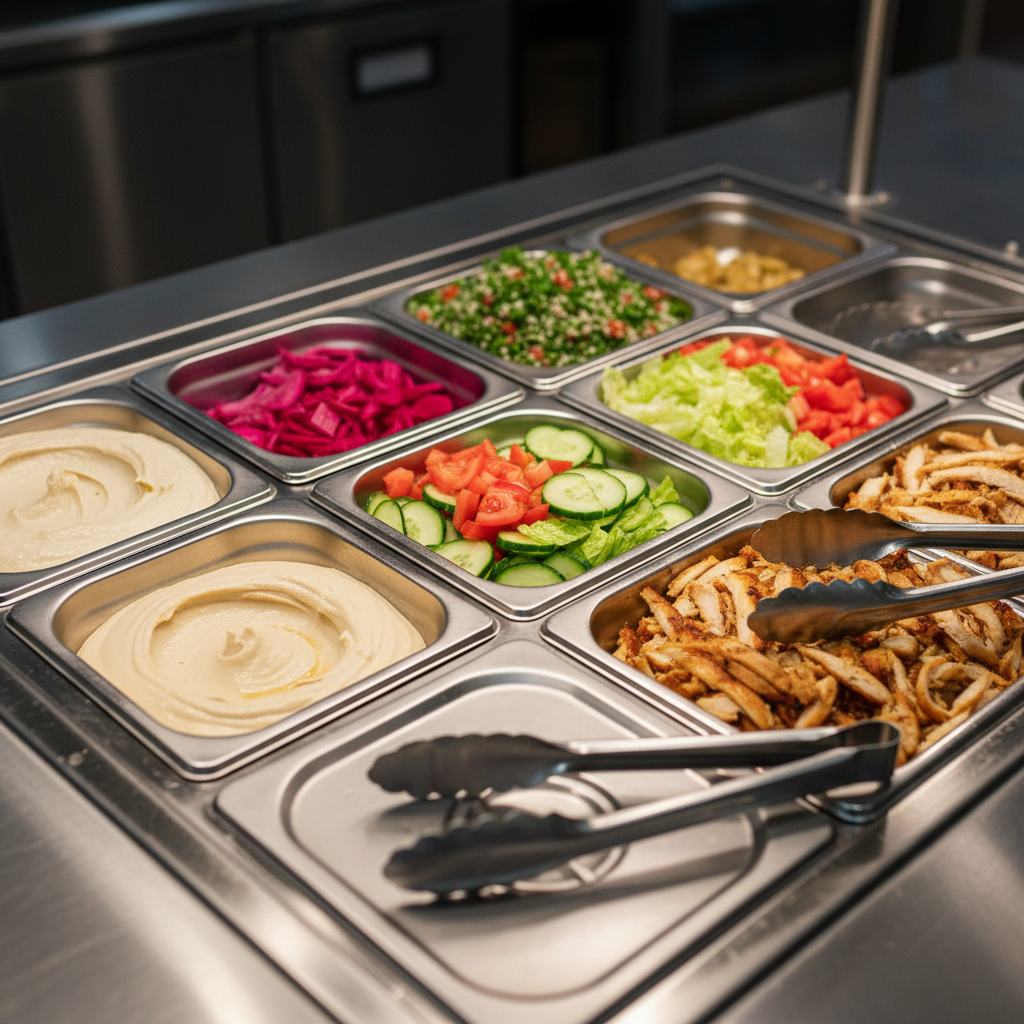
- Build-Your-Own Shawarma Bar
- Fast lines, easy customization, and natural portion control.
- Works for 15–150 people; repeat the station every 30–40 guests.
- Pairs with rice, fattoush, tabbouleh, warm pita, garlic, tahini, and mild/hot sauce.
- Individually Boxed Meals
- Ideal for training rooms, quiet spaces, or off-site workshops.
- Label boxes by diet; keep sauces lidded for transit.
- Great when table space is limited and you need zero setup.
- Hybrid Layout
- Boxed mains plus a central salad/sauce bar for variety and speed.
- Stagger pickup by team or row to prevent bottlenecks.
- Useful for 60–120 attendees when speed and choice both matter.
| Format | Best For | Pros | Watch-outs |
|---|---|---|---|
| Build-Your-Own Buffet | 15–150 attendees, mixed diets | Fast, inclusive, low waste | Needs labeling and utensil separation |
| Boxed Meals | Tight rooms, hybrid seating | Zero setup, easy distribution | Less variety per person |
| Hybrid | 60–120 attendees | Balanced speed and choice | Needs staggered pickup to avoid lines |
Want menu ideas that travel well and please a crowd? We unpack them in our guide to corporate catering menu ideas. When you’re ready to roll, you can also browse our build-your-own catering for a pre-configured setup.
Best Practices and Pro Tips
Portion by role and agenda length, label every item, and separate utensils by diet. Deliver 15–30 minutes early, mirror stations for 40+ people, and place beverages after the buffet. These moves eliminate bottlenecks and keep the room clean and focused.
Portion Planning (Works Every Time)
- Per-person guidelines
- Protein: 6–8 oz per adult; 5–6 oz for short meetings.
- Grains: 1 cup cooked per person.
- Pita: 1.5 per person (round up to 2 for field or athletic teams).
- Salads: 3–4 oz as a side; 6 oz if salad is the main.
- Sauces: 1.5–2 oz per person (garlic, tahini, hot pepper).
- Reality-check your counts
- For 30 guests: approximately 15 lb protein, 30 cups rice, 45 pita, 6–8 qt salads.
- Add 5–10% for drop-ins and bigger appetites.
Dietary Inclusivity
- Include vegan (falafel), vegetarian, and halal proteins every time.
- Label allergens prominently: sesame (tahini), dairy (yogurt sauces), gluten (pita).
- Use separate tongs and trays for vegan/halal sections; place them first in the line.
- Offer a dairy-free garlic sauce so everyone gets flavor.
Delivery & Setup Logistics
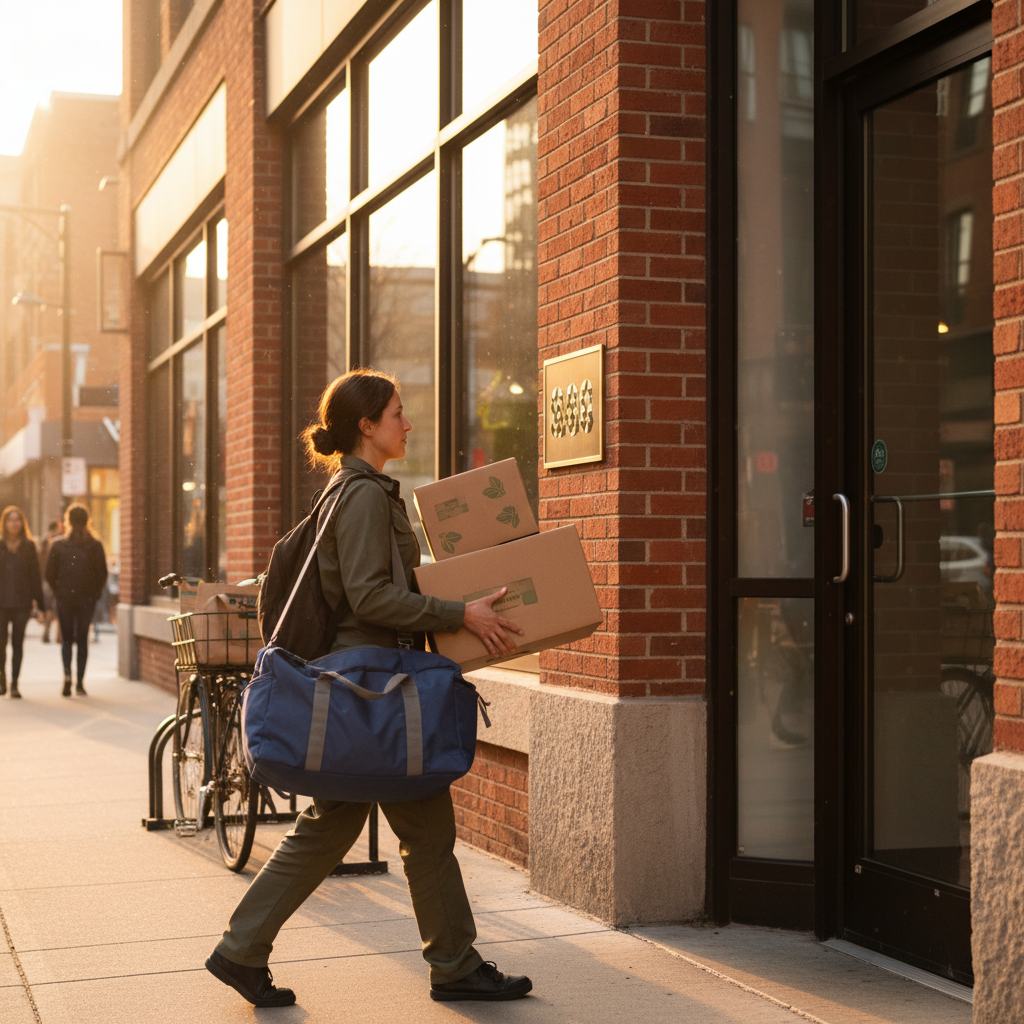
- Provide a direct phone number, floor, room, and any security desk requirements.
- Book loading bays or freight elevators in the core; some towers need advance registration.
- Stage the line for flow: plates and proteins up front; cutlery and napkins at the end.
- Keep a cart ready for moves between rooms or floors.
Food Safety & Temperature
- Serve hot foods at or above 140°F and cold foods at or below 40°F.
- Plan to eat within 90 minutes of delivery; refresh serving utensils each hour.
- Keep sauces covered to prevent contamination and drying.
- Designate a clean plating zone for gluten-free meals.
Speed Tricks for Large Groups
- Duplicate the station per 30–40 people.
- Pre-slice pitas; crack lids slightly to release steam.
- Stagger teams by 3–5 minutes to avoid lines.
- Add a second utensil set on protein trays to double throughput.
Waste Reduction
- Use slightly smaller plates to prevent over-portioning.
- Offer whole fruit for dessert—low waste and universally liked.
- Label a leftovers area with containers; encourage same-day take-home where permitted.
- Coordinate donation policies with building management for safe transfers.
Beverage Planning (Often Overlooked)
- Baseline: 12–16 oz water per person; add sparkling for town halls.
- Include a light option (mint lemonade) and a sugar-free choice.
- Place beverages after the buffet line to keep plates moving.
Room Flow & Signage
- Signpost diet zones: Vegan, Halal Proteins, Gluten-Free.
- Put cutlery and napkins last to reduce backtracking.
- Position trash, recycling, and compost within 10 feet of exits.
Need a hand?
We can stage a build-your-own shawarma bar, label allergens, and time delivery around your agenda. Prefer a done-for-you option? Explore our corporate catering package.
Tools, Templates, and Resources
Standardize your process with three tools: a headcount and diet tracker, a portion calculator, and a delivery checklist. Save a menu template (proteins, grains, salads, sauces) and reuse it for every lunch to reduce friction and errors.
- Headcount & Diets Sheet
- Columns: name or team, diet (halal/vegan/vegetarian/gluten-free), allergies, boxed vs buffet.
- Finalize 24 hours ahead; plan a 5–10% buffer.
- Portion Calculator
- Adjust protein up for training days and outdoor crews; down for quick huddles.
- Track leftovers and run-outs; refine next time.
- Delivery Checklist
- Exact address, floor, elevator/dock access, on-site contact, serve window.
- Building rules: ID, loading bay procedures, security desk, waste sorting.
Office Lunch Catering Checklist

1) Confirm goal, headcount, diets, and serve window
2) Choose format: buffet / boxed / hybrid
3) Menu: 2–3 proteins, 1–2 grains, 2 salads, 3 sauces, pita
4) Logistics: address, floor, access, on-site phone
5) Room flow: plates → proteins → grains → salads → sauces → cutlery
6) Safety: hot ≥ 140°F, cold ≤ 40°F, utensil separation
7) Service: assign handoff lead, restock proteins and pita first
8) Wrap-up: pack leftovers within 2 hours; record run-outs
Want a pre-built playbook? Our corporate meeting catering checklist walks through room flow, timing buffers, and labeling specifics step by step.
Real-World Examples from Toronto Teams
Toronto teams succeed with repeatable menus and tight logistics. Build-your-own shawarma bars move diverse lines quickly, boxed bowls shine in training rooms, and hybrid layouts balance speed and choice. Early delivery, clear labels, and separate utensils keep service under control.
- 25-Person Sales Huddle (Little Italy)
- Format: Build-your-own shawarma bar near College & Ossington.
- Menu: Chicken, falafel, rice, fattoush, tabbouleh, pita, garlic and tahini.
- Outcome: 20-minute service window; zero allergen issues with separate tongs.
- 80-Person Town Hall (Financial District)
- Format: Two mirrored stations plus bottled water placed after the line.
- Logistics: Freight elevator booked; delivery 25 minutes early.
- Outcome: No lines over 3 minutes; easy cleanup with staged bins.
- 12-Person Hybrid Training (Liberty Village)
- Format: Individually boxed bowls with sealed sauces.
- Outcome: Minimal noise; attendees ate at desks without spills.
- 150-Person Offsite (Mississauga)
- Format: Three repeating stations; pre-sliced pitas; whole-fruit add-on.
- Outcome: Service complete in 30 minutes; leftovers neatly packed.
- 40-Person Engineering Demo Day (Waterfront)
- Format: Hybrid (boxed mains plus shared salad/sauce bar).
- Outcome: 10-minute total distribution; plenty of vegan options left.
- 30-Person Board Update (Yorkville)
- Format: Boxed bowls labeled by diet.
- Outcome: Quiet service; smooth cleanup before the next agenda block.
- 60-Person All-Hands (North York)
- Format: Two mirrored shawarma bars; beverages after the line.
- Outcome: Lines under 4 minutes; strong feedback on garlic sauce.
- 20-Person Design Sprint (Queen West)
- Format: Build-your-own with extra greens and fruit.
- Outcome: Balanced plates; return to work in 25 minutes.
- 50-Person Warehouse Shift (Brampton)
- Format: Boxed bowls and bottled drinks; staggered breaks by crew.
- Outcome: Zero bottlenecks; each wave served in 6–8 minutes.
- 18-Person Client Workshop (The Junction)
- Format: Boxed bowls; sauces on the side.
- Outcome: Clean desks; easy mid-session nibbling.
- 95-Person Quarterly Review (Etobicoke)
- Format: Three stations plus signage for diets.
- Outcome: All attendees served in about 22 minutes; no cross-contact reports.
- 35-Person Product Launch (Scarborough)
- Format: Hybrid with boxed mains and a sauce bar.
- Outcome: Engaging lunch; people customized bowls; minimal waste.
Local Tips
- Tip 1: Downtown deliveries move faster when you pre-book the loading bay and share the security desk phone—especially for University Ave and Bay St towers.
- Tip 2: Winter adds travel time; pad buffers by 10–15 minutes from December to March and expect slower elevators during peak lunch hours.
- Tip 3: For venues near 898 College St, designate street-level pickup to avoid tight freight schedules during the lunch rush.
IMPORTANT: Confirm elevator reservations and room access a day early to prevent last-minute bottlenecks.
FAQ
Plan office lunches by locking headcount 24 hours early, covering halal, vegan, vegetarian, and gluten-free diets, and scheduling delivery 15–30 minutes before serving. Use clear labels, separate utensils, and repeat stations for 40+ guests to keep lines short.
How far in advance should I finalize my headcount?
Lock numbers 24 hours before delivery. Add a 5–10% buffer for drop-ins or bigger appetites. If you see frequent no-shows, track two lunches and adjust the buffer to your team’s pattern.
What’s the fastest setup for mixed diets?
A build-your-own shawarma bar moves the quickest. Separate vegan, halal, and gluten-free items with dedicated tongs and labels. Duplicating the station per 30–40 people keeps lines under three minutes.
Boxed or buffet—how do I choose?
Use boxed for tight rooms, hybrid training, or quiet environments where clatter distracts. Use buffets for larger groups and when you want variety and interaction. A hybrid combines boxed mains with a shared salad and sauce bar.
How do I prevent allergen cross-contact?
Label every item and use separate utensils per diet zone. Keep sesame (tahini) and dairy (yogurt sauces) clearly marked. Replace tongs regularly and brief volunteers on the layout before service.
How early should the food arrive?
Plan for 15–30 minutes before your serve window. In the core, elevator lines and loading bay checks often add extra minutes around lunch. A small buffer protects the agenda without cooling the food.
Conclusion and Next Steps
Standardize your lunch process: confirm headcount and diets, pick the right format, label clearly, and deliver early. Use mirrored stations, portion baselines, and a simple checklist. With a repeatable playbook, your team eats well and your meeting stays on time—every time.
- Key takeaways
- Build-your-own Mediterranean spreads cover diets and move fast.
- Mirror stations per 30–40 guests to keep lines short.
- Deliver 15–30 minutes early and assign a handoff lead.
- Track leftovers and refine portions over time.
- Next steps
- Pick your format (buffet, boxed, or hybrid) based on the room and agenda.
- Fill a headcount and diet sheet; run the portion calculator.
- Confirm building access, security procedures, and a delivery buffer.
- Stage plates-to-sauces flow and set bins near the exit.
If you want a trusted partner near College Street, Shawarma Moose specializes in build-your-own shawarma bars and boxed bowls with authentic Turkish flavors. Explore our build-your-own catering and corporate catering, or browse our office lunch box ideas for hybrid days.