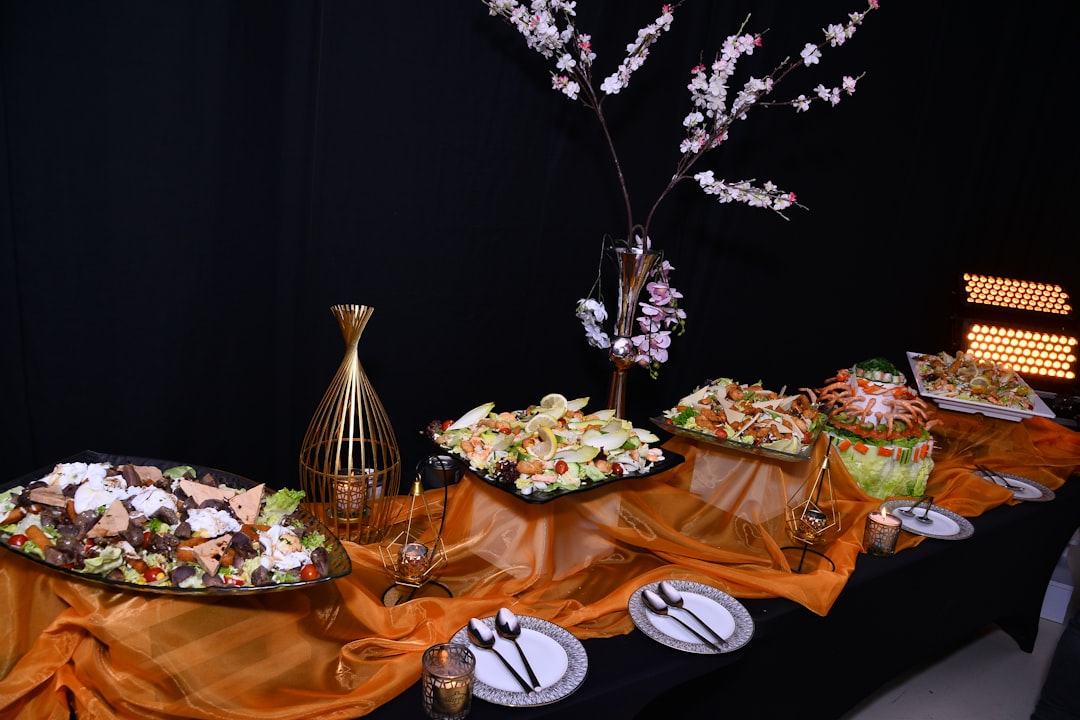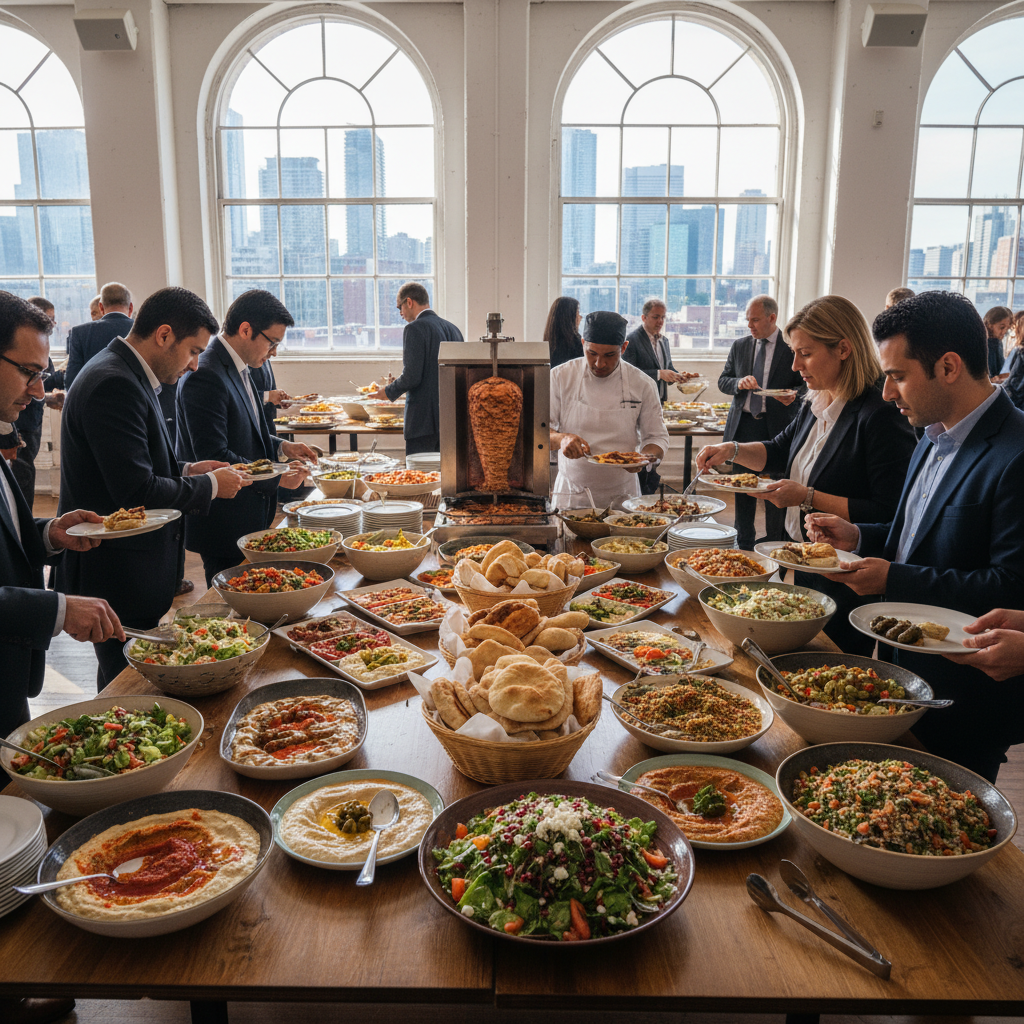
Event catering package options are curated, ready-to-serve meal formats—buffets, boxed meals, platters, and live stations—that align portions, dietary accommodations, and logistics with your headcount and venue. The right package streamlines ordering, reduces waste, and keeps guests moving. At Shawarma Moose in Toronto, we tailor packages to teams, parties, and special occasions.
By Shawarma Moose Catering Team • Last updated: 2026-04-12
Above the Fold: Hook + Table of Contents
Pick an event catering package by matching format to your flow (buffet, boxed, platters), confirming portions per guest, and locking delivery and setup timelines. This approach prevents lines, shortages, and stress. Toronto hosts rely on clear headcounts, labeled allergens, and a defined service window to keep events smooth.
- At a Glance
- What Are Event Catering Package Options?
- Why These Packages Matter
- How Package Planning Works
- Formats and Package Types
- Best Practices and Checklists
- Tools and Resources
- Toronto Case Studies and Examples
- FAQ
- Conclusion
Quick Answer
Event catering package options at Shawarma Moose bundle entrées, sides, and setup for smooth service. For Toronto events near 898 College St, choose buffets for variety, boxed meals for speed, and platters for sharing. We align delivery windows and dietary labels so hosts can relax and enjoy.
At a Glance
Event catering packages simplify feeding groups by pre-bundling portions, sides, utensils, and delivery details. Select a format, estimate per-person portions, account for dietary needs, and confirm timing and layout. Hosts gain predictable service, cleaner operations, and happier guests with fewer last-minute decisions.
- Core formats: Buffet bars, boxed meals, shareable platters, and live stations.
- Portion planning: 4–6 oz protein per adult; 2–3 sides; add 10% for seconds.
- Dietary labels: Clearly mark vegetarian, vegan, halal, gluten-friendly, and dairy-free items.
- Logistics: Schedule a 20–30 minute setup buffer; align delivery to agenda.
- Local focus: We deliver across Toronto, Mississauga, and Brampton with online ordering.
Local Tips
- Tip 1: For downtown venues near College St and Ossington Ave, reserve street access for 15–20 minutes so your delivery crew can unload buffets and heating sets without delays.
- Tip 2: During winter storms or spring downpours, schedule boxed meals to minimize lines and keep food covered; Toronto weather shifts fast.
- Tip 3: If your office uses keycard elevators after hours, share access details in advance so hot trays reach your floor while temperatures stay safe.
IMPORTANT: These tips reflect how Shawarma Moose serves corporate teams and private events across the city from our 898 College St base.
What Are Event Catering Package Options?
Event catering package options are pre-configured meal plans that bundle entrées, sides, sauces, disposables, and delivery timing for groups. Packages reduce guesswork, standardize portions, and help hosts match menu variety to headcount and dietary needs while keeping service on schedule and within operational constraints.
- Purpose-built bundles: Packages combine entrées, sides, sauces, utensils, and delivery windows.
- Formats matched to flow: Buffets = variety, boxed meals = speed, platters = sharing, live stations = theater.
- Dietary clarity: Label vegetarian, vegan, halal, dairy-free, and gluten-friendly components.
- Operational cadence: Align setup and service with your agenda to avoid bottlenecks.
- Local relevance: Shawarma Moose tailors shawarma bars and Turkish mezze to Toronto teams and celebrations.
Self-contained answer: Event catering packages are standardized combinations of food and logistics that fit a known group size and venue plan. By choosing a package that fits your event (e.g., a shawarma buffet for 40, boxed meals for 25), you control portions, service times, and dietary coverage without micromanaging each line item.
Why Event Catering Package Options Matter
Packages matter because they turn complex menu and logistics decisions into a repeatable playbook. Clear bundles reduce waste, protect food temperature, and speed service. Teams spend less time coordinating and more time participating, which improves guest satisfaction and event outcomes.
- Faster decision-making: Fewer choices mean quicker approvals and cleaner agendas.
- Predictable portions: Standard per-person benchmarks reduce shortages and leftovers.
- Safer service: Timed delivery and insulated equipment support safe holding temperatures.
- Happier guests: Well-labeled stations reduce wait times and confusion.
- Local agility: Our College St team navigates Toronto traffic and building access daily.
Self-contained answer: Well-designed catering packages protect your schedule and guest experience. With defined portions, labeled dietary items, and a timed delivery window, hosts avoid common pitfalls like long lines, missing utensils, or cold entrées—issues that derail otherwise great programs.
How Package Planning Works (Step-by-Step)
Define headcount and dietary needs, select a format, map service timing, and confirm delivery and access details. Finalize portion counts with a 10% buffer and label allergens. Lock a setup plan with the venue and align cleanup. This sequence keeps service smooth and on time.
- Confirm the headcount: Separate by adults, youth, and kids; add 10% for walk-ins or seconds.
- Record dietary needs: Vegetarian, vegan, gluten-friendly, dairy-free, halal; plan distinct trays and labels.
- Choose a format: Buffet, boxed, platters, or live station depending on agenda and space.
- Plan the timeline: Delivery 20–30 minutes before service; build a 15-minute buffer for setup.
- Confirm access: Loading docks, elevators, security, door codes, and parking details.
- Align portions: 4–6 oz protein per adult, 2–3 sides; kids count as half portions.
- Finalize menus: Balance proteins, grains, salads, and vegetables with sauces and dips.
- Prepare signage: Label dietary attributes and allergens at each station.
- Assign roles: Point of contact, setup helper, and cleanup plan.
- Reconfirm 24 hours prior: Update final headcount, access windows, and contact numbers.
Helpful resource: If you want a flexible format, see our build-your-own option in the context of an office lunch; it lets you tune proteins and sides without overcomplicating ordering. We outline customization in our build-your-own catering page.
Self-contained answer: Successful catering plans start with headcount and dietary needs, then align format, portions, delivery timing, and access. A 10% buffer on food and a 20–30 minute setup lead time cover most surprises, while clear labels and a single point of contact keep lines moving.
Formats and Package Types
Pick a format that matches your venue and schedule. Buffets maximize variety, boxed meals maximize speed, platters encourage sharing, and live stations deliver theater. Shawarma Moose supports all four, from shawarma bars to individually sealed boxes for fast-moving agendas.

1) Buffet Shawarma Bars
- Best for: Medium–large groups; flexible eaters; longer breaks.
- Why it works: High variety with proteins, grains, salads, and sauces; easy for seconds.
- Operational note: Keep hot trays insulated; plan one 6–8 ft table per 40 guests.
- Example: A 60-person all-hands with chicken, falafel, rice, fattoush, and hummus.
- Toronto reality: Allocate 10 extra minutes for elevator access at downtown towers.
2) Boxed Meals
- Best for: Tight agendas, trainings, offsites, and outdoor events.
- Why it works: Fast handout; minimal mess; easy headcount tracking.
- Operational note: Label by diet to prevent mix-ups; stack by meeting room.
- Example: 120 training attendees receive labeled shawarma wraps with salads.
- Toronto reality: Use boxed meals on rainy days to avoid buffet traffic jams.
3) Shareable Platters
- Best for: Social mixers, open houses, and casual celebrations.
- Why it works: Conversation-friendly serving; attractive displays.
- Operational note: Estimate 1 mixed platter per 8–10 guests for appetizers.
- Example: Mezze platters with pita, hummus, ezme, olives, and grilled veggies.
- Toronto reality: Great for condo party rooms with limited counter space.
4) Live Action Stations
- Best for: Premium experiences, VIP receptions, or weddings.
- Why it works: Adds theater; customizes to each guest.
- Operational note: Coordinate power, ventilation, and floor protection.
- Example: A shawarma carving station with fresh wraps assembled to order.
- Toronto reality: Confirm venue rules about live stations and on-site heating.
Comparison Table: Which Format Fits?
| Format | Best For | Setup Time | Portion Guide | Pros | Watch-outs |
|---|---|---|---|---|---|
| Buffet Bar | 40–200 guests | 20–30 minutes | 4–6 oz protein pp; 2–3 sides | Variety, easy seconds | Line control; table space |
| Boxed Meals | 15–300 guests | 5–10 minutes | One box pp | Speed, labeling, portability | Less communal feel |
| Platters | 10–120 guests | 10–15 minutes | 1 platter per 8–10 | Social, flexible | Monitor refills |
| Live Station | 50–250 guests | 30–45 minutes | Chef-served | Custom, premium | Venue rules, power |
Self-contained answer: Choose buffets for variety, boxed meals for speed, platters for sociability, and live stations for theater. For office lunches, boxed or platters reduce downtime; for longer celebrations, buffets and stations shine. Match format to agenda, space, and guest expectations.
Best Practices and Checklists
Lock the basics early: headcount, dietary needs, delivery window, and setup plan. Add a 10% food buffer, stage signage, and assign a single point of contact. Confirm building access and elevator timing. With these steps, you avoid 90% of common catering issues.
Portions and Menu Design
- Protein: 4–6 oz per adult; 3–4 oz for lighter agendas or afternoon snacks.
- Grains and salads: 3–4 oz grains (rice/bulgur) + one hearty salad per guest.
- Vegetarian/vegan balance: Plan at least 20–30% veg options unless data says otherwise.
- Sauces and dips: 1.5–2 oz per person across tahini, garlic, and hot sauces.
- Label clearly: Put “vegetarian” and “contains dairy” on station cards.
Timing and Flow
- Delivery lead: Target 20–30 minutes before the first plate is served.
- Setup zones: Entry, queue, build area, and beverage station separated by 3–4 feet.
- Line pacing: Add a second utensil set after 40 guests to split the line.
- Cleanup: Stage trash and recycling near exits; avoid crowding the buffet.
Facilities and Access
- Elevators and docks: Share instructions and contacts to speed unloading.
- Power and surfaces: For warmers, confirm outlets and safe staging tables.
- Allergen safety: Separate utensils for vegetarian and meat trays.
- Weather plan: Use covered boxes or indoor layouts if rain or snow threatens.
For a deeper planning primer, see event catering menu planning and how it pairs with our corporate catering menu ideas to build balanced menus for training days and team milestones.
Self-contained answer: Portion discipline (4–6 oz protein, two sides), labeled stations, and a 20–30 minute setup buffer prevent delays. A single coordinator with elevator and loading details keeps hot food on time, while clear allergen separation protects guests and speeds service.
Tools and Resources
Use checklists, headcount templates, and station diagrams to remove guesswork. A shared agenda and labeled dietary matrix keep everyone aligned. Online ordering with confirmed delivery windows turns a plan into predictable execution.
- Headcount matrix: Adults, youth, kids; vegetarian, vegan, gluten-friendly, dairy-free, halal.
- Station map: Sketch flow: entry, queue, build area, sauce station, beverages.
- Timing tracker: Delivery time, setup start, service open, last call, cleanup start.
- Label set: Menu cards with dietary/allergen notes at each tray.
- Online ordering: Lock details through our individual catering and catering packages pages.
Self-contained answer: Practical tools—a headcount matrix, station sketch, and timing tracker—turn your package choice into a reliable operation. When everyone sees the same plan and labels, setup moves faster and guests get what they need without confusion.
Toronto Case Studies and Examples
Match package formats to real agendas: boxed meals for tight trainings, buffets for celebrations, platters for mixers, and live stations for VIPs. These Toronto scenarios show how small planning choices—buffers, labels, and access notes—protect schedules and guest experience.
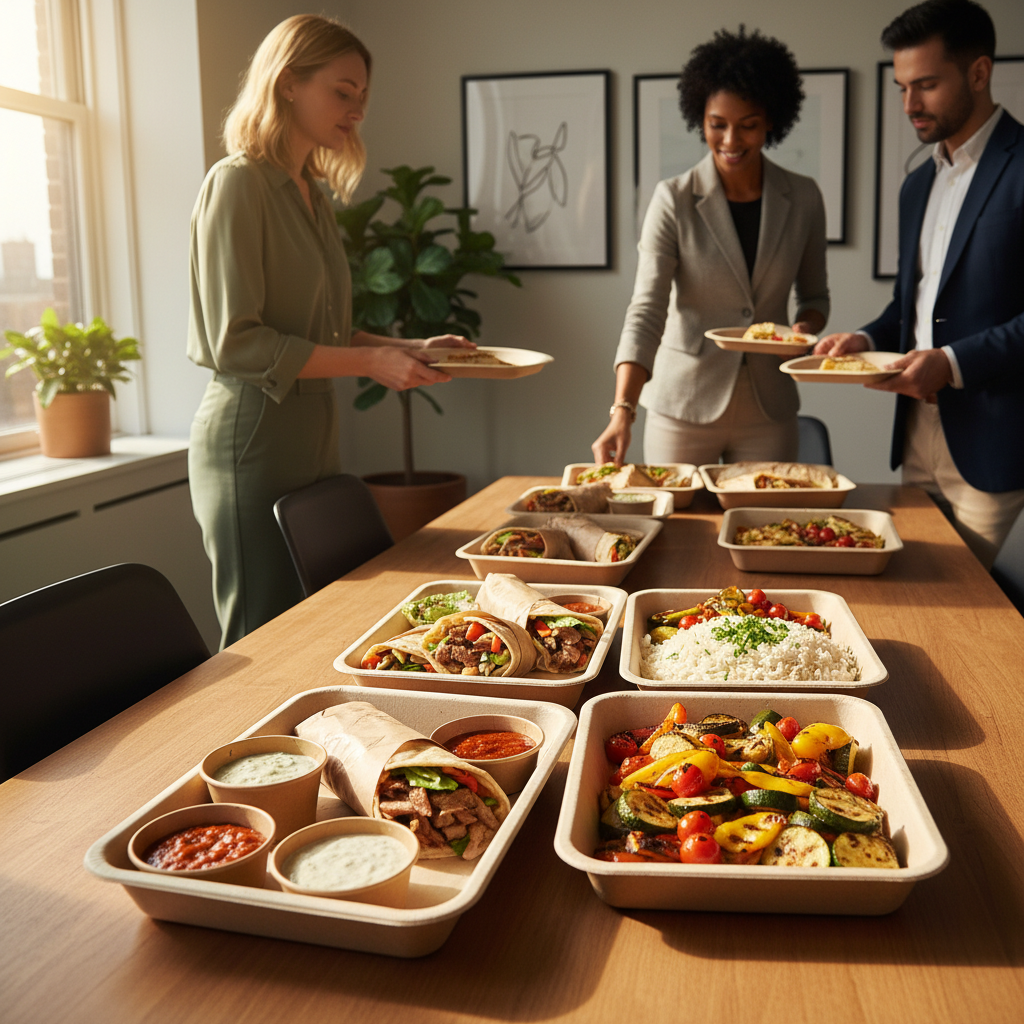
1) Downtown Training Day (120 Attendees)
- Need: Minimal downtime between sessions; strict dietary labeling.
- Package: Boxed shawarma wraps with sides; veg/vegan clearly labeled.
- Flow: Handout by room; stack extras at the back for late arrivals.
- Result: Lunch distribution completed in under 12 minutes across two lines.
- Tip: Stage beverages away from food lines to prevent congestion.
2) Office Anniversary (75 Guests)
- Need: Celebration feel with time for toasts and mingling.
- Package: Buffet shawarma bar with chicken, falafel, rice, salads, dips.
- Flow: Two serving utensils per tray; dessert table separate from entrées.
- Result: Guests completed plates in ~15 minutes; many returned for seconds.
- Tip: Add a mezze starter station to spread arrivals and shorten lines.
3) Gallery Opening (90 Guests)
- Need: Portable bites; quick setup in limited space.
- Package: Shareable platters with mini wraps, veggies, and dips.
- Flow: Floating platters during speeches; refill from a back table.
- Result: Continuous service without blocking art viewing areas.
- Tip: Use smaller plates (7–8 inches) to control portion size and waste.
4) Leadership Reception (150 Guests)
- Need: Elevated experience, chef presence, customization.
- Package: Live shawarma station alongside salads and warm sides.
- Flow: Position the station away from doors; queue markers keep order.
- Result: Guests engaged with the chef while keeping the schedule on track.
- Tip: Confirm venue policies on on-site cooking and power usage.
For flavor inspiration across formats, see this perspective on guest-pleasing shawarma service in an event context: event catering shawarma ideas.
Self-contained answer: Boxed meals accelerate trainings, buffets elevate celebrations, platters keep galleries moving, and live stations create VIP moments. Consistent portions, labels, and access notes keep each scenario on schedule—vital for downtown Toronto venues with elevator and loading constraints.
Need a hand aligning your package?
Our Toronto team can map headcounts, dietary needs, and timing into a package that fits your space and agenda. Tell us your goals and we’ll suggest formats, portions, and delivery windows that work.
Explore shawarma catering options or lock details with our catering packages.
FAQ
Choose a package that fits your agenda and space, then align portions, labels, and delivery timing. Most operational questions reduce to headcount certainty, access, and a 10% buffer. These answers cover the details planners ask most.
- How far in advance should I confirm my event catering package options?
- Lock your format as soon as headcount and venue are set. Finalize the menu and dietary split 48–72 hours prior so labels and trays are prepared. Same-week requests work for many office lunches, but earlier confirmation protects delivery windows during peak seasons.
- What’s the easiest format for tight schedules?
- Boxed meals move the fastest—often distributed in under 10–15 minutes for 100+ guests with two pickup lines. Boxes also simplify dietary control because each unit is labeled and sealed.
- How do I handle dietary restrictions without slowing the line?
- Group vegetarian and vegan trays at the start of the line with clear signage; use distinct utensils. For boxed meals, color-sticker or label by diet category. A separate gluten-friendly zone prevents cross-contact and speeds service.
- What if my venue has limited table space?
- Use shareable platters or boxed meals. Stage beverages and desserts in a separate area to reduce congestion. If a buffet is essential, plan a U-shaped layout or two smaller parallel lines.
- Can I mix formats in one event?
- Yes. A common pairing is a live station as the centerpiece with boxed meals for staff, or a buffet plus shareable appetizer platters during arrivals. Mixing formats helps control lines and supports different guest preferences.
Conclusion
The best catering package is the one that matches your agenda, space, and guests. Pick the right format, portion precisely, label clearly, and anchor delivery to your schedule. With that playbook, your event runs smoothly and guests leave satisfied.
Key Takeaways
- Format-first: Choose buffets for variety, boxes for speed, platters for sharing, stations for theater.
- Plan portions: 4–6 oz protein per adult; two to three sides; add a 10% buffer.
- Label and separate: Dietary clarity speeds lines and protects guests.
- Time the drop: Delivery 20–30 minutes pre-service with clear access notes.
- Use checklists: Headcount matrix, station map, and timing tracker remove guesswork.
Related Articles
- How to plan an office lunch agenda around food service
- Designing buffet flow for small venues
- Labeling and allergen best practices for catered events