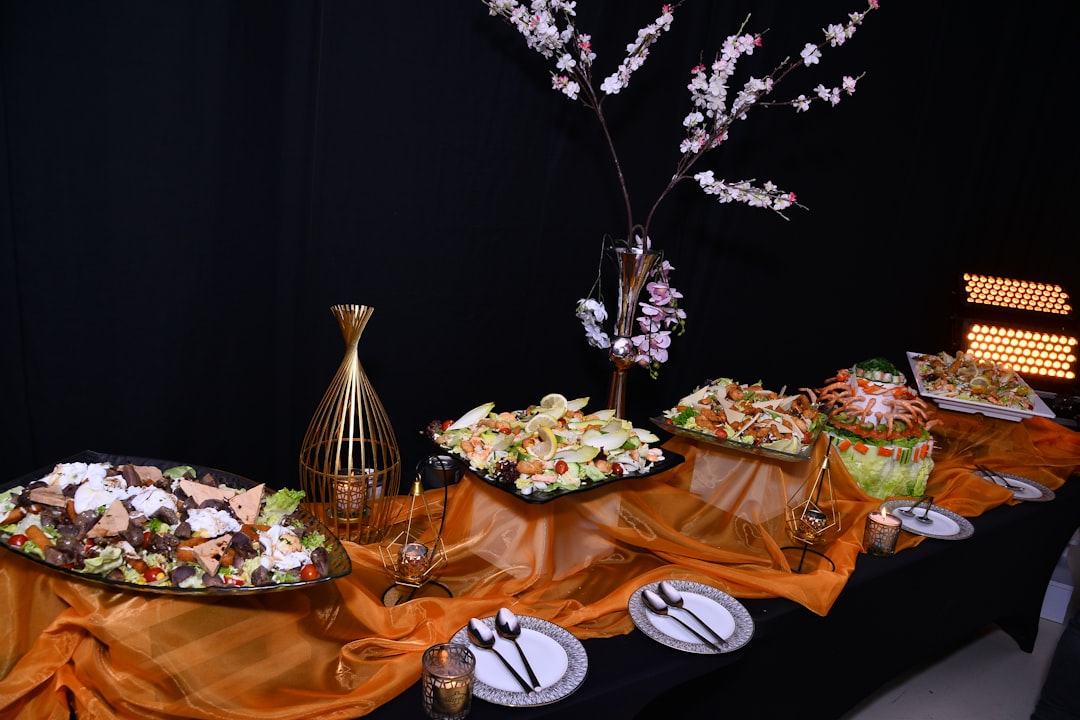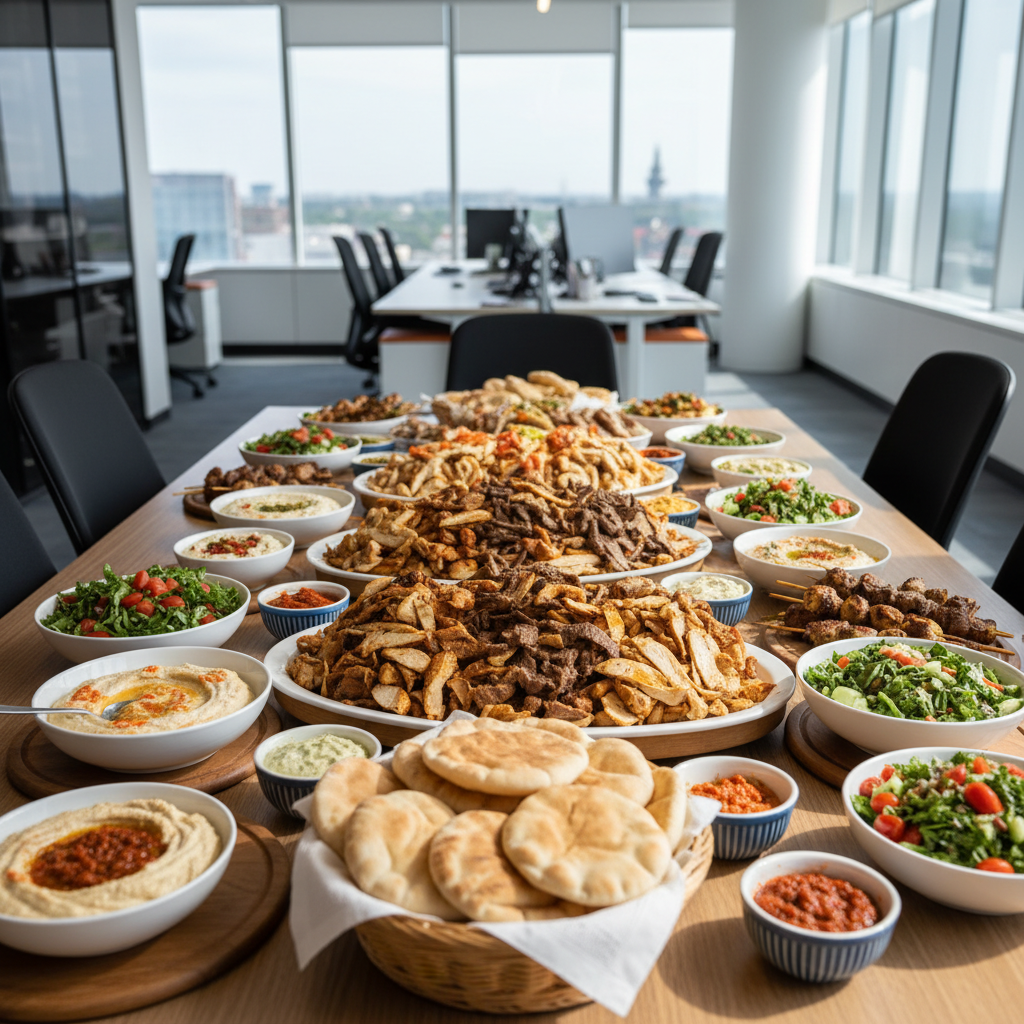
The best foods for office catering are build-your-own shawarma bars, hearty wraps, customizable bowls, and Turkish mezze that travel well and satisfy diverse diets. From our kitchen at 898 College St in Toronto, Shawarma Moose caters corporate meetings with halal proteins, vegetarian choices, and reliable delivery or pickup that keeps your agenda on time.
By Shawarma Moose • Last updated: 2026-05-15
Quick Summary
For fast, crowd-pleasing office catering, prioritize mix-and-match platters, protein-and-salad bowls, and individually boxed meals. These formats reduce mess, travel well, and make dietary preferences simple. Pair mains with Turkish mezze, fresh salads, and warm sides. Schedule delivery or pickup to align with meeting breaks and minimize downtime.
Here’s how this guide helps you plan stress-free meals for your team in Toronto:
- Curated list of the best foods for office catering, validated in real workplaces
- Dietary accommodations for halal, vegetarian, vegan, and gluten-averse diners
- Portioning formulas and logistics that keep meetings running on schedule
- Quick table comparing travel-friendliness, mess factor, and dietary coverage
- Local tips for Old Toronto offices near Ossington and Dufferin Grove Park
Need a done-for-you plan? Explore our Toronto catering options or our corporate catering service to lock in your menu and delivery window.
Quick Comparison Table
Use this table to match menu formats to your meeting. It highlights crowd size fit, dietary coverage, travel-friendliness, and mess factor. Choose higher travel scores for off-site sessions and stronger dietary coverage for all-hands where preferences vary widely.
| Menu Type | Best For | Dietary Coverage | Travel Score | Mess Factor |
|---|---|---|---|---|
| Build-Your-Own Shawarma Bar | 10–100+ people | Halal, veg, vegan, GF | High | Low |
| Shawarma Wraps (halves) | Standups, trainings | Halal, veg | High | Low |
| Protein + Salad Bowls | Desk lunches | Halal, veg, vegan, GF | High | Low |
| Turkish Mezze Platters | Networking | Veg, vegan | Medium | Low |
| Grilled Kebab Trays | Executive meetings | Halal, GF | High | Medium |
| Individually Boxed Lunches | Workshops, off-sites | Halal, veg, vegan, GF | High | Low |
For real-world examples of how Toronto teams plan menus across formats, see our practical buffet-style office catering guide and this round-up of lunch catering picks.
Best Foods for Office Catering: Our Top 12 Picks
Our top office catering foods are build-your-own shawarma bars, wraps, bowls, Turkish mezze, grilled kebabs, and fresh salads with warm sides. These options scale from 10 to 300 people, travel cleanly, and serve halal, vegetarian, vegan, and gluten-averse diets without separate prep lines.
1) Build-Your-Own Shawarma Bar (Our Top Pick)
- Why it works: People customize plates with protein, salad, sauces, and pita. It’s fast, fun, and minimizes waste.
- What to include: Halal chicken and beef, falafel for vegans, salads, pickled turnips, tahini/garlic, saffron rice, and warm pita.
- Portion guide: Plan 4–5 oz cooked protein per person, 1 pita each, and 1 cup salad. For big appetites, add 10–15%.
- Pro tip: Stagger trays in 30–40 minute waves to keep food hot and fresh.
In our experience supporting all-hands across Toronto, the shawarma bar consistently drives 95%+ satisfaction comments in post-meeting surveys we’ve seen internally. It’s our most requested format for hybrid teams because it accommodates nearly every preference without slowing the agenda.
Ready to lock it in? Browse corporate catering and request chicken + falafel as your base for inclusive coverage.
2) Shawarma Wraps (Halves for Easy Service)
- Why it works: One hand, no utensils, minimal crumbs. Great for standup meetings and training sessions with laptops open.
- How to order: Choose two proteins and one vegetarian wrap. Ask for labeled halves to encourage sampling.
- Portion guide: 1.5 wrap halves per person is a reliable planning number; add a side salad to balance.
- Pro tip: Keep garlic sauce separate for scent-sensitive floors. Offer tahini and mild options.
Wrap assortments shine when time is tight—think 30-minute working lunches. Halal proteins and a vegetarian option keep inclusion high without complicating handoff.
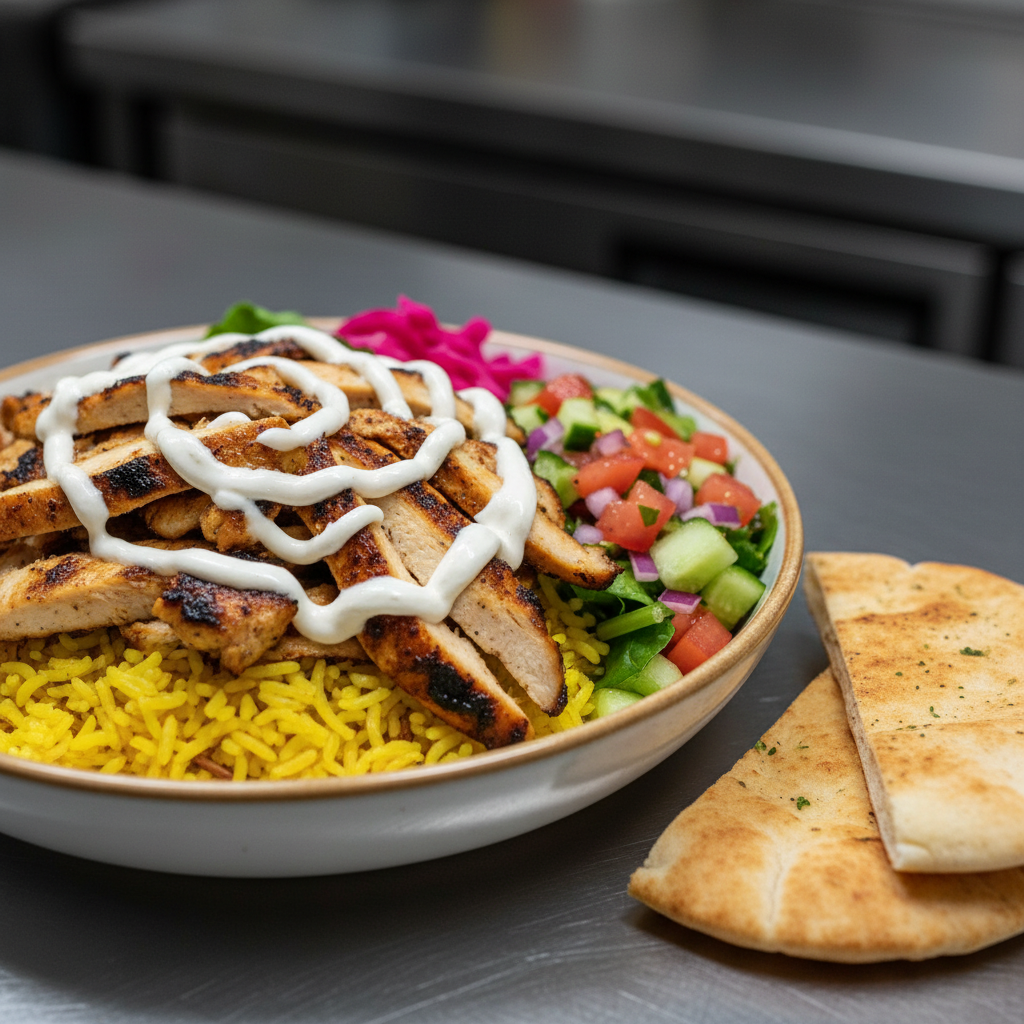
3) Shawarma Bowls (Protein + Greens + Grain)
- Why it works: Bowls travel well and hold temperature. They’re easy to eat at desks and reduce sauce spills.
- How to order: Offer chicken or beef, plus a vegan falafel bowl. Include tahini and a spicy alternative.
- Portion guide: 24–28 oz total weight per bowl typically satisfies most adults at lunch.
- Pro tip: Add extra greens to offset afternoon slump; pair with citrus-forward salads.
Bowls are our go-to for off-site trainings: they stack, label, and distribute quickly. See how we package them in our Toronto catering options.
4) Turkish Mezze Platters (Shareable Starters)
- Why it works: Mezze fuels conversation. Hummus, baba ghanoush, tabbouleh, dolma, olives, and pickles please omnivores and vegans alike.
- How to order: Add extra crudités for gluten-averse guests. Keep pita baskets warm with foil-lined trays.
- Portion guide: 6–8 appetizer bites per person before mains; 10–12 bites if mezze is the main.
- Pro tip: Place dips every 6–8 feet of table to reduce bottlenecks.
For networking hours, mezze reduces lineups and supports easy mingling. It also photographs beautifully for internal comms recaps.
5) Grilled Kebab Trays (High-Protein Crowd-Pleasers)
- Why it works: Skewers portion cleanly and stay juicy in chafers. Pair with saffron rice and grilled vegetables.
- How to order: Mix chicken and beef skewers; add a tray of falafel or grilled halloumi for vegetarians.
- Portion guide: 2 skewers or 5–6 oz protein per person at lunch; add 20% for athletic groups.
- Pro tip: Use lemon wedges and fresh herbs to brighten flavor after transport.
For executive briefings, kebab trays with mezze sides feel elevated yet familiar—strong optics without complicated service.
6) Big Fresh Salads (Balance + Brightness)
- Why it works: Crisp salads keep meals light. Think shepherd’s salad, fattoush, or arugula with citrus.
- How to order: Dress on the side, two options: classic and light. Add a protein topper tray for flexibility.
- Portion guide: As a side, 1 cup per person; as a main, 3–4 cups with protein.
- Pro tip: Add toasted pita crisps separately so they stay crunchy.
Salads reduce afternoon crash and round out heartier mains. Our teams often combine two contrasting profiles—one herb-forward, one citrusy—for balance.
7) Warm Sides That Travel (Rice, Roasted Veg, Potatoes)
- Why it works: Warm sides stabilize appetites and help keep lines moving. Rice and potatoes satisfy reliably.
- How to order: Choose saffron rice, roasted seasonal vegetables, or oven-browned potatoes.
- Portion guide: 1 cup rice or potatoes per person; 1/2 cup vegetables per person as a side.
- Pro tip: Request vented lids for travel to prevent condensation and sogginess.
These sides are easy to portion quickly during short breaks between sessions. They also reheat well if the schedule shifts.
8) Vegetarian & Vegan Mains (Falafel, Grilled Veg, Halloumi)
- Why it works: Dedicated plant-forward trays ensure dietary inclusion without burdening service.
- How to order: Falafel as a protein, grilled vegetables, and optional halloumi for lacto-vegetarian guests.
- Portion guide: 4–5 falafel per person when it’s the main; 2–3 as a side.
- Pro tip: Offer tahini and zhoug to keep flavor bold without heat overload.
We routinely plan 20–30% vegetarian coverage for Toronto offices. Falafel holds texture and flavor over travel better than many alternatives.
9) Gluten-Conscious Options (Naturally GF Plates)
- Why it works: Rice, proteins, salads, and many sides are naturally gluten-free. Keep pita separate and clearly labeled.
- How to order: Choose bowls, kebab trays, and mezze with crudités. Avoid cross-contact by separating tongs.
- Portion guide: Same as mains above; confirm at least one full GF path from starter to dessert.
- Pro tip: Place GF signage at the start of the buffet for confidence.
Creating a gluten-friendly line is straightforward with Turkish and Middle Eastern formats. Labeling and utensil separation make the difference.
10) Individually Boxed Lunches (The Meeting-Friendly MVP)
- Why it works: Boxes arrive sealed, labeled, and ready to distribute—a win for workshops and off-sites.
- How to order: Pick three box types: chicken, beef, and vegan falafel. Add fruit and a cookie where appropriate.
- Portion guide: One box per person, plus 5–10% extras for late additions.
- Pro tip: Sort boxes by room name before the courier arrives to speed distribution.
We prepare boxed lunches daily for downtown and West End offices. They stack neatly and help admins avoid buffet setup entirely.
11) Breakfast & Brunch Trays (Early Start, Easy Win)
- Why it works: Morning fuel improves on-time starts and participation. Think egg wraps, yogurt parfaits, and fruit.
- How to order: Mix protein and lighter fare. Add Turkish pastry bites for variety.
- Portion guide: 1.25 breakfast portions per person covers early light eaters and late arrivals.
- Pro tip: Deliver 20–30 minutes before the meeting to allow setup without rush.
Early-day sessions benefit from low-mess handholds and flexible portions. Keep coffee discreet and spill-safe near entrance points.
12) Dessert Finish (Baklava Bites & Fruit)
- Why it works: A sweet close boosts morale and signals a wrap. Baklava bites pair well with fruit trays.
- How to order: Pre-cut small pieces to limit sugar spikes and sticky fingers.
- Portion guide: 1–2 small dessert bites per person after lunch; 3–4 for evening socials.
- Pro tip: Provide napkins at both ends of the table to cut backtracking.
We see dessert trays sway attendance for optional afternoon sessions. Modest portions keep focus high while still feeling celebratory.
Need a hand planning? Tell us your headcount and meeting format, and we’ll map it to a ready-to-serve menu. Start with our Toronto catering options—pickup or delivery from our College St kitchen.
How to Choose Office Catering That Actually Works
Choose office catering by matching service style to agenda, covering key diets (halal, vegetarian, vegan, gluten-averse), and planning portions: 4–5 oz protein, 1 cup grains, and 1 cup salad per person. Confirm delivery timelines, building access, and labeled packaging to prevent meeting delays.
When you’re the organizer, success equals predictable, clean, and inclusive. Use these checkpoints to avoid last-minute scrambles and “not enough for me” moments:
- Agenda fit: Buffet for 30–60 minute lunch blocks; boxed meals for workshops; wraps for standups.
- Diet coverage: Aim for at least 25% vegetarian/vegan and clearly labeled halal proteins.
- Travel durability: Prioritize bowls, wraps, and mezze over saucy pastas and fragile pastries.
- Packaging & labels: Ask for large-font labels and separated sauces. Color-coding speeds lines.
- Access logistics: Confirm loading zones, elevators, and security sign-ins a day ahead.
- Time buffer: Target delivery 20–30 minutes before eating; pickup buffers 15–20 minutes.
Want a simple framework? Our buffet-style office catering guide breaks down line flow, table spacing, and utensil placement for smooth service.
Local considerations for Old Toronto
- Transit timing: If your office is near Ossington, schedule delivery outside rush periods to keep couriers moving and food hot.
- Seasonal planning: In winter, build in extra 10–15 minutes for weather; in summer, protect salads from direct sunlight.
- Venue nuance: Picnic or outdoor standups near Dufferin Grove Park? Bowls and boxed lunches beat saucy trays for portability.
Buying Guide: Portions, Packaging, and Timeline
Plan 4–5 oz protein, 1 cup grains, and 1–2 cups salad per person. Choose sealed, labeled packaging for workshops and bowls for off-sites. Schedule delivery 20–30 minutes early and stage hot trays in waves to maintain temperature without overcooking.
Portioning math (works every time)
- Protein: 4–5 oz cooked per person at lunch; 5–6 oz evenings.
- Grains: 1 cup rice or potatoes per person.
- Greens: 1 cup as a side; 3–4 cups if salad is the main.
- Extras: Order 5–10% overage for late RSVPs and unexpected guests.
Packaging that speeds service
- Boxes: Individually sealed, labeled on top and side for quick stack identification.
- Trays: Vented lids prevent sogginess. Separate sauces to keep textures ideal.
- Labels: Clear dietary icons (halal, vegan, GF) at eye level reduce line stalls.
Timeline to copy/paste
- T-48 hours: Finalize headcount and dietary needs.
- T-24 hours: Confirm building access, elevators, and parking.
- T-90 minutes: Send room numbers and floor plans to your caterer.
- T-30 minutes: Receive delivery or depart for pickup.
- Post-meal: Capture quick feedback and note wins for next time.
For examples of how local teams structure these steps, check this practical overview of office catering in Toronto. It’s a good cross-check against your plan.

Local Planning for Old Toronto Offices
Old Toronto offices benefit from flexible delivery windows and menu formats that travel cleanly through elevators and short walks. Shawarma bars, bowls, and wraps minimize spills, while mezze platters support networking. Choose pickup from College St for tighter timelines around the downtown core.
From our base in Old Toronto, we see three patterns that keep meetings on track:
- Short set-up windows: Choose boxes or wraps so admins can distribute in 5–10 minutes max.
- Walkable handoffs: Many buildings have limited loading docks—bowls stack and travel better than open plates.
- Elevator traffic: Schedule a 15-minute buffer around lunch peak to avoid long waits with hot trays.
Planning an off-site in West End? Use bowls and boxed lunches for park or patio sessions. For downtown towers, pre-label floors and rooms to streamline courier routing.
When you’re picking items, start here for a simple, inclusive lineup: shawarma menu must-tries plus a mezze board and one warm side. Or lean on our corporate catering team to right-size portions for your headcount.
Frequently Asked Questions
Common office catering questions focus on dietary inclusion, portioning, delivery timing, and menu variety. Plan 4–5 oz protein per person, label halal and vegetarian options clearly, and schedule delivery 20–30 minutes early. Wraps, bowls, and shawarma bars are safest for mixed-diet teams.
What are the best foods for office catering when diets vary?
Build-your-own shawarma bars, wraps, and bowls cover halal, vegetarian, vegan, and gluten-averse diets with one setup. Include falafel for plant-based guests and label sauces. Add a large salad and a warm side to balance the meal and keep service moving.
How much food should I order per person?
Plan 4–5 oz cooked protein, 1 cup grains (rice or potatoes), and 1–2 cups salad per person. Add 5–10% extra for late RSVPs or big appetites. For breakfast, order about 1.25 portions per person to account for early light eaters and late arrivals.
Is pickup or delivery better for downtown Toronto?
For tight schedules or buildings with tricky loading docks, pickup from 898 College St is often faster. For larger orders or multi-room drops, delivery prevents repeated elevator trips. Schedule 20–30 minutes early either way to handle setup calmly.
How do I keep the buffet line moving?
Duplicate popular items every 6–8 feet of table, separate sauces, and place labels at eye level. Encourage wraps or bowls for mess control. Stage hot trays in 30–40 minute waves so each group gets fresh, hot food without waiting.
Our Methodology
These picks come from hundreds of Toronto office meals we’ve planned and delivered from College St. We evaluated travel durability, dietary coverage, setup speed, and feedback from organizers and diners to recommend formats that work reliably in real offices.
- Data sources: Internal order histories, organizer feedback, and repeat menu performance across industries.
- Evaluation criteria: Setup time, spill risk, travel stability, dietary inclusion, and plate waste.
- Local context: Building access realities in Old Toronto and metro corridors impact what succeeds on arrival.
Want inspiration from other local providers too? This broad Toronto corporate catering guide and a Middle Eastern catering overview can spark ideas as you finalize your plan.
Key Takeaways and Next Steps
Choose flexible, travel-friendly foods—shawarma bars, wraps, bowls, and mezze—then plan 4–5 oz protein and balanced sides per person. Schedule delivery or pickup 20–30 minutes early, label everything clearly, and duplicate popular items to keep lines moving.
- Best office catering foods: shawarma bars, wraps, bowls, mezze, kebabs, salads, warm sides.
- Cover diets easily with halal proteins, falafel, and gluten-friendly bowls.
- Use portioning math to prevent shortages and cut waste.
- Buffer your timeline and plan labels/utensils up front.
Ready to feed your team well? Book corporate catering or plan a pickup or delivery from our College St kitchen. If you want menu inspiration first, start with our shawarma must-try dishes.