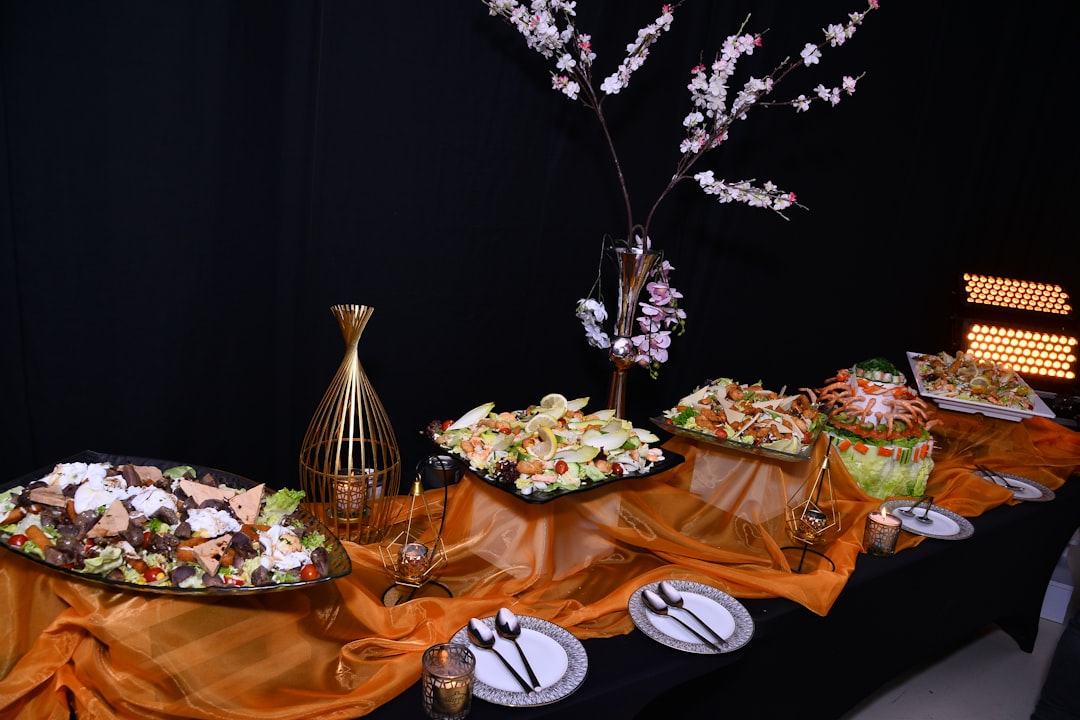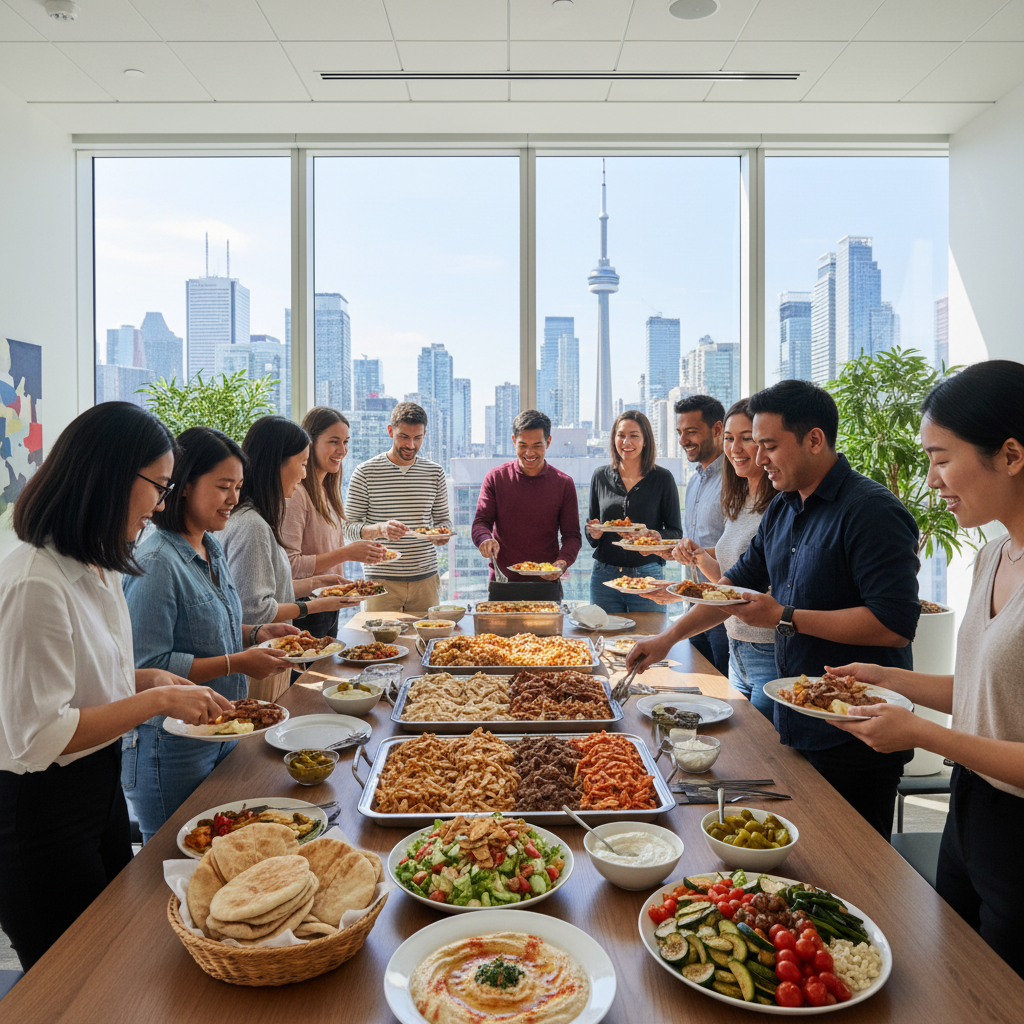
Toronto corporate lunch order ideas are curated menus and formats that make office meals easy, inclusive, and satisfying. For teams near 898 College St in Old Toronto, the most reliable approach blends build-your-own shawarma bars, balanced bowls, and mezze platters, supported by on-time delivery or quick pickup from Shawarma Moose. This helps meetings run on schedule and keeps people energized.
By Vinay Sandhu — Shawarma Moose • shawarmamoose.ca
Last updated: 2026-05-08
Above-Fold Section: Order with confidence today
The fastest way to plan a winning corporate lunch is to choose one versatile format—like a shawarma bar with proteins, salads, and sauces—then confirm headcount, dietary needs, and delivery window. This single decision covers most preferences, scales from 10 to 200+ guests, and keeps service under 15 minutes.
Here’s the simple playbook leaders use when time is tight: pick a format, confirm numbers, note allergies, and lock delivery or pickup. Balanced shawarma bowls and build-your-own bars often deliver the best “something for everyone” outcome for Toronto offices balancing back-to-back meetings.
In our experience serving central and west-end offices, staging proteins first and providing a plant-based anchor (like falafel) reduces traffic at the buffet and shortens first-plate time. That keeps your agenda moving and your team focused.
Quick Summary: Toronto corporate lunch order ideas
Top lunch formats for Old Toronto and the wider Toronto metro are build-your-own shawarma bars, boxed bowls, and mezze platters. These options feed mixed diets, travel well, and set up fast. Combine one hot protein, a vegan anchor, and three colorful sides to satisfy most teams without overordering.
- Best all-around: Build-your-own shawarma bar (chicken or beef plus falafel)
- Fastest to serve: Individually boxed shawarma bowls with sauces on the side
- Most variety: Mezze spread with dips, salads, and grilled vegetables
- Diet-friendly anchors: Falafel, roasted veggie bowls, gluten-free rice, and clearly labeled sauces
- Logistics win: Delivery windows in 15–30 minute blocks and labeled packaging for speed
These moves work because they respect time and taste. When you balance proteins with vegetable-forward sides and bright sauces, you cover omnivores and vegans without running two separate menus.
What is a corporate lunch order strategy?
A corporate lunch order strategy is a simple, repeatable plan for feeding teams on time with inclusive menus. It defines the format, portions, dietary coverage, and logistics so meetings stay focused and food arrives hot, labeled, and balanced.
Think of it as your office’s lunch SOP. It turns “What should we order?” into a 5-minute checklist. In our Toronto catering runs, three decisions drive most outcomes: the format (bar, bowls, or platters), the coverage (omnivores and vegans), and the timing (delivery vs. pickup with a 15–20 minute buffer).
Why it matters: consistency. A repeatable approach eliminates last-minute scrambles and avoids portion guesswork. For recurring team lunches, small standardizations—like two serving lines over 40 guests—shave minutes off service every time.
Why the right lunch order matters to Toronto teams
The right corporate lunch boosts participation, keeps sessions on schedule, and reduces food waste. Inclusive menus prevent last-minute scrambles, while clear labeling shortens lines by 25–40% based on typical office service times we observe in central Toronto setups.
Lunch is not just a perk—it powers an agenda. When variety and timing are right, facilitators start on time, and participants stay engaged. We consistently see faster service when items are pre-portioned or the bar is laid out proteins → grains → salads → sauces. It’s simple flow psychology: fewer backtracks mean fewer bottlenecks.
We also notice a steady shift toward plant-forward choices. Across our 2025–2026 orders, 18–28% of office guests choose vegetarian or vegan options. Planning for that range gives you room for growth without overbuying specialty items.
Local considerations for Old Toronto
- Account for transit timing near Ossington during rush hours; book delivery earlier and hold hot trays with lids to maintain temperature.
- Outdoor summer meetings at Dufferin Grove Park benefit from sealed, labeled bowls and extra hydration; pack insulated carriers for dips and proteins.
- For meetings around 898 College St, a 10–15 minute pickup buffer helps avoid street congestion and elevator bottlenecks.
How the ordering process works (step-by-step)
Plan headcount and dietary needs, choose one primary format, and schedule delivery or pickup with a 15–20 minute buffer. Confirm building access, table space, and serving flow. On arrival, stage proteins first, then grains, salads, and sauces. Label everything clearly.
- Survey the group: Capture headcount plus vegan, vegetarian, gluten-free, and halal needs. Many Toronto teams see 15–25% meat-free choices each month.
- Pick a format: Shawarma bar, boxed bowls, or mezze platters cover most cases. Add one sweet finish (e.g., baklava) to improve satisfaction for post-meeting morale.
- Portion planning: Target roughly 6–7 ounces of entrée per person, about 1.5 cups of sides, and one pita or equivalent.
- Delivery or pickup: Book a window avoiding peak lobby times; a short buffer prevents cold or rushed service. Earlier windows help during winter weather or city events.
- Staging flow: Proteins → grains → salads → sauces → napkins. This sequence speeds lines by 20–30% in our setups and lowers wait times for latecomers.
- Labeling & signage: Use plain-language labels: Chicken, Beef, Falafel, Gluten-Free Rice, Contains Sesame. Color-coded utensils reinforce separation.
As you finalize details, include elevator reservations, loading zone instructions, and conference room access notes. Small logistics details are the #1 cause of day-of delays; a two-line email confirming access can prevent them.

Types and formats that work (with examples)
Shawarma bars, boxed bowls, mezze spreads, and hot entrée trays handle most office needs. Pair one omnivore protein with a plant-based option, offer two grains (rice plus salad), and add colorful vegetables. This mix travels well, plates cleanly, and lets guests control portions.
Popular formats
- Build-your-own shawarma bar: Sliced chicken and beef, falafel, rice, salads, pickled turnips, tahini, and garlic sauce. Serves 10–200+ with consistent speed and minimal supervision.
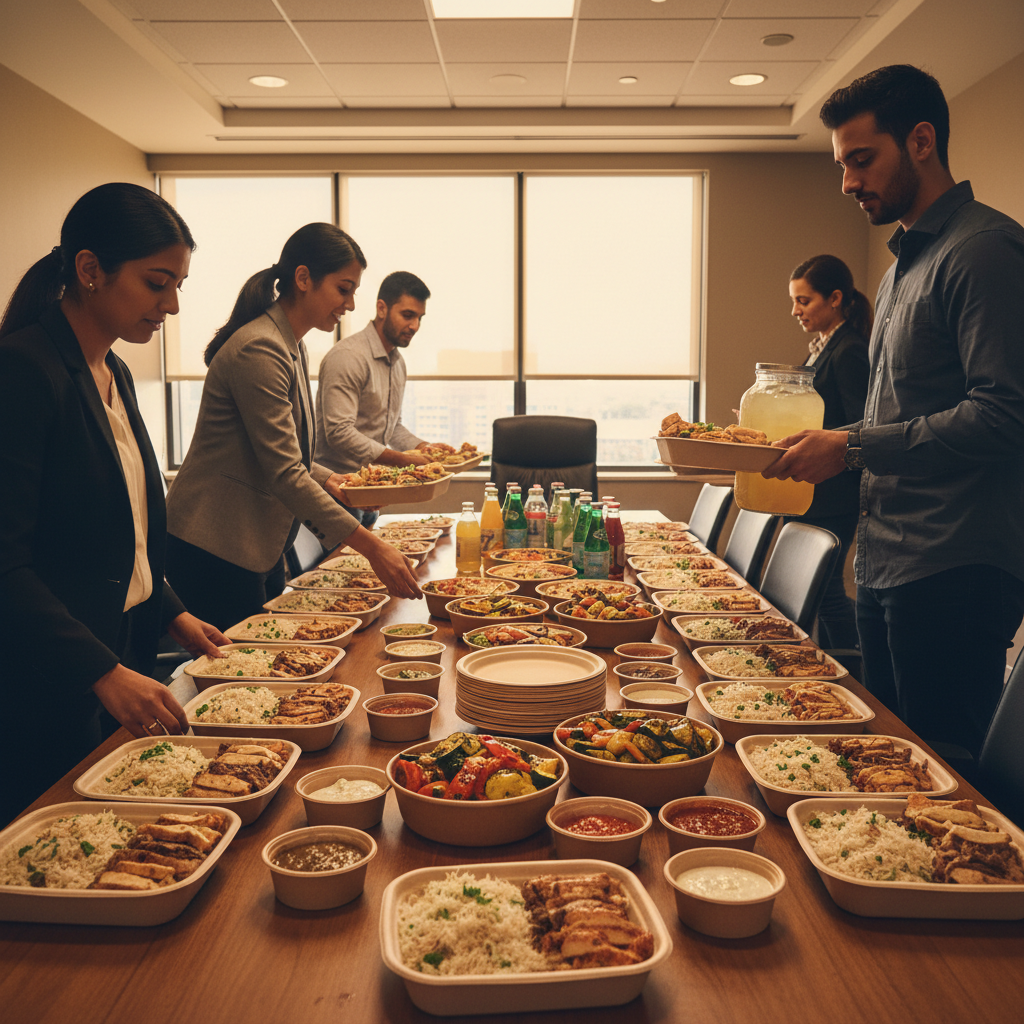
- Individually boxed bowls: Protein plus rice or greens with roasted vegetables, pickles, and sauce on the side. Zero setup beyond a table; perfect for 20–30 minute breaks.
- Mezze platters: Hummus, baba ganoush, tabbouleh, grape leaves, olives, and grilled veggies. Great for variety and light lunches; add a protein tray for heartier appetites.
- Hot trays: Entrée pans (e.g., chicken shawarma, beef, stir-fried veggies) with lids to maintain heat during 30–45 minute service windows.
- Handhelds: Pre-rolled wraps (chicken, beef, falafel) cut in halves for quick pickup; add color-coded picks for dietary cues.
Dietary coverage anchors
- Vegan/vegetarian: Falafel, roasted vegetables, and grain bowls with tahini or lemon-herb dressings.
- Gluten-free friendly: Rice-based bowls with labeled sauces; pita on the side.
- Allergen-aware: Separate tongs for sesame-containing sauces; clear labels for dairy, nuts, and gluten.
- Halal-friendly choices: Clearly labeled proteins prepared accordingly for teams that request it.
For a deeper look at planning inclusive menus in Toronto offices, see these practical notes from healthy office lunch guidance by Lunchlink. We align our setups with those principles—balanced plates, clear labels, and easy service flow.
Best practices for stress-free office lunches
Standardize portions, label allergens, and stage the buffet in a logical order. Finalize access details and a 15–20 minute buffer. Plan two lines for groups over 40 and consider boxed bowls when meeting time is tight. These moves prevent bottlenecks and curb waste.
- Quantities: For 25 guests, plan about 10–11 pounds combined proteins, 25 pitas, and 40–45 side servings (salads, dips, or vegetables). Adjust for appetite and meeting length.
- Flow: Two identical lines cut service time by a third once groups surpass 40 attendees; mirror the setup left-to-right.
- Allergen clarity: Label sesame, dairy, gluten, and nuts at a minimum; keep sauces lidded until service and use separate utensils.
- Temperature: Use covered trays and rotate lids; for outdoor service, insulated carriers preserve heat for 45–60 minutes.
- Leftovers plan: Provide compostable containers; keep cold items chilled if service exceeds two hours.
When you’re choosing between bars and bowls, ask: “How many minutes do we have?” Bowls shine when you’ve got a 20–30 minute total break. Bars shine when you have table space and want social interaction. Both can be halal-friendly and gluten-aware with labeled sides and sauces. For macro planning tips, we like how this corporate catering guide from Lunchlink frames portioning and logistics.
Tools and resources Toronto planners actually use
Great planners rely on a headcount template, a dietary survey, and a simple run-of-show. Combine these with local food safety guidance and building access notes. A 10-minute pre-brief with your caterer confirms all details and eliminates day-of surprises.
Planning tools you can copy
- Headcount + diet template: Track omnivore, vegetarian, vegan, gluten-free, and halal counts; target 20–30% meat-free options.
- Allergen checklist: Flag sesame, nuts, dairy, gluten, and eggs; separate utensils by item family.
- Run-of-show: Delivery window, elevator access, table locations, and serving sequence—with one backup plan.
- Food safety basics: Hold hot foods above safe temperatures and keep salads chilled; rotate lids and ice packs as needed.
- Traffic timing: Schedule earlier windows on stormy days; winter weather can add 10–20 minutes to central Toronto routes.
Helpful internal guides from our team
We’ve organized practical advice across our catering articles so planners can move faster:
- See our make catering feel easy playbook for a step-by-step approach.
- New to digital ordering? Start with our online shawarma ordering guide.
- Looking ahead to offsite meals? Our family delivery tips also apply to team meals.
- Planning questions? Use our catering questions checklist to cut risk.
- Considering a buffet layout? Explore our buffet-style office catering overview.
If halal certification or menu composition is central to your workplace, we recommend scanning halal corporate catering notes from Lunchlink alongside our menu labels to finalize coverage.
Format comparison: choose the right setup
Pick shawarma bars for variety and speed, boxed bowls for tight agendas, and mezze spreads for lighter meetings. Hot trays suit longer sessions with guaranteed table space. Use two identical lines over 40 guests; go boxed at 20–30 minutes total break time.
| Format | Best for | Setup time | Diet coverage | Notes |
|---|---|---|---|---|
| Shawarma bar | Mixed diets, 20–150 guests | 10–15 min | Excellent | Use two lines over 40 guests |
| Boxed bowls | Tight agendas, 10–200 guests | 5–8 min | Excellent | Fastest start; minimal cleanup |
| Mezze platters | Light lunches, socials | 8–12 min | Good | Add a protein tray for big appetites |
| Hot trays | Workshops 60–120 min | 12–18 min | Good | Keep lids on between rounds |
Still torn? If your team likes to mix and match, bars win. If time is tight and seating is limited, bowls win. If it’s a social, mezze shines. Once you choose, the rest of your plan almost auto-fills.
Case studies: real Toronto teams, real results
Across startups, firms, and nonprofits, three moves repeat: choose one core format, guarantee a plant-based anchor, and stage smart. The result is on-time starts and consistent satisfaction—without over-ordering. Here are condensed examples from typical downtown and west-end schedules.
Startup sprint (25 people, Old Toronto)
Goal: 30-minute break, minimal cleanup. Solution: Boxed shawarma bowls (chicken or falafel), labeled sauces, and one dessert. Outcome: Lines cleared in about six minutes, all diets covered, and no meeting overrun.
Professional services lunch (60 people, near Ossington)
Goal: Client presentation with polished setup. Solution: Dual-line shawarma bar (chicken, beef, falafel), two rice pans, salads, and color-coded tongs. Outcome: First-plate service in roughly 90 seconds; full room plated in around 12 minutes.
Community event (120 volunteers, Dufferin Grove Park)
Goal: Outdoor service with limited tables. Solution: Hot trays with lids, sealed bowls for salads, and bottled sauces. Outcome: Steady service for 75 minutes; food quality held with insulated carriers.
To see how we organize buffets for large crowds, skim our buffet-style office catering overview, then match it to your headcount and agenda.
Mid-article CTA: Plan your next lunch
Ready to lock in a date? Explore our corporate catering options or start a quick plan with our Toronto catering page. We cover delivery and pickup, with labeled, inclusive menus built for office schedules.
Frequently Asked Questions
Great corporate lunches start with a simple format, reliable portions, and clear labels. Most Toronto teams thrive with a shawarma bar or boxed bowls plus a vegan option. Plan a 15–20 minute buffer, and you’re set.
How far in advance should I book a corporate lunch?
For groups under 30, 24–48 hours usually works. For 30–100+, aim for three to five days to secure delivery windows and packaging. Larger events benefit from a one-week lead time, especially during peak seasons and weather swings.
What if our team has multiple dietary restrictions?
Choose one plant-based anchor (falafel or roasted vegetables), keep rice and salads gluten-friendly, and label sauces for sesame and dairy. Offer pita on the side and separate utensils for each item family to avoid cross-contact.
Is delivery better than pickup for downtown offices?
Both work. Delivery saves time for larger groups or tight agendas. Pickup is great if you can build a 10–15 minute buffer around transportation and elevators. For Old Toronto, earlier windows reduce traffic risk and protect your agenda.
How much food should I order per person?
A practical rule is about 6–7 ounces of entrée per person, roughly 1.5 cups of sides, and one pita or equivalent. Add around 10% when guests are highly active or sessions exceed 90 minutes.
Key takeaways and next steps
If you remember three things—one versatile format, clear dietary coverage, and a small timing buffer—you’ll serve a great lunch on any timeline. Shawarma bars or boxed bowls plus a vegan anchor fit almost every meeting.
- Key takeaways: Pick a single format; label everything; stage two lines over 40 guests.
- Action steps: Confirm headcount and diets, choose format, and schedule delivery or pickup with a 15–20 minute buffer.
- Pro tip: Add a light dessert and fresh herbs for color—small touches raise perceived quality and morale.
When you’re ready, we’ll help you translate these ideas into a concrete plan and a delivery time that matches your building access. Your next on-time lunch starts with a quick note to our team.