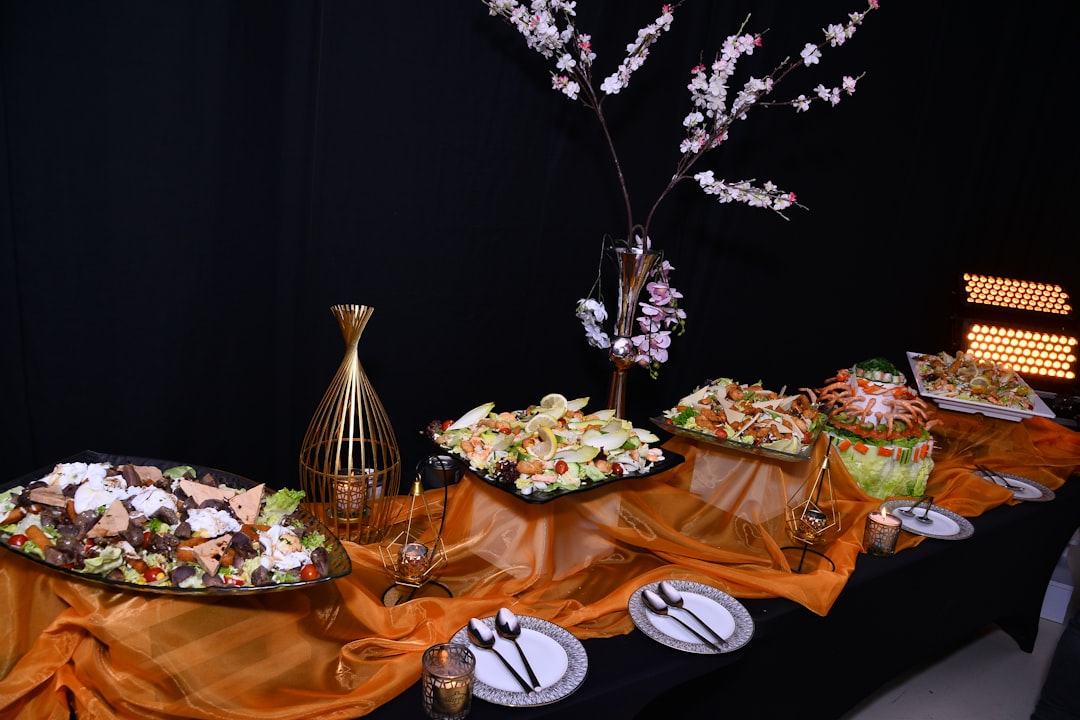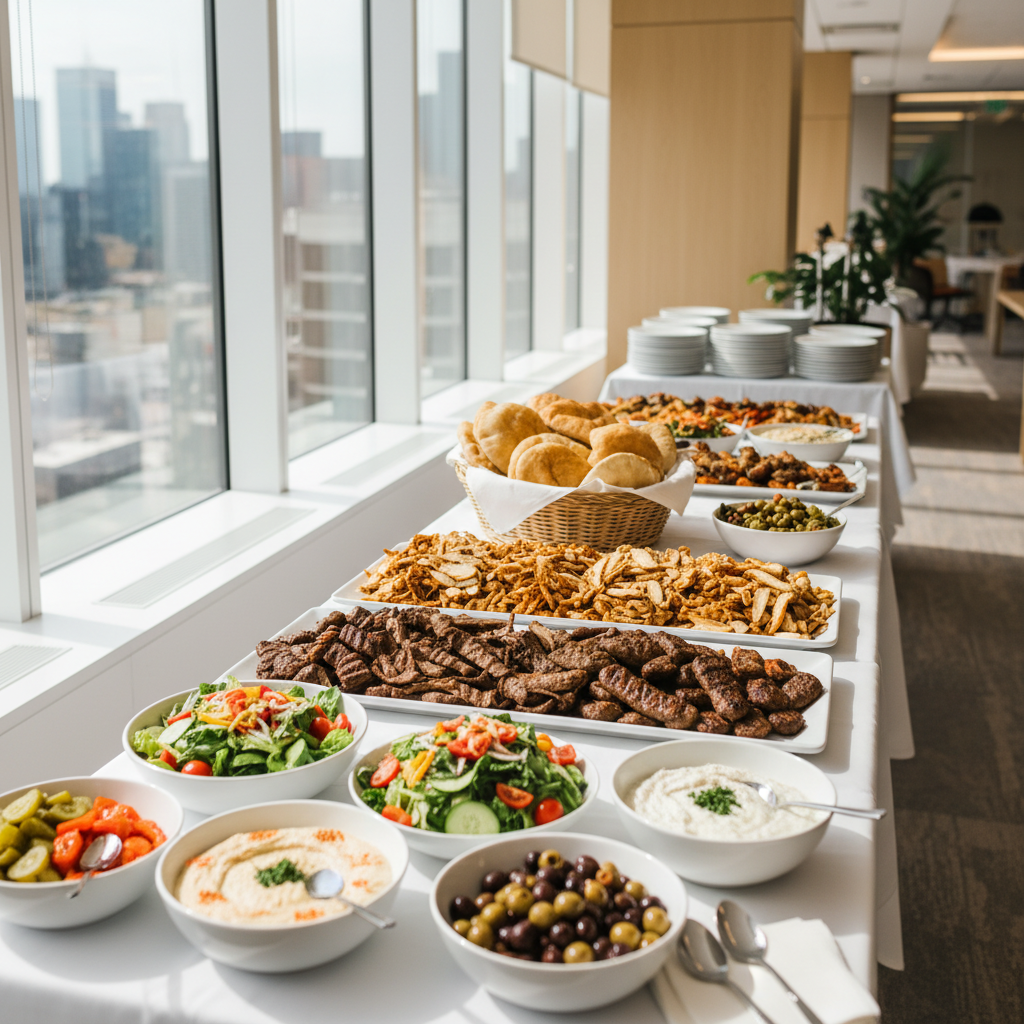
Toronto catering for company events is the organized preparation and delivery of meals tailored to workplace gatherings, meetings, and celebrations. From 898 College St in Toronto, Shawarma Moose provides corporate-friendly menus, reliable delivery, and easy online ordering so office managers can feed teams well, stay on schedule, and handle dietary needs without stress.
By Shawarma Moose • Last updated: 2026-05-13
Quick Summary
Planning corporate meals in Toronto is simpler with a clear process: choose a menu style, estimate portions by headcount, note dietary needs, and lock delivery details. Shawarma Moose streamlines this with online ordering, reliable delivery from Old Toronto, and chef-guided menus built for meetings, workshops, and celebrations.
Here’s what you’ll get in this complete guide and how to use it fast:
- What it is: A plain-English look at corporate catering in Toronto.
- Why it matters: Boost attendance, focus, and morale with the right food.
- How it works: A step-by-step process you can follow today.
- Menu playbook: Buffet, boxed, and mixed formats that actually work.
- Dietary clarity: Halal-friendly options, vegetarian/vegan, and gluten-aware choices.
- Checklists + tools: Headcount, portions, day-of run of show.
What Is Toronto Catering for Company Events?
Corporate catering in Toronto is professional meal service tailored to workplace gatherings—team lunches, board meetings, trainings, town halls, and celebrations. It covers menu planning, prep, safe transport, and on-time setup. Shawarma Moose delivers authentic Turkish flavors with shawarma-focused menus designed for productivity and easy cleanup.
When we say “company events,” we mean practical, on-the-clock moments: all-hands, client meetings, workshops, hack days, and milestone parties. Food needs to be punctual, satisfying, and easy to serve in regular office spaces—no full kitchen required.
- Formats: Buffet spreads, individual boxed meals, or hybrid setups.
- Workflows: Plan → Confirm → Prepare → Deliver → Set up → Clean up.
- Goals: Keep people engaged, fueled, and on schedule.
For teams across Toronto, Mississauga, and Brampton, our catering overview centralizes everything: menus, delivery windows, and service notes for recurring meetings or one-off events.
Why Corporate Catering Matters in Toronto
Great office meals improve turnout, focus, and goodwill. In fast-paced Toronto workplaces, reliable catering keeps agendas tight and reduces downtime. Consistent menus that respect dietary needs build trust, while hot, flavorful food turns routine meetings into team-building moments.
Food decisions have ripple effects. When lunch is late, meetings start late. When options exclude key team members, engagement drops. When cleanup is messy, conference rooms stay blocked. The right plan prevents those issues.
- Attendance & punctuality: On-time delivery anchors packed agendas.
- Morale & equity: Inclusive menus signal care for everyone’s needs.
- Operational flow: Fewer trips out; more time on the actual work.
- Brand moments: Client lunches with authentic flavors make a statement.
Our Old Toronto kitchen focuses on practical details—sturdy packaging, temperature retention, labeled proteins—so organizers don’t have to chase last-minute fixes or manage complicated setups.
How Shawarma Moose Corporate Catering Works
We align menu, headcount, and timing early, then confirm delivery and setup details 24–48 hours before your event. On the day, we arrive on time with labeled proteins, sides, and sauces, set up a clean buffet or boxed station, and leave you with a simple self-serve flow.
Here’s our proven process from our 898 College St base in Old Toronto:
- Discovery: You share headcount, dietary needs, location, and timing. We recommend a format: buffet-style, individual meals, or hybrid.
- Menu lock: Choose protein (chicken, beef, falafel), salads, rice, pita, and sauces. We suggest portions and add-ons for balance.
- Confirmation: We finalize counts and note building access and elevator details.
- Prep & pack: Hot items sealed for temperature; cold items crisp. Labels clarify content.
- Delivery & setup: We place items in a logical flow and brief your coordinator.
- Post-event: Easy self-serve cleanup with minimal waste.
| Phase | What We Do | What You Handle | Timing Guide |
|---|---|---|---|
| Discovery | Map headcount, dietary needs, and flow | Share event goals and constraints | 3–7 days out |
| Menu lock | Recommend proteins, sides, sauces | Approve menu & counts | 48–72 hours out |
| Confirmation | Coordinate access and delivery window | Confirm meeting room & table space | 24–48 hours out |
| Prep & pack | Cook, label, and insulate for transit | Share any last-minute changes | Event morning |
| Delivery & setup | Organize a clean serving line | Assign a point of contact | 30–60 mins pre-start |
Need a flexible option for staggered schedules? Our corporate catering options support rolling lunches and late arrivals without compromising quality.
Local considerations for Old Toronto
- Timing around transit: When planning deliveries near Ossington, allow a few extra minutes for mid-day curbside access.
- Seasonal flow: Winter weather can slow loading; add buffer time for safe setup.
- Parks and offsite: For outdoor team days near Dufferin Grove Park, request extra coolers and compostable serveware.
Catering Types and Menu Approaches
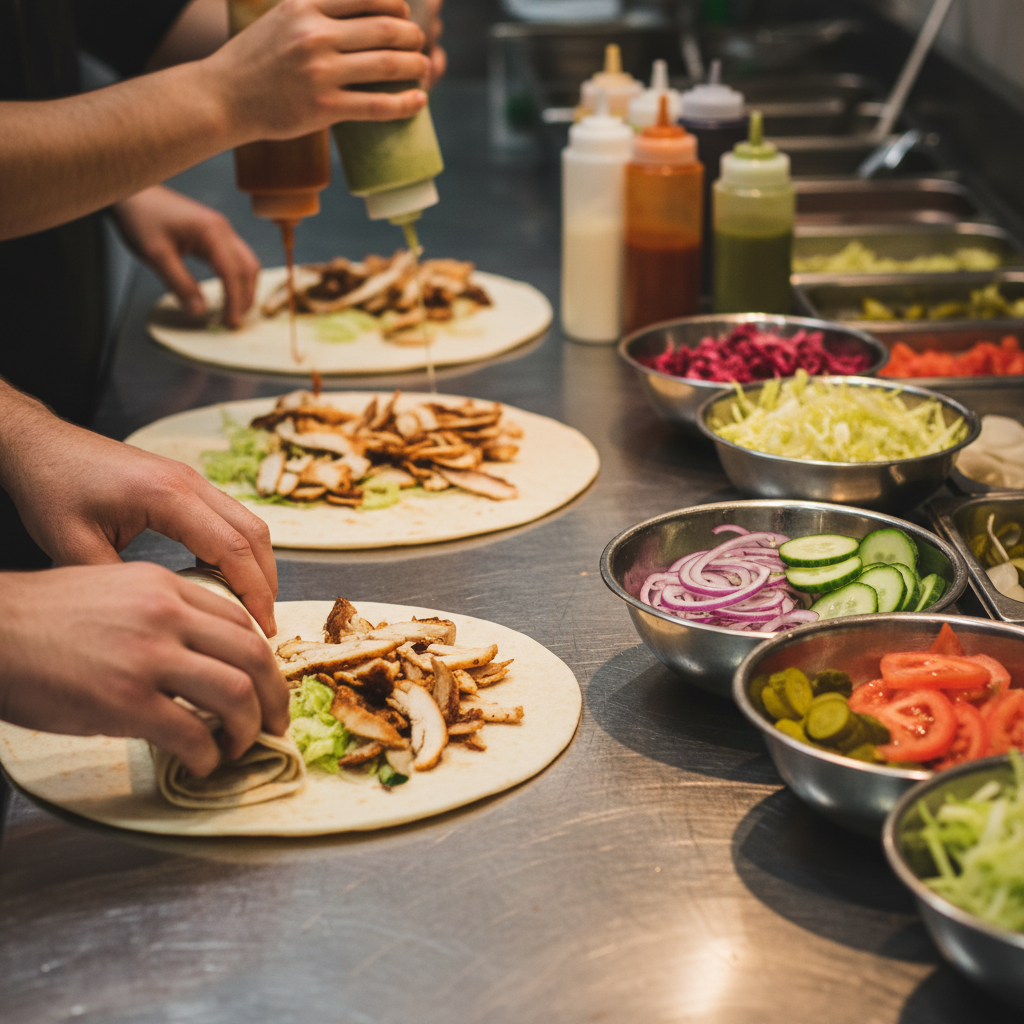
Pick a format that matches your agenda and room: buffet for speed and variety, boxed meals for simplicity and distancing, or a hybrid for mixed schedules. Shawarma Moose menus feature halal-friendly proteins, vegetarian and vegan options, and gluten-aware sides to include everyone.
Buffet spread (most flexible)
- When it shines: 20–150 people, casual team lunches, mixed diets.
- Flow tips: Place proteins first, then grains, salads, sauces, and plates.
- Example menu: Chicken shawarma, beef shawarma, falafel, rice pilaf, fattoush, tabbouleh, hummus, garlic sauce, pickles, warm pita.
- Action: Explore a sample lineup on Catering in Toronto.
Individual boxed meals (frictionless)
- When it shines: Training sessions, client meetings, remote staff drop-ins.
- Flow tips: Alphabetize boxes by last name; keep sauces on the side.
- Example menu: Chicken shawarma wrap with cucumber salad and garlic sauce; falafel wrap with fattoush and tahini.
- Action: See our individual catering options.
Hybrid service (best of both)
- When it shines: Rolling arrivals, back-to-back meetings, multi-floor teams.
- Flow tips: Offer an early buffet plus backup boxes for latecomers.
- Example menu: Buffet proteins + grab-and-go wraps, labeled for dietary needs.
- Action: Compare layouts in our buffet-style office catering guide.
Best Practices for Seamless Office Meals
Lock headcount early, plan 1–1.5 mains per person, and build redundancy for late arrivals. Separate proteins and sauces to keep lines moving and label everything clearly. Confirm building access and table space the day before to avoid delays.
Headcount and portions
- Forecast wisely: Calendar invites plus form responses give truer numbers.
- Plan portions: For mixed appetites, 1–1.5 wraps per person keeps lines smooth.
- Balance plates: Pair proteins with salads and grains to satisfy varied diets.
Dietary inclusion (make it visible)
- Call it out: Label halal-friendly, vegetarian, vegan, and gluten-aware options.
- Cross-contact care: Keep vegetarian/vegan utensils and trays separate.
- Build trust: List major allergens on menu cards and serving labels.
Room setup and flow
- Line logic: Proteins first, then starches, then salads, then sauces.
- Table spacing: Leave at least 3 feet of clearance around serving lines.
- Waste plan: Compostable plates and clear bin signage reduce cleanup time.
Tools, Resources, and Planning Templates
Use a shared headcount sheet, a run-of-show checklist, and a labeled table map. These simple tools cut errors and keep meals on schedule. Shawarma Moose provides portion guidance and labeling templates upon request.
For recurring meetings, create a lightweight playbook you can reuse:
- Headcount tracker: Columns for RSVP, dietary notes, and late arrivals.
- Run-of-show: Delivery window, setup start, handoff, and cleanup times.
- Table map: Where proteins, sides, salads, sauces, plates, and cutlery go.
- Backup plan: Extra wraps/boxes for 10–15% unexpected attendees.
Case Studies: Real Toronto Teams We’ve Fed
From hybrid town halls to department trainings, we’ve supported teams with buffet spreads and boxed meals that travel well and serve fast. These snapshots show how menu choices, labeling, and setup translate to smooth, on-time events across Toronto offices.
Hybrid town hall, 120 attendees
- Goal: Feed on-site staff quickly between two back-to-back sessions.
- Approach: Buffet proteins plus a reserve of labeled boxed wraps.
- Result: Full service in 25 minutes; no line bottlenecks; happy remote drop-ins.
Training day, 40 attendees
- Goal: Simple, quiet setup with minimal mess near equipment.
- Approach: Individual boxed meals, sauces on the side, compostable cutlery.
- Result: 5-minute setup; zero spills; quick cleanup before the next session.
Client strategy lunch, 18 attendees
- Goal: Memorable flavors without a formal plated service.
- Approach: Elevated buffet with chicken/beef shawarma, falafel, fattoush, and hummus.
- Result: Compliments on authenticity; fast service; easy returns to agenda.

Frequently Asked Questions
Corporate catering in Toronto works best when you confirm headcount, diets, and delivery windows early, then choose a format—buffet, boxed, or hybrid—that fits your room and schedule. Here are clear answers to common organizer questions.
What should I include in a company lunch order?
Aim for a balanced mix: two proteins (including a vegetarian/vegan option), one grain, two salads, warm pita, and at least two sauces. Label items for dietary needs and set proteins before salads in the serving line to keep things moving.
How far in advance should I book catering?
For standard meetings, booking 3–5 days ahead is ideal. For larger events, a week gives room for approvals and headcount changes. If your team meets weekly, set a recurring order with flexible counts to reduce admin.
What’s the best format for mixed schedules?
A hybrid works best: run a buffet for the main crowd and keep a reserve of labeled boxed wraps for late arrivals. This keeps lines short and ensures everyone eats—even if meetings run long or traffic delays people.
Can you handle vegetarian, vegan, and gluten-aware diets?
Yes. We routinely provide vegetarian and vegan mains (like falafel) and gluten-aware sides. We keep utensils and trays separate for plant-based items and label everything so guests can choose confidently.
Conclusion: Plan Your Next Toronto Team Meal
Lock your format, confirm headcount and dietary needs, and choose authentic, office-friendly menus. From Old Toronto, Shawarma Moose delivers on-time, clearly labeled spreads and boxes so your team focuses on the work—not the logistics.
- Pick a service style that fits your room: buffet, boxed, or hybrid.
- Estimate portions with simple rules of thumb and add a 10–15% buffer.
- Label clearly; separate plant-based items; place proteins first in the line.
- Confirm delivery windows, building access, and table space a day ahead.
Ready to go? Start with our catering hub, review corporate options, or grab ideas from our Catering in Toronto sample lineup. We’ll help you turn the next meeting into a smooth, satisfying experience.
Key Takeaways
Choose the right format, plan portions by headcount, and label for inclusion. When logistics are simple and food is authentic, meetings run on time and guests feel considered. That’s the foundation of dependable corporate catering in Toronto.
- Buffet for speed and variety; boxes for simplicity; hybrid for mixed schedules.
- 1–1.5 mains per person is a dependable rule of thumb.
- Clear labels, separated utensils, and a logical line reduce friction.
- Confirm delivery, access, and table space the day before.