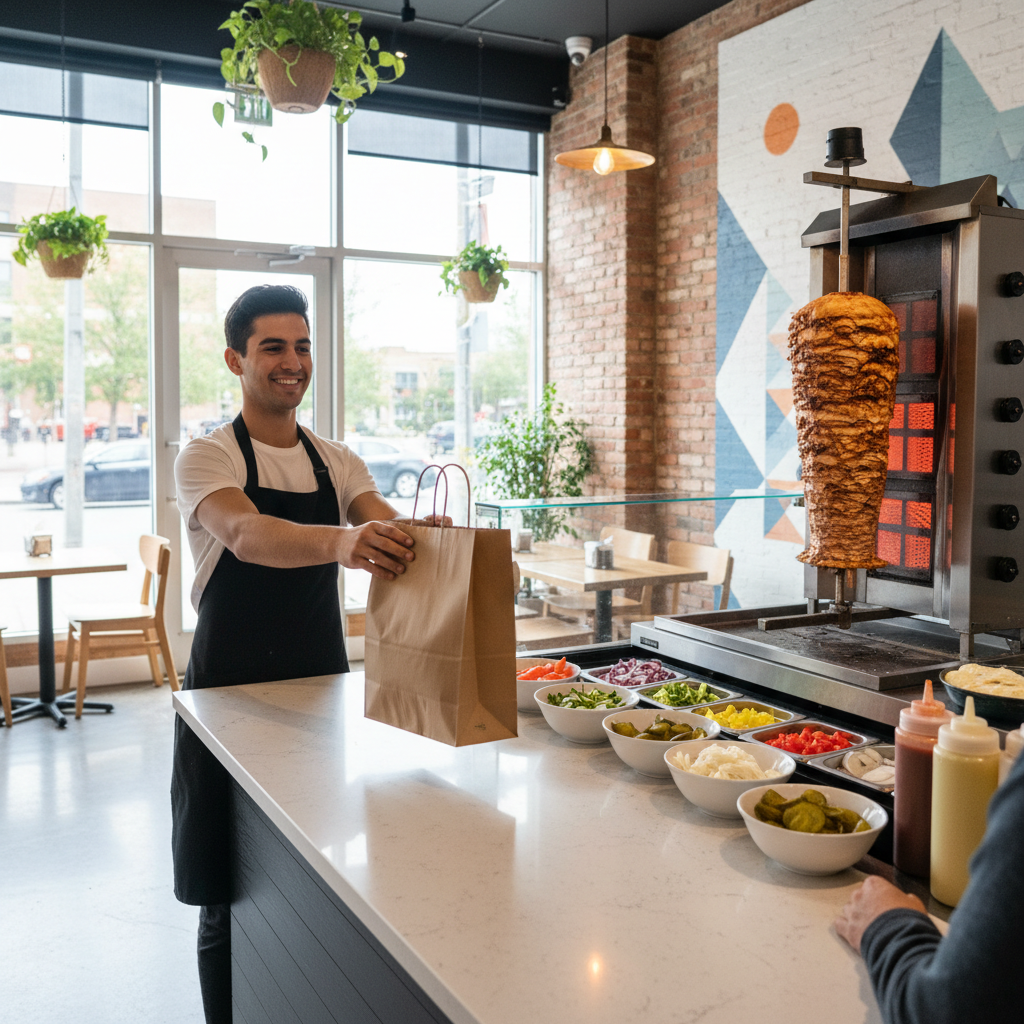
Pickup order convenience vs delivery is the practical comparison of grabbing your food yourself versus having it brought to you. In Toronto, the fastest option often depends on time of day, traffic, and order size. For hot, ready-now meals from Shawarma Moose, pickup typically wins within short distances, while delivery suits larger, coordinated group orders.
By Shawarma Moose • Last updated: 2026-04-27
Introduction
Pickup excels when you want food fast and fresh within a few kilometers, while delivery shines for hands-free convenience and group orders. At Shawarma Moose in Toronto, both options are optimized: order online, choose pickup for speed, or delivery for comfort and coordination.
Shawarma Moose serves Toronto with authentic Turkish flavors, online ordering, and flexible catering. You’re likely deciding between pickup order convenience vs delivery because speed, freshness, and hassle matter. We’ll compare both options using real scenarios from our kitchen and local conditions we see daily.
- Understand where pickup truly saves time and preserves texture.
- Know when delivery is simpler for families, office lunches, and events.
- Use our quick table, top pick, and 9 more entries to decide fast.
- Apply a step-by-step choosing framework you can reuse in seconds.
Here’s the thing: no single choice wins every time. But with a few rules of thumb—distance, timing, order size—you’ll make the right call more than 90% of the time. We’ll show you how that plays out in Toronto.
Quick Summary
Choose pickup for speed inside short distances and tight schedules. Choose delivery for comfort, coordination, and when carrying multiple meals is impractical. For Toronto diners, pickup often lands hot food in 15–25 minutes; delivery better fits multi-person orders and weather-sensitive nights.
In our experience fulfilling thousands of Toronto orders, three signals drive the best choice: distance, timing, and carrying capacity. Short trips and solo meals favor pickup. Group meals and inclement weather lean delivery. When in doubt, check the quoted ETA at checkout and your calendar buffer.
Local considerations for Toronto
- Winter slows driving, parking, and residential access; pickup may still be faster within close range if you’re already out.
- Rush periods (lunch on weekdays, dinner on weekends) extend delivery ETAs; pickup windows are more predictable if you order ahead.
- Event nights and city festivals spike demand; pre-scheduling delivery or placing timed pickup orders helps lock in reliability.
Quick Comparison Table
Use pickup when you’re within a short drive and want maximum heat and crunch. Use delivery when comfort, group coordination, or bad weather outweighs speed. The table below summarizes when each wins on freshness, timing, effort, and reliability.
| Criteria | Pickup | Delivery |
|---|---|---|
| Speed (typical) | Often 15–25 minutes for solo/duo meals nearby | Commonly 30–50 minutes depending on traffic/time |
| Freshness/Texture | Max heat and crisp, shortest bag time | Good with proper packaging; longer travel softens crisp |
| Effort | Requires travel/parking and pickup timing | No travel; minimal effort |
| Best For | Individuals, couples, tight schedules | Families, offices, multi-bag orders |
| Reliability Signals | Quoted pickup time + your travel time | ETA + driver assignment + live map |
| Weather Impact | Low if you’re already out; parking can vary | Higher during storms; ETAs may widen |
| Scheduling | Order-ahead holds food near target time | Pre-schedule windows for events |
From our kitchen view, short bag times directly correlate with crisp textures on fries and pitas. When a shawarma plate sits 10–15 minutes in a sealed bag, steam softens surfaces more than when it’s picked up promptly. That’s why nearby pickup frequently feels “extra fresh.”

Our Top Pick
Our top pick is pickup within a short distance when you want heat, crunch, and control over timing. For hot shawarma plates or wraps, reducing transit minutes preserves texture. Delivery is still excellent for larger or coordinated group orders.
If you’re within a few kilometers and time is tight, pickup order convenience vs delivery tilts toward pickup. It compresses the total timeline: kitchen prepares, you arrive, and food hits your table near peak temperature. We’ve seen pickup shave 10–20 minutes off quoted delivery windows on weeknights.
- Order online in advance: Use our online ordering to reserve your pickup time.
- Plan arrival: Aim to arrive within 5 minutes of the ready time to minimize bag steam.
- Carry properly: Keep bags upright; vent briefly at home to release steam before plating.
As an example, a chicken shawarma wrap and fries combo is especially sensitive to time-in-bag. Pickup often means fries arrive crisper and wraps hold better structure. Delivery still works great—particularly if you’re juggling kids, meetings, or weather.
Entries #2–10: Best Situations for Pickup vs Delivery
Use this scenario list to choose fast. If you need speed and you’re close, pick pickup. If you need hands-free convenience, coordination, or you’re carrying many meals, choose delivery. Each scenario below calls a clear winner and gives pro tips.
Entry #2: Office lunch for 5–12
- Winner: Delivery, for hands-free coordination and multiple bags.
- Why: One driver manages transport; you manage meeting prep.
- Pro tip: Pre-schedule the window to align with your agenda; include notes for reception or security.
We routinely send grouped bags with clear labeling for office drops. For more structure, consider our private catering guide when headcount rises above a dozen and timing precision matters.
Entry #3: Late-night cravings
- Winner: Delivery, if you’re settled at home after a long day.
- Why: Safety and comfort outweigh short freshness gains.
- Pro tip: Choose items that hold heat well—shawarma plates retain warmth better than delicate add-ons.
When you’re winding down, delivery removes the need to drive and park. In our logs, late-night delivery ETAs vary, but the comfort tradeoff is usually worth it compared with a quick drive.
Entry #4: Family dinner for 4
- Winner: Delivery, unless you’re already out.
- Why: Two adults wrangling schedules and kids often prefer doorstep convenience.
- Pro tip: Add a large salad and extra pitas; family-style sides absorb minor ETA variance without stress.
For family meals, we pack proteins and sides to arrive warm and organized. If you’re near the restaurant anyway, pickup can reclaim 10–15 minutes on busy evenings.
Entry #5: Rain or snow days
- Winner: It depends—pickup wins if you’re already driving nearby; delivery wins if roads are slow and you’re home.
- Why: Weather elongates every minute from kitchen to table; minimize outdoor time based on your situation.
- Pro tip: Preheat plates or use a low-temp oven at home to buffer warmth on arrival.
We see ETAs widen on storm days across Toronto. Pickup stays quick for customers already out running errands; delivery is better if you’re cozy at home and prefer zero travel.
Entry #6: Tight 30-minute break
- Winner: Pickup.
- Why: Predictable kitchen prep + your travel beats uncertain driver assignment.
- Pro tip: Order ahead and walk in at the ready time; this often nets you food in under 20 minutes door-to-door.
When time really matters, controlling your own transit is clutch. We regularly quote pickup ready times around standard prep windows so you can sync precisely with your break.
Entry #7: Big game night gathering
- Winner: Delivery for 8+ portions; pickup for small watch parties if someone volunteers.
- Why: One cohost can handle a pickup run, but delivery centralizes the logistics when headcount climbs.
- Pro tip: Use grouped platters and label plates; it speeds serving during kickoff.
On major event nights, order volume spikes citywide. We recommend placing orders earlier than usual and securing a delivery window. If you opt for pickup, designate one runner and bring an insulated bag.
Entry #8: Dietary customizations
- Winner: Tie. Both are great if you add clear notes at checkout.
- Why: Our kitchen follows precise build notes for pickup and delivery alike.
- Pro tip: Keep dressings on the side for delivery; request venting to reduce steam on crisp items.
We routinely build plates with detailed preferences. Whether you pick up or schedule delivery, spell out instructions in the order notes for the best match.
Entry #9: No parking nearby
- Winner: Delivery.
- Why: If curb access is tough, save the parking hunt and let the driver come to you.
- Pro tip: Add drop-off instructions and buzzer codes to prevent delays at your building entrance.
Urban blocks shift by the hour. When parking is scarce, delivery trims uncertainty from your timeline and reduces the chance of food cooling while you circle for a spot.
Entry #10: Corporate catering planning
- Winner: Delivery or full-service catering depending on size and schedule.
- Why: Coordinated delivery windows streamline setup; catering adds menu planning and equipment guidance.
- Pro tip: For recurring meetings, standardize portions and serving times. Consider our catering guide for smoother planning.
When office calendars are packed, a consistent weekly delivery cadence simplifies everything. For larger events, our catering team can help you pick platters that travel and serve efficiently.

How to Choose Pickup or Delivery (Fast)
Check three signals: distance, schedule buffer, and bag count. If you’re close, rushed, and carrying one or two meals, pick pickup. If you’re farther, coordinating several bags, or prefer zero travel, choose delivery. Confirm the quoted ETA and align it with your calendar.
Step-by-step framework
- Estimate distance: Inside a short drive or walk? Pickup gains freshness and control.
- Check time buffer: Under 30 minutes free? Pickup is predictable; beyond that, delivery can be more comfortable.
- Count bags: Two or fewer bags = pickup-friendly. Many bags = delivery-friendly.
- Look at weather: Bad conditions extend ETAs; let delivery absorb the headache if you’re home.
- Lock the plan: Place the order and set a reminder for pickup arrival or delivery window.
In our Toronto operations, we see the best outcomes when customers apply a simple rule: the tighter your schedule and the closer you are, the stronger the pickup case. The more complex your order and the more variables in play, the more delivery shines.
Want a primer on optimizing online orders generally? Our team’s notes in this online ordering best practices piece cover accuracy, timing, and handoffs that help both pickup and delivery.
Ordering Guide (What to Get for Each Mode)
For pickup, choose items that reward peak crisp and quick plating—wraps, fries, and freshly grilled proteins. For delivery, select balanced plates, salads, and sauces on the side. Platter-style builds travel best and simplify serving at home or the office.
Great for pickup
- Chicken shawarma wrap with garlic sauce for a tight-timing lunch.
- Beef shawarma wrap plus a small fries—arrives crisp when bag time is short.
- Mixed shawarma plate if you’re already nearby and want maximum heat.
Great for delivery
- Falafel plate with tahini on the side; textures hold nicely in transit.
- Beef shawarma plate and a salad; balanced portions travel well.
- Family-style platters for offices or group dinners; easy to label and serve.
If you’re planning a larger meeting or celebration, our catering overview outlines how we streamline menu planning, timing, and dietary notes for Toronto teams.
Friendly tip: If you’re unsure, start with pickup for solo meals to learn your door-to-door timing. Then graduate to delivery for bigger, coordinated orders. Both modes are available through our online ordering.
Frequently Asked Questions
Pickup is usually faster at short range; delivery is easier for multi-person orders and bad weather. Order ahead, check ETAs, and match the mode to your schedule. These FAQs cover the most common decisions our Toronto customers face.
Is pickup always faster than delivery?
Not always. Inside a short drive or walk, pickup often wins by 10–20 minutes. During heavy traffic or severe weather, delivery may be similar or slower. Check the quoted ready time for pickup and the live ETA for delivery to decide.
What travels best for delivery—wraps or plates?
Plates generally travel better because proteins and sides hold heat well, and sauces can stay separate. Wraps are excellent for pickup when bag time is short. For delivery, request sauce on the side and vent briefly on arrival.
How far is too far for pickup?
If you’ll spend more time driving and parking than the quoted delivery ETA, choose delivery. For many Toronto customers close to our restaurant, pickup stays efficient, especially when you order ahead and time your arrival to the ready window.
Can I pre-schedule pickup or delivery?
Yes. Order ahead online, select your preferred pickup time or a delivery window, and add clear notes for building access. Pre-scheduling stabilizes timing during rush periods and event nights across the city.
Methodology
We evaluated pickup vs delivery using prep time, bag time, travel distance, order size, and Toronto traffic patterns. Data points come from our day-to-day operations, online order timestamps, and customer feedback on freshness and reliability.
Our team monitors quoted ready times, actual pickup arrivals, and delivery ETAs to understand where minutes accumulate. We also track how certain dishes behave over time: fries, for instance, are more sensitive to steam than proteins or salads. Combining these observations yields reliable rules of thumb.
- Prep window: Typical ready times for common items fit into predictable ranges.
- Bag time: Shorter bag times correlate with crisper textures.
- Transit uncertainty: Parking, traffic, and weather add variance to delivery.
- Order complexity: More bags favor delivery; fewer bags favor pickup.
We refine guidance with real customer input and staff notes. While every city block differs, these patterns hold consistently across most Toronto orders we fulfill.
Key Takeaways
Close and rushed? Go pickup. Coordinating people or bags? Go delivery. Order ahead, check ETAs, and match items to the mode. That’s the fast path to hot, reliable meals in Toronto—every time.
- Pickup maximizes heat and crisp when you’re nearby and on a schedule.
- Delivery simplifies multi-person meals, weather challenges, and parking constraints.
- Order-ahead plus clear notes improves outcomes for both modes.
- Plates travel best; wraps and fries love short bag times.
- Use distance, buffer, and bag count to decide in under 10 seconds.
Conclusion
There’s no universal winner. In Toronto, pickup wins for speed and texture at short range; delivery wins for coordination and comfort. Use distance, time buffer, and order size to choose the better mode for every meal.
When you stack everything together—distance, schedule, weather, bag count—the answer becomes clear. For many solo or duo meals, pickup order convenience vs delivery tilts to pickup. For families, offices, and stormy nights, delivery is the reliable ally. Either way, Shawarma Moose has you covered.
Ready to eat? Order online for pickup or delivery. For teams and events, explore our catering guidance to plan like a pro.
For more on delivery timing and coordination, see this short note on getting shawarma delivered fast.