Questions to ask catering companies are the essential prompts that protect your event’s food quality, timing, and guest experience. At 898 College St in Old Toronto, Shawarma Moose caters meetings and celebrations with authentic Turkish flavors and flexible service. Use this guide to vet any caterer—ourselves included—so your team eats well and on time.
By Shawarma Moose • Last updated: 2026-05-07
Quick Summary
Ask about menu fit, dietary accommodations, food safety, delivery logistics, service style, staffing, tastings, reliability signals, and contract terms. Prioritize clarity: who is eating what, how it’s prepared, when it arrives, and who owns each step. A clear Q&A prevents shortages, delays, and allergen risks.
Here’s a fast overview of how to evaluate a caterer for a meeting, party, or town hall in Toronto. Use it as your mental checklist before you book.
- Menu & portions: Will the menu satisfy your mix of eaters and appetites? What are the default portion sizes?
- Dietary needs: How are vegan, vegetarian, gluten-sensitive, and halal guests accommodated?
- Food safety: How is hot food kept hot and cold food kept cold during transport and service?
- Logistics: Who delivers, sets up, labels, and cleans up? What’s the arrival window?
- Service style: Buffet, family-style trays, or individual boxed meals—what fits your space and agenda?
- Tastings: Can you taste before a large order? What samples are provided?
- Reliability: What happens if attendance changes, weather disrupts, or a speaker runs long?
- Terms: What are lead times, minimums, and change windows? No pricing here—just policy clarity.
What are the right questions to ask catering companies?
Start with the essentials: menu suitability, dietary accommodations, food safety practices, delivery and setup timing, service style, staffing, tasting options, reliability safeguards, and contract terms. These questions reveal operational maturity, reduce risk, and ensure your guests get hot, fresh, accurately labeled food.
Think of your question list as risk insurance. The right prompts quickly show whether a caterer can feed your crowd safely, on schedule, and with the flavors you promised. At Shawarma Moose, our team welcomes detailed questions because they surface details early and prevent last‑minute guesswork.
- Menu fit: Which proteins and sides best suit our group’s preferences and appetite mix?
- Dietary coverage: How will you provide vegan/vegetarian trays and clearly labeled allergen information?
- Halal handling: What safeguards keep halal items separate from non‑halal during prep and service?
- Hot holding: What equipment maintains safe serving temperatures from kitchen to table?
- Arrival window: What’s the exact delivery window and contingency if traffic or elevators slow things down?
- Service style: For our room, would buffet, family‑style, or boxed meals move guests fastest?
- Staffing: How many attendants handle setup, replenishment, and breakdown for our headcount?
- Tastings: Can we sample the shawarma proteins and sides before confirming a large order?
- Reliability: What redundancies cover vehicle, staffing, or supply hiccups?
- Change policy: What’s the last day to adjust headcount or menu items?
When planners in Toronto bring us these questions, we respond point‑by‑point, including labeling plans and a timeline for building trays, departure, arrival, setup, and teardown. That transparency sets accurate expectations on both sides.
Why asking the right catering questions matters
These questions prevent the three biggest event failures: cold food, misfit menus, and late setups. Clear answers align expectations, reduce allergen exposure, and protect your agenda. A five‑minute Q&A now can save 30 minutes of chaos later.
Great events hinge on basics done well: hot entrees, crisp salads, and a smooth flow. In fast‑moving office settings, a late lunch can derail an all‑hands. A poorly labeled tray can send a vegan to the dessert table—hungry and frustrated. Good questions surface these risks before they happen.
- Guest satisfaction: People remember warm bread, flavorful shawarma, and easy choices. They also remember if lunch is 20 minutes late.
- Allergen safety: Labeled trays and separate serving utensils help protect guests with sensitivities.
- Time efficiency: The right service style can cut lines in half and keep your agenda on track.
- Operational predictability: A documented arrival and setup flow keeps facilities and reception in sync.
In our experience serving Toronto offices, the single biggest stress reliever is certainty—knowing when the courier hits reception, where the buffet runs, and how quickly guests move through the line. Questions create that certainty.
How to evaluate a caterer: step-by-step
Evaluate caterers in five steps: define requirements, shortlist fits, run a structured Q&A, sample core menu items, and confirm logistics in writing. This sequence keeps decisions objective, aligns stakeholders, and prevents last‑minute friction.
Use this process to compare any two or three candidates on even footing. It’s simple, fast, and avoids decision fatigue.
- Define requirements: Headcount, date/time, dietary needs, room layout, and preferred service style.
- Shortlist: Pick 2–3 providers whose menus align with your audience and location.
- Structured Q&A: Send the same question set to each provider for apples‑to‑apples answers.
- Taste test: Sample signature proteins, sides, and a dessert to validate flavor and texture.
- Written logistics: Confirm arrival window, setup plan, labeling, and cleanup responsibilities.
| Step | What to capture | Example at Shawarma Moose |
|---|---|---|
| Requirements | Headcount, dietary mix, service style, room flow | 75 guests, 25% vegetarian, buffet line along west wall |
| Shortlist | 2–3 menus that fit tastes and logistics | Shawarma + Turkish mezze focus near Old Toronto |
| Structured Q&A | Same questions sent to all providers | Halal handling, labeling plan, arrival window, staffing |
| Taste test | Validate flavor, tenderness, and seasoning | Sample chicken shawarma, beef doner, grilled veg, hummus |
| Written logistics | Arrival, setup diagram, utensils, cleanup roles | Deliver 11:30–11:45, buffet signs, separate vegan tongs |
Want a framework you can reuse? Our internal catering planning guide walks through room flow, timing, and staffing so your meeting stays on schedule.

Service styles and ordering approaches compared
Choose buffet for speed and variety, family‑style trays for collaborative tables, or boxed meals for maximum convenience and dietary clarity. Match the format to your room, agenda, and guest mix to reduce lines and confusion.
Service style determines how fast people eat, how tidy the room feels, and how clearly allergens are separated. Here’s how the common approaches stack up for offices and private events across Toronto.
Buffet line (fast and flexible)
- Best for: 20–150 guests, open spaces, short lunch windows.
- Benefits: Fast throughput, guests choose portions, easy to replenish.
- Consider: Line management and clear labeling are key.
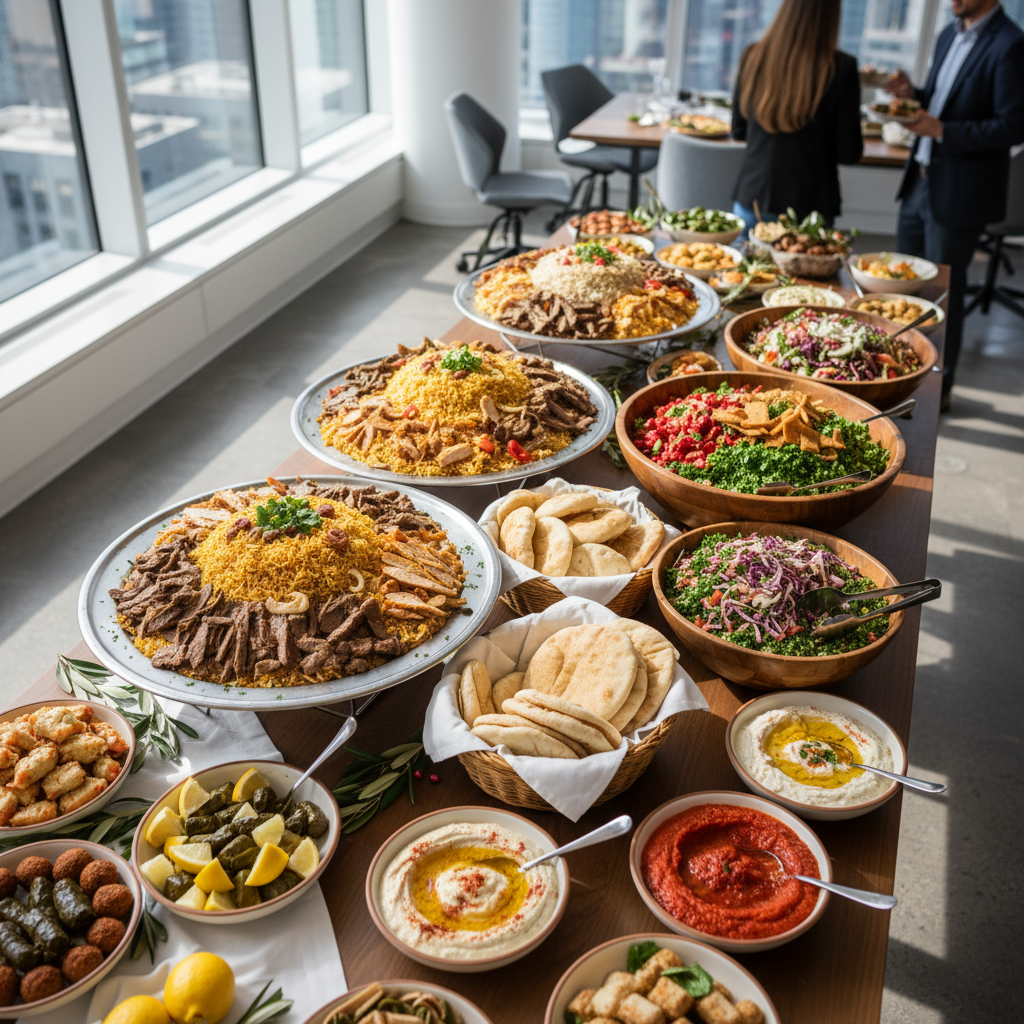
- Shawarma Moose fit: Our buffet‑style office catering features shawarma proteins, rice, salads, pita, and dips with signage.
Family‑style trays (casual, communal)
- Best for: 10–40 guests seated at tables.
- Benefits: Shared platters spark conversation and reduce lines.
- Consider: Add table tents to indicate vegan, halal, and gluten‑friendly options.
- Shawarma Moose fit: Our catering trays keep proteins and sides separate with dedicated utensils.
Individually boxed meals (maximum clarity)
- Best for: Breakout rooms, training sessions, and hybrid events.
- Benefits: Zero lines, portable, labels per person for dietary needs.
- Consider: Give a name list so boxes match attendees.
- Shawarma Moose fit: We pack shawarma bowls and wraps with clear labels for vegan/vegetarian and halal selections.
If you’re comparing formats, our Toronto corporate catering guide overview is a helpful cross‑check on room and agenda fit.
Menu planning and dietary needs
Build a core menu around two proteins, a vegetarian centerpiece, two sides, salad, bread, and a dessert. Reserve 25–35% of portions for vegetarian or vegan guests, and label allergens on every tray. This balances choice with throughput.
Balanced menus please mixed audiences and move lines faster. Turkish‑inspired spreads work especially well because guests can build plates their way.
- Core proteins: Chicken shawarma, beef doner; add a grilled vegetable or falafel option.
- Vegetarian centerpiece: Hearty grilled vegetable medley or falafel with tahini.
- Sides: Fragrant rice, roasted potatoes, or bulgur; rotate in seasonal vegetables.
- Salads: Chopped salad or shepherd’s salad for freshness and crunch.
- Bread & dips: Warm pita with hummus, baba ghanoush, and garlic sauce.
- Dessert: Simple sweets like baklava squares or fruit platters.
At Shawarma Moose, our build‑your‑own catering format lets planners tune proteins, sides, and vegan items, then match serving style to the room and schedule.
Food safety, allergens, and halal handling
Ask how hot and cold foods are held during transport, how allergens are labeled, and how halal items are prepared and kept separate. Clear labeling and dedicated utensils reduce risk and build guest trust.
Food safety and respect for dietary practice sit at the center of great catering. While regulations vary by jurisdiction, the fundamentals are universal: strong hygiene, temperature control, and precise labeling.
- Transport control: Confirm insulated carriers and appropriate holding equipment from kitchen to service.
- On‑site setup: Place hot and cold items separately with serving utensils for each tray.
- Allergen clarity: Label dairy, nuts, gluten, and common allergens on every platter.
- Halal confidence: Keep halal proteins separate in prep and service with distinct utensils and signage.
If your workforce includes specific dietary observances, request a brief written plan to document how cross‑contact is avoided and who monitors labeling during service.
Delivery logistics and on‑site flow
Lock in a tight arrival window, a named point of contact, and a setup path that won’t block doors or elevators. Good logistics shorten lines, reduce mess, and keep your agenda moving on time.
For downtown buildings and Old Toronto offices, timing and access make or break lunch. A precise plan avoids elevator traffic jams and hallway bottlenecks.
- Arrival window: Align delivery 15–30 minutes before guests eat for optimal temperature and freshness.
- Room diagram: Sketch where tables, beverages, and plates will sit to guide setup.
- Flow design: Position utensils first, proteins next, then sides and salads to speed choices.
- Signage: Use clear cards for halal, vegan, vegetarian, and gluten‑friendly options.
- Cleanup plan: Clarify who removes trays, bags, and recyclables after service.
For a broader look at workflow options, this office catering overview outlines practical ways to streamline lunch service in busy buildings.

Local considerations for Old Toronto
- Plan for midday traffic and elevator waits near Ossington; schedule arrivals 20 minutes earlier than suburban sites.
- Spring–fall patios by Dufferin Grove Park add space; confirm shade for salads and beverage ice.
- Some buildings require vendor sign‑in; share your loading dock instructions with the caterer the day before.
Staffing, equipment, and setup details
Clarify who brings tables, chafers, utensils, signage, and linens—and who stays to replenish. The right staffing mix keeps food hot, lines short, and trays tidy throughout service.
Equipment and staffing transform a good menu into a great experience. Under‑staffed buffets stall, while well‑tended lines feel seamless and generous.
- Chafers and heat: Ensure adequate hot holding for proteins and rice.
- Utensils and serveware: Tongs and spoons dedicated per tray minimize cross‑contact.
- Signage and labels: Clear cards reduce questions and speed lines.
- Attendants: One attendant can typically manage 30–50 guests per line.
- Breakdown: Define who clears trays and when the room returns to meeting‑ready.
Our corporate catering team documents setup diagrams and replenishment roles so leaders can focus on agenda—not plates.
Tastings, samples, and reliability signals
Request a tasting of key items and ask for a written logistics plan. Look for fast, specific replies, clear allergen labeling, and contingency thinking—reliability shows up before the food does.
Tastings and communication style are strong proxies for event performance. Providers who respond quickly, label clearly, and suggest useful tweaks will likely show up the same way on event day.
- Focused tasting: Sample your exact proteins and sides, not substitutes.
- Label proof: Ask for example labels showing halal, vegan, and allergen notes.
- Timeline draft: Request an outline from departure to cleanup to see the plan on paper.
- Contingencies: Ask how the team handles traffic delays or room changes.
If you want a second perspective on menu fit or service style, this halal catering overview discusses options many Toronto teams consider when serving diverse groups.
Terms, lead times, and change policies (no pricing)
Clarify order lead times, minimum headcounts, and last‑day change rules. Policy transparency prevents surprise constraints and keeps your team aligned when attendance shifts.
Strong policies help planners adapt without drama. You’ll move faster when everyone knows which adjustments are easy and which require earlier notice.
- Lead time: Confirm when final headcount and menu selections are due.
- Minimums: Understand any minimum order size or item counts.
- Changes: Note the final day for flavor or quantity adjustments.
- Delivery access: Provide loading instructions, contact names, and elevator details in advance.
- Cancellations: Ask about rescheduling flexibility for weather or venue issues.
When you’re ready to plan, our Toronto catering page outlines service styles, menu building blocks, and what we handle on site.
Tools and resources: checklists and templates
Use a standardized question sheet, a one‑page event brief, and a setup diagram. Reusing the same tools speeds decisions and keeps details consistent across vendors and venues.
Here are simple tools we see planners rely on week after week in Toronto offices and private venues.
- Caterer question sheet: One page covering menu, dietary, safety, logistics, staffing, tastings, and policies.
- Event brief: Date, headcount, schedule, room diagram, access notes, and points of contact.
- Label list: Final menu with allergen and dietary tags to copy onto tray cards.
- Setup diagram: Buffet table order and traffic flow.
- Debrief doc: Note what guests loved and what you’d adjust for next time.
For more planning context, our post on ordering shawarma online explains timing, packaging, and how to keep wraps warm for transport across the city.
Need a quick recommendation? Tell us your headcount and dietary mix, and our team will suggest a menu and service style in minutes—see corporate catering details.
Case studies: Toronto teams using Shawarma Moose
Real examples show how questions translate to smooth events. These snapshots highlight menu choices, labeling, delivery windows, and flow—all driven by a strong Q&A up front.
These brief scenarios mirror the most common requests we serve from Old Toronto through the wider metro.
1) 40‑person product sprint lunch
- Goal: Fast buffet line within a 45‑minute break.
- Menu: Chicken shawarma, grilled vegetables (vegan), rice, chopped salad, pita, hummus, baklava.
- Questions that mattered: Arrival window, vegan labeling, separate utensils.
- Outcome: Guests moved through the line in 7–8 minutes; managers returned to agenda on time.
2) 120‑guest town hall, mixed dietary needs
- Goal: Keep momentum between sessions, minimize waste.
- Menu: Chicken and beef shawarma, falafel, rice, roasted potatoes, salad duo, dips, fruit.
- Questions that mattered: Two buffet lines vs. one, signage placement, replenishment staffing.
- Outcome: Two mirrored lines halved waits; labeled vegan and halal trays boosted confidence.
3) 25‑person leadership offsite (boxed)
- Goal: Zero mess; executive presentations continued during lunch.
- Menu: Individually labeled shawarma bowls (vegan, vegetarian, halal), cookies, bottled beverages.
- Questions that mattered: Name‑labeled boxes, delivery directly to breakout rooms.
- Outcome: No lines, tidy tables, exactly the right box in each room.
4) Weekend family celebration in a condo party room
- Goal: Casual, celebratory feel with minimal cleanup.
- Menu: Buffet trays with shawarma proteins, rice, salads, warm pita, and dips; baklava platter.
- Questions that mattered: Elevator access timing, parking instructions, post‑event cleanup plan.
- Outcome: On‑time delivery, smooth setup, leftovers packed into containers guests could take home.
For more menu ideas beyond shawarma, explore why many workplaces opt for Turkish spreads in our short piece on Turkish cuisine for corporate events.
Frequently Asked Questions
Planners ask about lead time, dietary accommodations, setup support, and how to minimize disruption during meetings. Here are concise answers you can reuse in your internal briefs.
How far in advance should I book catering for an office lunch?
Book as soon as your date and headcount range are known. For common weekdays, a few business days is often fine; for large all‑hands or complex menus, provide more lead time so dietary labeling, staffing, and logistics are rock solid.
What’s the best service style for short lunch breaks?
Buffet lines with mirrored stations move people fastest. Boxed meals eliminate lines altogether but reduce on‑the‑spot choice. Match the format to your room and agenda length.
How do you handle halal, vegan, and gluten‑friendly needs together?
We separate prep and service for halal items, create dedicated vegan/vegetarian trays, and label allergens on every platter. Distinct utensils and clear signage reduce cross‑contact and keep choices obvious for guests.
Can I taste the menu before committing to a large order?
Ask for a focused tasting of your exact proteins and sides. Sampling the real menu—shawarma proteins, sides, and a dessert—lets you validate flavor and texture and align on final labeling.
Related Articles and resources
Deepen planning skills with practical guides on room flow, menu building, and setup diagrams. Internal resources and local overviews help you tailor service style and timing to your space and schedule.
For a planning playbook, see our short article on making catering feel easy. If you’re exploring broader office trends, this corporate catering overview offers additional context on service styles and scheduling. When you’re ready to customize, start with build‑your‑own catering to match your team’s preferences.
Key takeaways
Align on menu, dietary needs, logistics, service style, staffing, tastings, reliability, and policies before you book. The right questions create fast lines, safe service, and satisfied guests.
- Use a consistent question sheet to compare providers on equal footing.
- Pick service style to fit the room and agenda, not just the menu.
- Demand clear labeling and separate utensils for allergens and halal.
- Lock in arrival windows and a documented setup path.
- Capture learnings in a debrief so every event improves the next.
Conclusion: turn questions into confidence
A short, structured Q&A with your caterer removes guesswork and delivers hot, fresh, clearly labeled food on time. Use this guide to standardize decisions and run smoother events, week after week.
When the basics are right—menu fit, safe handling, smart setup—the rest feels effortless. If you want a quick recommendation for your next Toronto event, our team can suggest a menu and service style in minutes via the Toronto catering page.