Corporate event food planning checklist refers to a structured, step-by-step list that ensures every meal detail is covered for meetings and company events. It defines menu choices, portions, dietary needs, logistics, and timing. For Toronto teams, using a checklist with a trusted caterer like Shawarma Moose streamlines ordering, reduces stress, and helps every attendee feel taken care of.
By Shawarma Moose • Last updated: 2026-04-23
Overview at a Glance
A corporate event food planning checklist organizes your headcount, menu, dietary needs, delivery or pickup timing, and on-site setup. Start with goals, confirm portions, pick service style, and lock logistics one week out. In Toronto, partner with a reliable caterer so your team eats well and meetings stay on schedule.
This complete guide distills what fast-moving office teams need from kickoff call to post-event feedback. You’ll find plain-language definitions, an action-ready checklist, a step-by-step process, menu formats, dietary and allergen protocols, tools, and real examples drawn from Shawarma Moose’s Toronto corporate catering work.
- What a corporate event food planning checklist includes and why it matters
- Step-by-step timeline from 30 days out to day-of service
- Buffet, boxed meals, and build-your-own shawarma bar compared
- Dietary and allergen labeling process your team can trust
- Portion planning, delivery logistics, and on-site flow
Use the table of contents to jump to what you need now, then bookmark this page for your next meeting.
- What is the checklist?
- Why planning matters
- Step-by-step process
- Menu types and styles
- Dietary & allergens
- Portions & logistics
- Tools & resources
- Case studies
- Best practices
- FAQ
What Is a Corporate Event Food Planning Checklist?
A corporate event food planning checklist is a structured list that captures headcount, menu, dietary needs, service style, delivery or pickup details, setup, and cleanup. It keeps stakeholders aligned, prevents last‑minute surprises, and ensures every guest is served appropriately and on time.
Think of the checklist as your single source of truth. It aligns event hosts, admins, facilities, and the caterer around one plan. When we support Toronto companies, the same format works for a 10‑person standup or a 300‑person all‑hands—because the core data stays consistent.
- Core fields: event purpose, date/time, headcount, dietary restrictions, menu selections, service style, delivery window, building access notes, setup plan, cleanup plan.
- Attachments: room layout sketch, run-of-show, quick seating notes, and a phone tree with day-of contacts.
- Status checks: order placed, confirmations received, labels approved, utensils/servingware verified, backup trays noted.
When you hear “corporate event food planning checklist,” think repeatable clarity. You can reuse and adapt it for weekly lunches, trainings, or client demos—keeping the brainwork light and the results consistent.
Why Planning Matters for Toronto Teams
Planning prevents delays, food gaps, and allergen risks. In a fast-paced Toronto workday, a solid checklist protects meeting time, supports dietary inclusion, and keeps deliveries synchronized with building access and elevator schedules.
Great meals power better meetings. A clear plan makes it easy to respect dietary needs, keep agendas on track, and avoid awkward scrambles. In our experience supporting offices across the city, reliable timing and thoughtful menu variety consistently improve turnout and post‑event feedback.
- Time integrity: lock delivery in a defined 20–30 minute window and stage food 10–15 minutes before break.
- Dietary inclusion: label clearly and ensure every constraint has a satisfying option, not an afterthought.
- Flow and access: align with building rules, dock hours, and elevator timing so food and people move smoothly.
Local considerations for Toronto
- Plan for winter carry distances and elevator queues; schedule delivery with a buffer so food stays hot on arrival.
- Peak corporate lunch demand clusters midweek; confirm orders earlier to avoid production bottlenecks.
- Diverse teams mean diverse diets; offer balanced halal-friendly, vegetarian, vegan, and gluten‑conscious choices where appropriate.
How Corporate Event Food Planning Works (Step-by-Step)
Start with goals and headcount. Choose a service style, confirm dietary needs, and set a delivery or pickup window. Lock your menu, portions, and labels. Coordinate building access, staging, and cleanup. Do a final 24‑hour check, then assign day‑of roles for a smooth service.
Use this progression to keep events predictable, calm, and on time. It works whether you run recurring trainings or one-off celebrations.
- Define purpose and outcomes: training, all‑hands, client review, celebration. Note timing and desired energy level (quick refuel vs. linger-and-connect).
- Estimate headcount: include on-site staff, walk‑ins, speakers, and contractors; add a 5–10% buffer.
- Choose service style: buffet, boxed meals, or a build‑your‑own shawarma bar depending on time and space.
- Gather dietary needs: list allergies, vegetarian/vegan, gluten‑conscious, and cultural considerations.
- Lock menu: select mains, sides, salads, sauces, and beverages; confirm a balanced spread and visual variety.
- Plan portions: set servings per person for mains, sides, and desserts; include 5–10% overage for safety.
- Set logistics: delivery or pickup window, building access, elevators/dock, room staging, and waste plan.
- Labeling & signage: finalize dish names and allergen icons; print or request display cards.
- Equipment & layout: tables, linens, warming racks, chafers, tongs, and beverage stations; map an efficient traffic flow.
- 24‑hour confirmation: reconfirm headcount, delivery window, building contact, and any late dietary changes.
- Day‑of assignments: one person greets delivery, one stages the buffet, one manages refills and waste.
- Post‑event feedback: collect notes on timing, portions, favorites, and improvements for next time.
For recurring meetings, save your order as a template and clone it. You can iterate headcount and swap a few dishes, but the bones of the plan remain solid.
Explore how a Mediterranean spread fits different agendas in these Mediterranean catering ideas and keep a template handy for your next booking.
| When | Milestone | What to Lock |
|---|---|---|
| 30–21 days out | Scope | Purpose, headcount estimate, service style |
| 14–10 days out | Menu draft | Dishes, dietary coverage, presentation approach |
| 7–5 days out | Order placement | Final headcount, delivery window, access notes |
| 48–24 hours out | Confirmations | Labels, equipment, room layout |
| Event day | Execution | Staging, service, cleanup, feedback |
Menu Types and Service Styles for Corporate Events
Pick a service style that matches time, space, and goals. Buffets maximize variety and speed. Boxed meals simplify distribution. Build‑your‑own bars boost engagement and accommodate diverse diets. Each can feature shawarma mains with Turkish salads, grains, and sauces.
Service format is your lever for time, space, and experience. Here’s how the common options compare for typical office scenarios.
| Format | Best For | Pros | Considerations |
|---|---|---|---|
| Buffet | Groups 20–200, 30–60 min meal windows | High variety, fast service line, appealing presentation | Needs staging tables and traffic flow plan |
| Boxed meals | Breakout rooms, trainings, desk‑side lunches | Easy distribution, pre‑labeled, minimal setup | Less visual variety, more packaging |
| Build‑your‑own | Team socials, culture events, mixed diets | Interactive, customizable, inclusive | Needs clear labeling and refills |
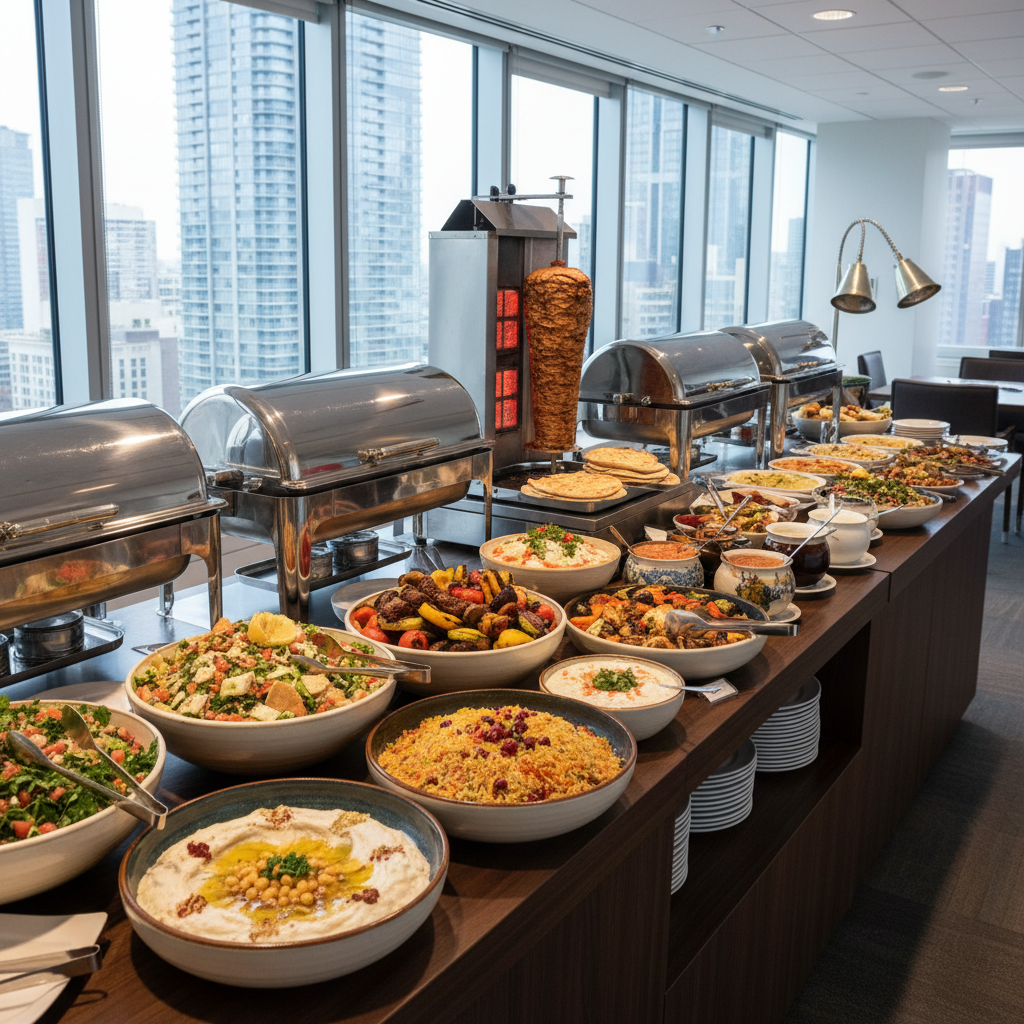
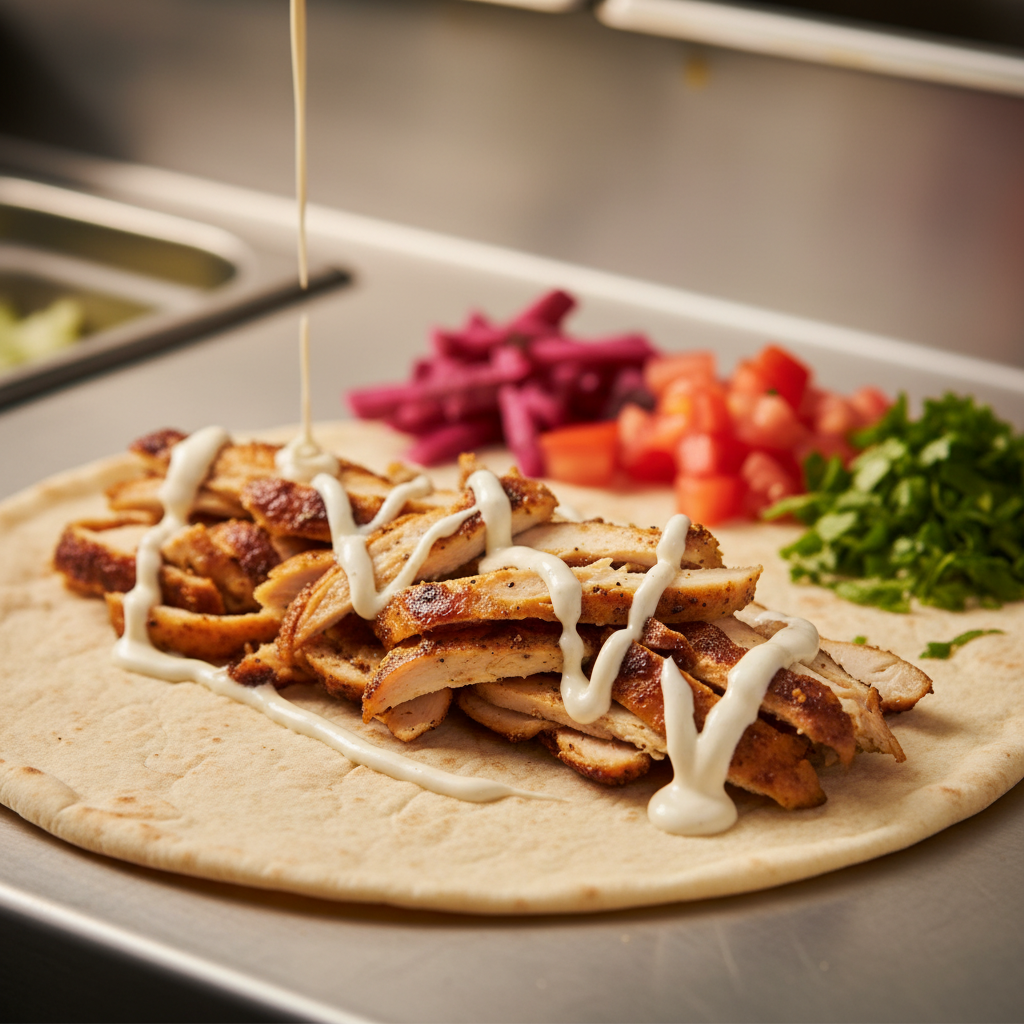
For quick midweek lunches, we often design a shawarma‑forward buffet: marinated chicken or beef, warm pitas, rice pilaf, roasted vegetables, fattoush, hummus, and tahini. If your agenda splits people into rooms, labeled boxed wraps plus salad cups remove friction. Want more interaction? A build‑your‑own shawarma bar taps into variety without slowing down service.
If you’re planning a larger buffet, skim our buffet‑style office catering guide for setup and traffic flow ideas specific to shared lunch spaces.
Dietary & Allergen Accommodations
Collect dietary needs during RSVP, then mirror them in the menu and labels. Offer satisfying vegetarian/vegan mains, gluten‑conscious choices, and nut‑aware salads. Use clear labels that mark common allergens so attendees can decide quickly and safely.
Inclusive meals aren’t just nice—they’re necessary. Clear advance collection, mirrored coverage in the menu, and precise labeling keep everyone safe and satisfied.
- Collect early: include a dietary field in sign‑ups; group needs by category for ordering.
- Mirror coverage: if 20% are vegetarian/vegan, ensure 20–25% of mains cover those needs with equivalent flavor and protein.
- Label precisely: use cards that list dish name and icons for gluten, dairy, eggs, sesame, soy, and nuts where applicable.
- Separate tools: designate serving tongs and spoons per dish; avoid cross‑contact with allergen‑free items.
- Hold backups: add one or two extra vegan/gluten‑conscious boxes or trays for walk‑ins or miscounts.
We routinely build menus that include hearty vegan mains (e.g., grilled vegetable platters with legumes), gluten‑conscious salads, and dairy‑free dips alongside our shawarma proteins—so no one feels like an afterthought at the buffet.
Portioning, Quantity & Logistics Checklist
Right-size portions, stage smart, and protect temperature. Plan 1 main per guest, 2 sides, and a salad. Add a 5–10% buffer. Stage lines for efficient flow, and keep hot foods hot (around 140°F or above) and cold items cold (near 40°F).
Use this quick checklist to confirm quantities and movement. Adjust for your group’s appetite and agenda length.
- Mains: plan one shawarma wrap or bowl per guest, with extra trays for groups over 50.
- Pitas & grains: one pita per person plus 10% extra; rice or bulgur at about 1 cup cooked per guest.
- Sides & salads: two side choices minimum; salad at 1 generous cup per person.
- Veg/vegan coverage: match order share to attendee share; include a protein‑rich plant option.
- Sauces: 1.5–2 ounces per person per sauce for popular picks like tahini or garlic sauce.
- Utensils & servingware: tongs per dish, serving spoons, napkins, plates, and sturdy forks; extras staged nearby.
- Beverages: 1.5 beverages per person for 60‑minute lunches; add sparkling options for client meetings.
- Traffic flow: entrance on one end, plates first, proteins center, sides after, sauces at the end.
- Waste plan: line bins for compost/recycling where available; place them near exits, not next to food.
For mixed dietary boxes, we can label cartons by color code so distribution happens in seconds, not minutes. If you’re splitting teams across floors, consider a split delivery window to keep meals fresh for each group.
If you need truly individual service, our individual catering options maintain variety while making distribution effortless.
Tools & Resources
Standardize your workflow with templates and simple tools. Use a living checklist, a headcount tracker, and a labeling template. Save your favorite orders for one‑click rebooking, and keep a contacts list for day‑of coordination.
Event pros rely on repeatable systems, not memory. Here’s a practical toolkit you can implement today.
- Planning checklist: one page that tracks headcount, menu, dietary coverage, access notes, and confirmations.
- Headcount tracker: a simple spreadsheet or form that tallies RSVPs, walk‑ins, and no‑shows.
- Labeling template: dish names plus allergen icons; print on card stock or ask your caterer to provide.
- Room map: quick sketch of tables, service line, beverage station, and bins; snapshot it for the team chat.
- Saved orders: cloneable favorites for weekly or monthly meetings reduce admin time.
Need inspiration for Mediterranean‑leaning menus? Browse these Mediterranean catering services & ideas to spark combinations that work for mixed‑diet teams.
Curious why Turkish flavors win at office events? See these cultural insights in why Toronto businesses choose Turkish cuisine and translate them into your next agenda.
Case Studies & Real-World Examples
Successful corporate meals share patterns: clear goals, right service style, matched portions, and crisp labeling. These quick case studies show how varied teams across Toronto used shawarma‑forward menus to feed people well without slowing meetings.
Here are condensed, real‑world scenarios that mirror what we execute for Toronto offices weekly.
Tech all‑hands, 120 guests, 45‑minute lunch window
- Goal: fast refuel between sessions.
- Format: buffet with two parallel lines.
- Menu: chicken and beef shawarma, warm pitas, rice pilaf, roasted vegetables, fattoush, hummus, tahini, garlic sauce, and fresh fruit.
- Notes: two vegan mains and gluten‑conscious salad trays staged first; labels with allergen icons.
Client review day, 24 attendees, room‑to‑room
- Goal: polished, low‑mess service.
- Format: boxed shawarma wraps and salad cups, pre‑labeled by diet.
- Menu: chicken shawarma wraps, falafel wraps for vegans, tabbouleh cups, and lemony tahini dressing on the side.
- Notes: delivery split across two floors to keep timing tight.
Warehouse shift lunches, staggered over 3 hours
- Goal: fuel multiple breaks with minimal downtime.
- Format: buffet refreshed at set intervals; insulated containers for hot hold.
- Menu: hearty bowls with grains, shawarma proteins, roasted vegetables, and dairy‑free sauces.
- Notes: color‑coded labels per shift. See ideas to feed your warehouse team without slowing production.
Quarterly town hall, 60 guests, mingle‑first
- Goal: encourage casual conversation.
- Format: build‑your‑own shawarma bar.
- Menu: sliced proteins, warm pitas, salad bar, pickled vegetables, dips, and a trio of sauces.
- Notes: signage prompts “assemble first, sauce second” to keep lines moving.
Want a broader perspective on why these menus resonate at work? Skim our short note on why Toronto teams choose our catering for fast, filling lunches that still feel fresh.

Best Practices & Risk Management
Lock logistics early, label clearly, and protect temperature. Stage efficient lines, assign day‑of roles, and keep a small buffer of vegan/gluten‑conscious meals. Confirm access instructions and point of contact 24 hours before delivery.
These habits turn good plans into great experiences.
- Confirm the “boring” details: building access, elevators, delivery routes, and a live phone number for day‑of coordination.
- Temperature safety: keep hot items around 140°F or above and cold items near 40°F; don’t leave perishable foods standing out for long meetings.
- Parallel lines: for 50+ guests, run two buffet lines or split stations to avoid bottlenecks.
- Label everything: dish name plus allergens; sauce names where color alone may confuse.
- Refill rhythm: refresh trays in smaller increments so last‑in guests see a full, appetizing spread.
- Wrap‑up plan: have compost/recycling lined and ready; stage a small table for leftovers and to‑go containers if policy allows.
If you need a flexible framework you can reuse, save your next order as a favorite and roll it forward. This is how teams turn a one‑off success into an efficient, low‑stress routine.
Frequently Asked Questions
Great corporate meals come from clear headcounts, thoughtful dietary coverage, and tight logistics. These short answers address the planning questions we hear most from Toronto teams running meetings, trainings, and town halls.
What should my corporate event food planning checklist include?
Include date and time, headcount, dietary needs, menu selections, service style, delivery or pickup window, building access notes, labeling plan, staging layout, and cleanup. Confirm 24 hours out and assign day‑of roles for greeting delivery, staging, and refills.
How far in advance should I book corporate catering?
For predictable results, scope menus 2–3 weeks out, place the order 5–7 days before, and reconfirm 24 hours ahead. For midweek peaks or larger groups, book earlier to secure preferred delivery windows and menu variety.
Buffet, boxed, or build‑your‑own—how do I choose?
Match format to timing and space. Buffets maximize variety and speed for larger groups. Boxed meals simplify distribution and travel well to breakout rooms. Build‑your‑own bars encourage customization and are great for mixed diets or social events.
How do I handle dietary restrictions and allergens?
Collect needs during RSVP, mirror coverage in your order, and label clearly. Use dedicated serving tools for allergen‑free dishes to avoid cross‑contact, and keep a couple of extra vegan or gluten‑conscious meals for surprises.
Conclusion and Next Steps
Use a repeatable checklist, align logistics early, and choose a service style that fits your agenda. When in doubt, keep portions simple, labels clear, and delivery timing tight. That’s how Toronto teams turn meals into meeting momentum.
- Key takeaways: define goals fast, match service to space, lock labels early, and assign day‑of roles.
- Action now: pick your menu style and create a living checklist you can reuse for each meeting.
Ready to plan with a partner who speaks office logistics? Explore our Toronto catering overview or jump straight to build‑your‑own catering. Want to see menus tuned for office life? Here’s how Turkish cuisine wins at work—and how that can help your next agenda land.