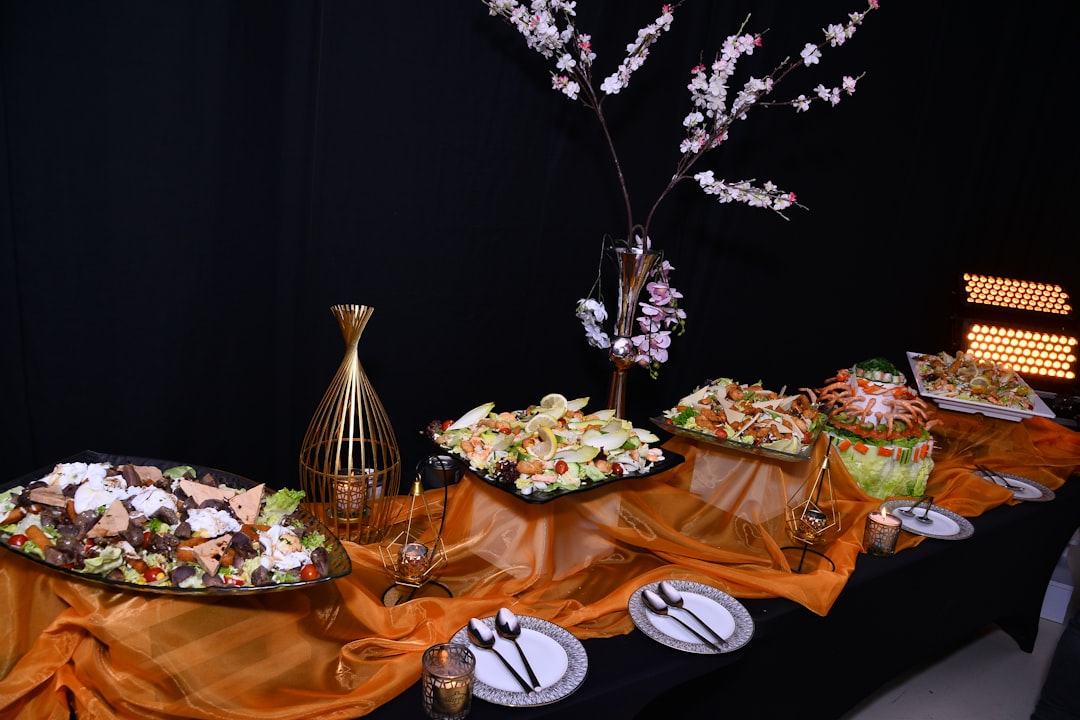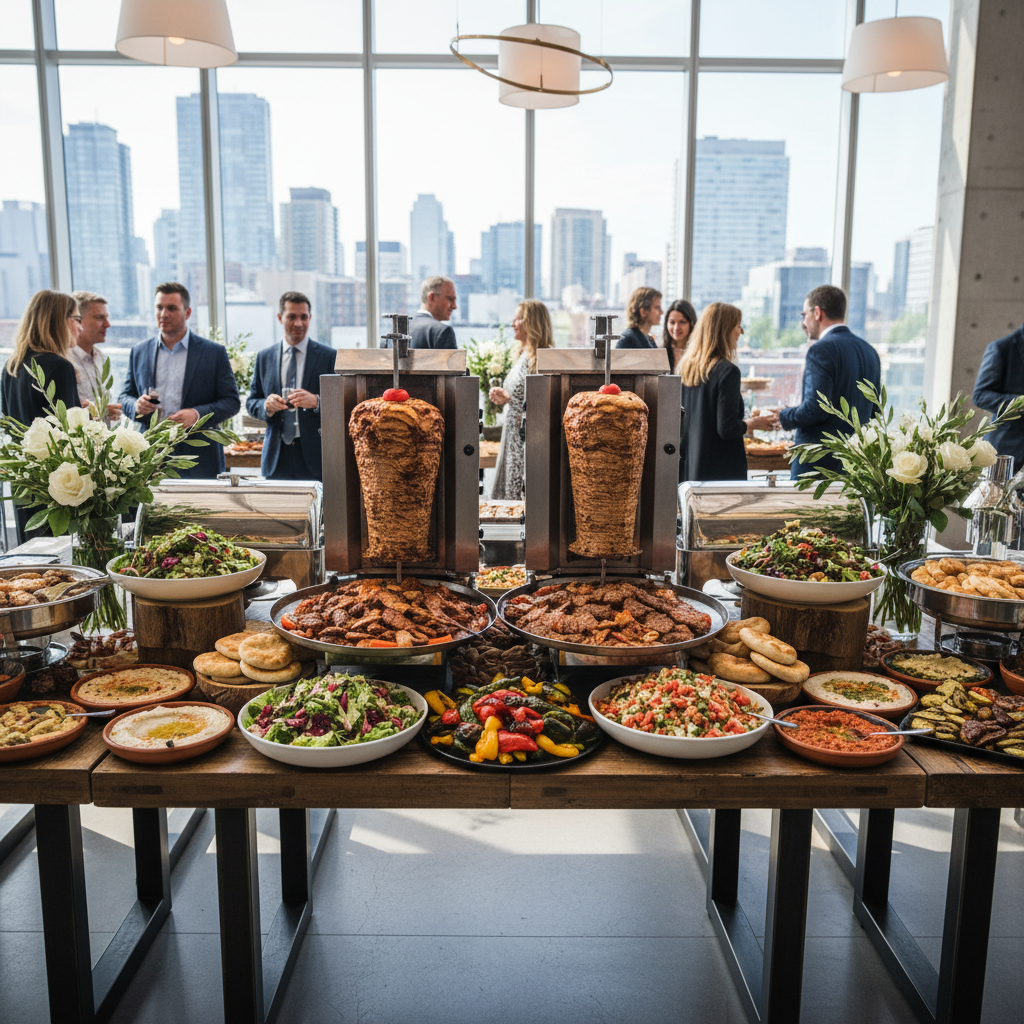
A private event catering Toronto checklist is a step-by-step plan that covers guest count, menu, dietary needs, service style, and delivery logistics for an event in Toronto. It ensures nothing is missed, simplifies vendor coordination, and leads to a stress-free experience—especially when you’re hosting near 898 College St with Shawarma Moose handling the food.
By Shawarma Moose • Last updated: 2026-05-26
Quick Summary
Use a private event catering checklist to lock your headcount, finalize a balanced menu, confirm dietary accommodations, map venue flow, and schedule delivery with buffers. Align timing with your program. Assign one point of contact. Confirm everything 72 hours out. This sequence prevents last‑minute surprises.
This complete guide is designed for Toronto hosts planning birthdays, showers, anniversaries, and private team gatherings. You’ll get a practical checklist, a planning timeline, menu advice tailored to shawarma and Turkish cuisine, and logistics tips for delivery or pickup. We also include real examples from events in Old Toronto.
What Is a Private Event Catering Checklist?
A private event catering checklist is a structured set of tasks—from headcount and menu choices to dietary notes and delivery timing—that keeps food service organized. It aligns hosts, venues, and caterers, reducing errors and ensuring hot, delicious food lands on time and in the right quantities.
Think of it as your event’s control panel. It tracks what’s locked, what’s pending, and what needs a reminder. Without it, key details like vegetarian counts or serving utensils often slip through the cracks. With it, you’ll move from idea to executed meal with confidence.
- Scope: Date, location, guest segments, program schedule.
- Menu: Proteins, sides, salads, sauces, desserts, beverages.
- Dietary: Allergens, halal-friendly choices, vegetarian/vegan, gluten considerations.
- Service: Buffet vs. plated, attendants or self-serve, serving order.
- Logistics: Delivery time, access, parking, elevators, setup/teardown windows.
- Risk controls: Weather plans, backup power, contact tree, extra servings.
In our experience supporting Toronto hosts, the best checklists are simple, visible, and shared early. A single Google Doc (or your task app) with five clear sections beats a complex spreadsheet nobody opens.
Why a Checklist Matters for Old Toronto Events
Old Toronto venues can be tight on loading space and timing. A clear catering checklist safeguards delivery windows, elevator access, and buffet flow. It also keeps dietary details centralized so your guests feel welcomed, not restricted, when the food arrives hot and on schedule.
Neighborhood streets, weekend festivals, and condo loading rules can complicate timing. A written plan avoids bottlenecks and aligns the caterer, venue, and your event lead. That matters when you’re welcoming family, friends, or colleagues who expect seamless hospitality in the heart of Toronto.
- Timing friction is real: Urban traffic adds variability—build 20–30 minutes of buffer into delivery.
- Access changes plans: Elevators or stairs affect setup speed; note them on your sheet.
- Guest mix varies: Expect a range of dietary needs; pre-label sauces and mains.
- Program beats menu: Food timing should follow speeches, not the other way around.
When we cater in Old Toronto, we stage trays in the order they’ll be served, keep dressings separate for freshness, and pre-assign one on-site contact so decisions aren’t slowed by group chat approvals.
Your Private Event Catering Toronto Checklist (Step-by-Step)
Start by locking your headcount and guest types, then choose a balanced menu with at least one vegetarian main and two popular sauces. Confirm delivery windows with buffers, document building access, and assign an on-site contact. Reconfirm 72 hours before the event and keep a printed copy on site.
Planning timeline (process table)
| When | Action | Why it matters |
|---|---|---|
| 4–6 weeks out | Define event goals, guest profile, and service style | Aligns food with the tone of your celebration or program |
| 3–4 weeks out | Select menu, flag dietary needs, plan table layout | Prevents last-minute substitutions and label confusion |
| 10–14 days out | Lock preliminary headcount and delivery window | Ensures prep capacity and driver routing |
| 5–7 days out | Confirm building access, elevator, parking/loading | Avoids delays from surprises at the door |
| 72 hours out | Finalize headcount, dietary list, and contact tree | Gives kitchen time for precise portions |
| Event day | Stage buffet, set utensils/labels, start warmers | Protects food temperature and traffic flow |
Checklist to copy
- Headcount: Adults, kids, staff; note fluctuations and last-minute RSVPs.
- Menu: Pick 1–2 proteins (e.g., chicken shawarma, doner), 2–3 sides, salads, and sauces.
- Dietary: Vegetarian/vegan counts; gluten-aware options; halal-friendly planning.
- Serving plan: Buffet order, kid-friendly options, dessert timing.
- Timing: Delivery window with 20–30 minute buffer; program beats food.
- Access: Entrance, elevator, parking/loading, buzzer codes, security.
- Equipment: Chafers, fuel, platters, tongs, ladles, labels, gloves.
- On-site roles: One decision-maker; one buffet monitor; one cleanup lead.
- Backups: Extra serving utensils; spare fuel; contingency for weather.
- Final reconfirm: 72-hour call or email to lock specifics.
To translate your plan into food, explore our corporate catering options or order individual catering sets when you need pre-portioned meals for mixed preferences.
Menu Planning for Shawarma and Turkish Cuisine
Anchor your menu with a familiar favorite—like chicken shawarma—then add a second protein, two hearty sides, fresh salads, and 2–3 sauces. Keep dressings separate, label allergens, and balance rich items with crisp vegetables and herbs for freshness and color.
A well-built spread satisfies varied tastes without overcomplicating your table. Turkish and Middle Eastern flavors make that easy: seasoned proteins, vibrant salads, and sauces with personality. Your checklist should capture the exact SKUs you’ll serve and where they’ll sit on the buffet.
- Proteins: Chicken shawarma, doner kebab, falafel (vegetarian), grilled kofte.
- Hearty sides: Rice pilaf, roasted potatoes, bulgur, grilled vegetables.
- Fresh sides: Shepherd’s salad, fattoush, pickles, sumac onions, herbs.
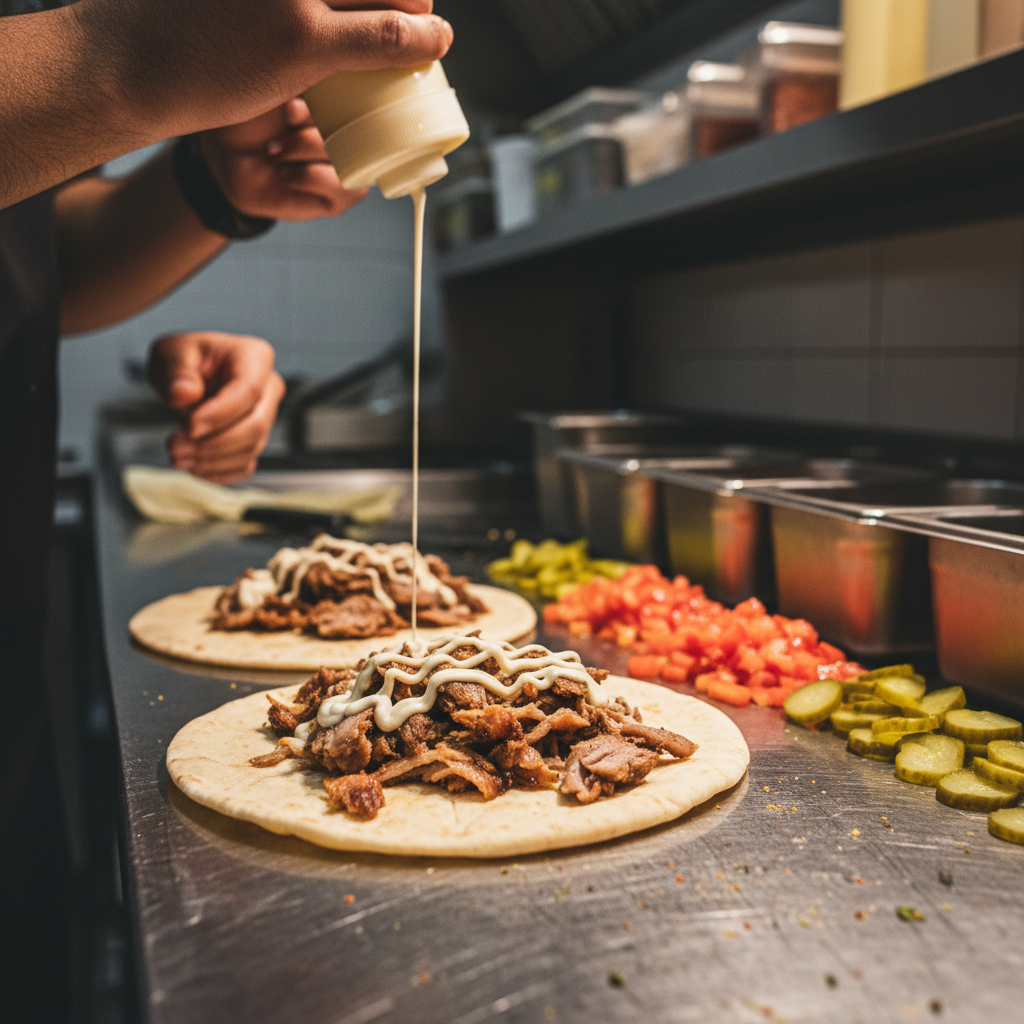
- Sauces: Garlic, tahini, spicy; consider yogurt-based for cooling balance.
- Breads: Warm pita kept covered to hold heat and texture.
- Presentation: Alternate colors and textures to guide guests visually.
Need help mapping this to a crowd? Our event catering menu guide shows pairings that work for teams and family gatherings alike.
Dietary & Allergen Accommodations
Centralize dietary needs on one list, then mirror that list into labels and portions. Offer at least one vegetarian main, gluten-aware sides, and sauces served separately. Keep utensil cross-contact in check, and place dietary items first in the buffet line with matching labels.
Guests remember how inclusive your table felt. Your checklist should capture names or counts for major requests, then translate those into portions, labels, and placement. Keep sauces in their own vessels to simplify gluten-aware and dairy-aware dining.
- Label once, everywhere: Your master list should match printed labels and the emcee’s notes.
- Sequence matters: Put vegetarian and gluten-aware items first to reduce cross-contact.
- Separate utensils: Dedicated tongs/ladles for each item curb mingling.
- Sauce clarity: Mark garlic, tahini, and spicy clearly; note common allergens.
- Individual sets: For complex needs, use individual catering for precision.
We’ve found that printing a one-page dietary key near the buffet calms questions and speeds the line. It also helps late arrivals find the right plates fast.
How Catering Logistics Work (Delivery, Pickup, and Flow)
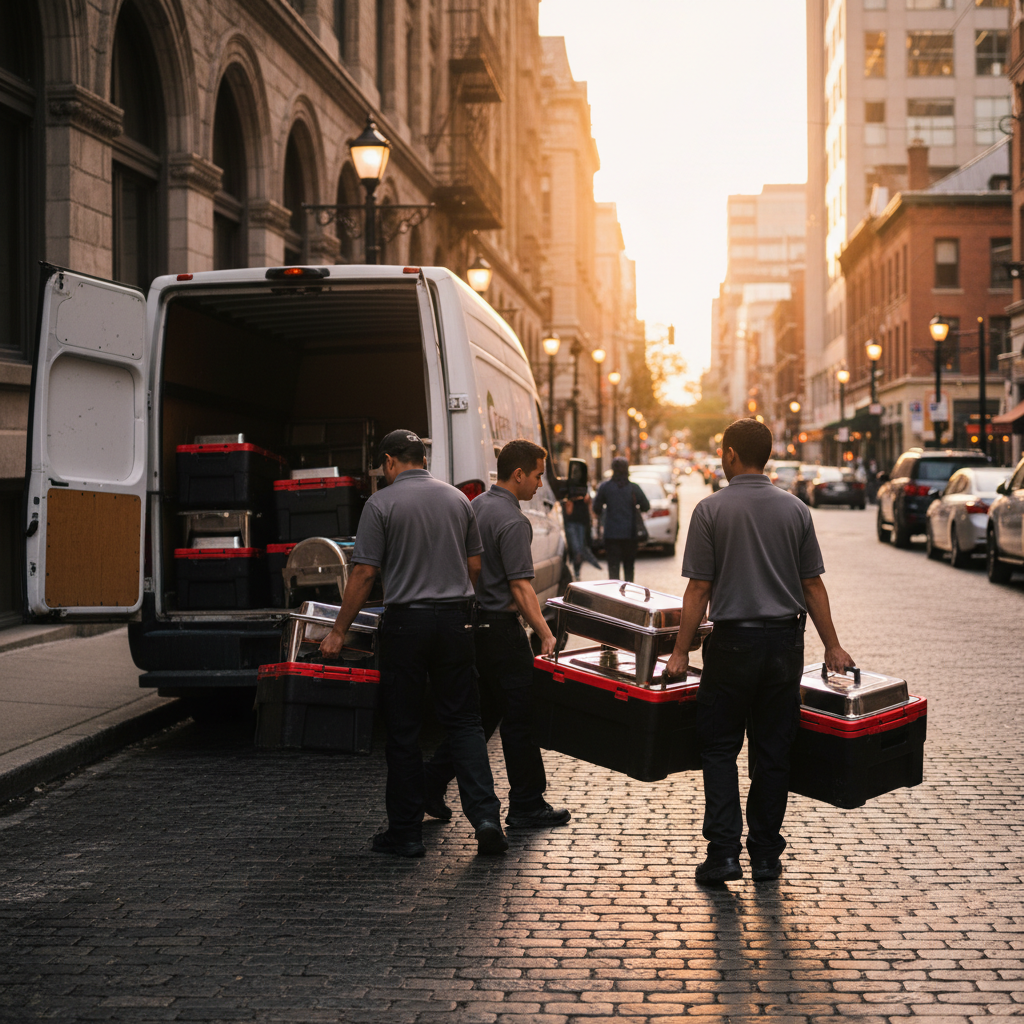
Great logistics protect food temperature and timing. Confirm your delivery window with a 20–30 minute buffer, document access details, and stage your buffet by traffic flow. Warm items go to chafers first; cold salads stay chilled until the last possible minute.
Delivery and setup are where events win or wobble. Write access notes on your checklist—buzzer codes, elevators, and parking. If pickup fits your plan, assign a runner and ensure the vehicle has flat space and blankets to stabilize trays.
- Delivery buffer: Urban traffic is variable; pad your schedule.
- Access map: Mark doors, stairs/elevators, and the buffet location.
- Heat chain: Chafers lit before hot trays arrive; salads staged last.
- Single contact: One decision-maker on site prevents stalls.
- Pickup ready: If collecting food yourself, confirm your pickup window and kit (coolers, towels).
For freshness techniques and temperature control, see our simple catering freshness guide. It explains staging warmers, covering breads, and managing sauces for optimal texture.
Local considerations for Old Toronto
- Weekend park events near Dufferin Grove Park fill up early—reserve loading space and add a 30-minute buffer.
- Transit-heavy areas by Ossington station see quick crowd surges; schedule delivery before peak arrivals.
- Winter or wet days slow setups; keep extra towels and tray covers on your equipment list.
Tools & Resources for Hosts
Use a single shared doc for your checklist, a calendar invite for the delivery window, and labeled bins for utensils and decor. Pair that with a simple comms plan: one on-site lead, one backup, and your caterer’s direct number pinned to the top of the thread.
Hosts who centralize tools finish stronger. You don’t need a complex stack—just a visible source of truth, calendar reminders, and labeled containers for setup. If you want menu inspiration, this Toronto catering guide highlights practical patterns for office-style events.
- Checklist: Google Doc or project board with five sections (Scope, Menu, Dietary, Logistics, Risk).
- Delivery window: Calendar invite with address pin, access notes, and on-site contact.
- Labels: Print or write clear dish and sauce labels; tape is fine in a pinch.
- Utensil bin: Tongs, ladles, gloves, tape, markers, spare fuel.
- Menu playbooks: Explore our package picker guide and menu ideas for pairings that travel well.
- Order hub: When you’re ready, the main catering page outlines options for private and corporate groups.
Mini Case Studies: What Works in Toronto
Successful private events in Toronto pair a concise program with a balanced buffet and clear roles. A single contact, labeled dishes, and a delivery buffer keep service smooth. Shawarma-focused menus shine when sides add crunch and herbs, and when sauces are self-serve.
Backyard milestone in Old Toronto (40 guests)
Challenge: mixed ages, limited kitchen space, speeches at sunset. Solution: chicken shawarma and falafel, rice pilaf, grilled veg, shepherd’s salad, garlic and tahini on the side. Buffers: 30-minute delivery pad; dessert after speeches. Outcome: quick line flow, happy kids and adults.
Condo party near College St (30 guests)
Challenge: elevator access and tight loading. Solution: pre-labeled pans, chafers staged in order of service, bread covered to retain heat. Outcome: setup in under 12 minutes; steady service with one buffet monitor. Pro tip: list the buzzer code and elevator dimensions on your checklist.
Team offsite in the Toronto core (60 guests)
Challenge: back-to-back sessions and a short lunch window. Solution: add individual boxed sets for presenters; buffet for the rest. Outcome: presenters stayed on schedule and attendees enjoyed variety without delays.
For more private-event inspiration, skim this short piece on impressing guests with Turkish flavors: private event ideas.
Best Practices Hosts Swear By
Keep the program tight, lock dietary notes early, and stage your buffet by flow. Use a 20–30 minute delivery buffer, separate utensils, and simple labels. Confirm everything 72 hours out. This rhythm consistently delivers warm food, smooth lines, and relaxed hosts.
- Program-first timing: Plan food around speeches, not vice versa.
- Early diet lock: Share dietary counts at least a week out to shape prep.
- Flow mapping: Place plates first, proteins next, then sides, salads, and sauces.
- Label clarity: Short names beat long descriptions for line speed.
- Buffer smartly: Add time cushions for traffic and elevators.
- Right-size orders: When in doubt, add a small cushion of portions rather than an entirely new dish category.
How to Place Your Order with Shawarma Moose
Decide on service style and menu, then choose delivery or pickup. Share your headcount, dietary notes, address, and building access. Confirm your delivery window with a buffer and one on-site contact. Reconfirm 72 hours out, and we’ll take it from there.
Ordering should be easy. If you’re feeding a private group or team, start with our catering packages, then personalize sides and sauces. If you need flexible portions or complex dietary handling, our individual sets simplify service.
FAQ: Private Event Catering in Toronto
Plan earlier than you think, keep the menu balanced and labeled, and build a delivery buffer. Confirm building access and one on-site contact. The answers below address the most common Toronto host questions, from timelines to dietary planning and service flow.
How far in advance should I book private event catering in Toronto?
Aim for 3–4 weeks for most private events and slightly earlier during peak seasons. That window lets you lock headcount, align the menu with your program, and coordinate building access without rush decisions.
What’s the simplest menu structure for mixed tastes?
Anchor with a popular protein like chicken shawarma, add a vegetarian main, choose two hearty sides, one fresh salad, and two or three sauces. Keep breads covered and sauces separate so everyone can customize their plate.
How do I handle dietary restrictions without slowing the line?
Put vegetarian and gluten-aware items first on the buffet, use separate utensils, and label clearly. For complex needs, pre-order a few individual boxed sets to guarantee accuracy and speed.
Delivery or pickup—which is better for private events?
Delivery reduces day-of errands and protects temperature, especially for larger groups. Pickup can work if you have a dedicated runner, flat vehicle space, and tray stabilizers. Either way, add a 20–30 minute buffer for urban traffic.
Key Takeaways
Write down your plan, build buffers, balance the menu, and label everything. Assign one on-site lead and reconfirm 72 hours out. These simple habits keep service smooth and your guests happy—no last-minute scrambling required.
- Use a single, shared checklist with five sections.
- Balance proteins, sides, salads, and sauces; label allergens.
- Protect timing with a 20–30 minute delivery buffer.
- Sequence the buffet for flow; put dietary items first.
- Reconfirm critical details 72 hours before your event.
Next Steps
Skim your calendar, pick a date, and outline your guest profile. Choose delivery or pickup and draft your menu. Share your plan; then confirm your window and access notes. With those steps, your private event is already on rails.