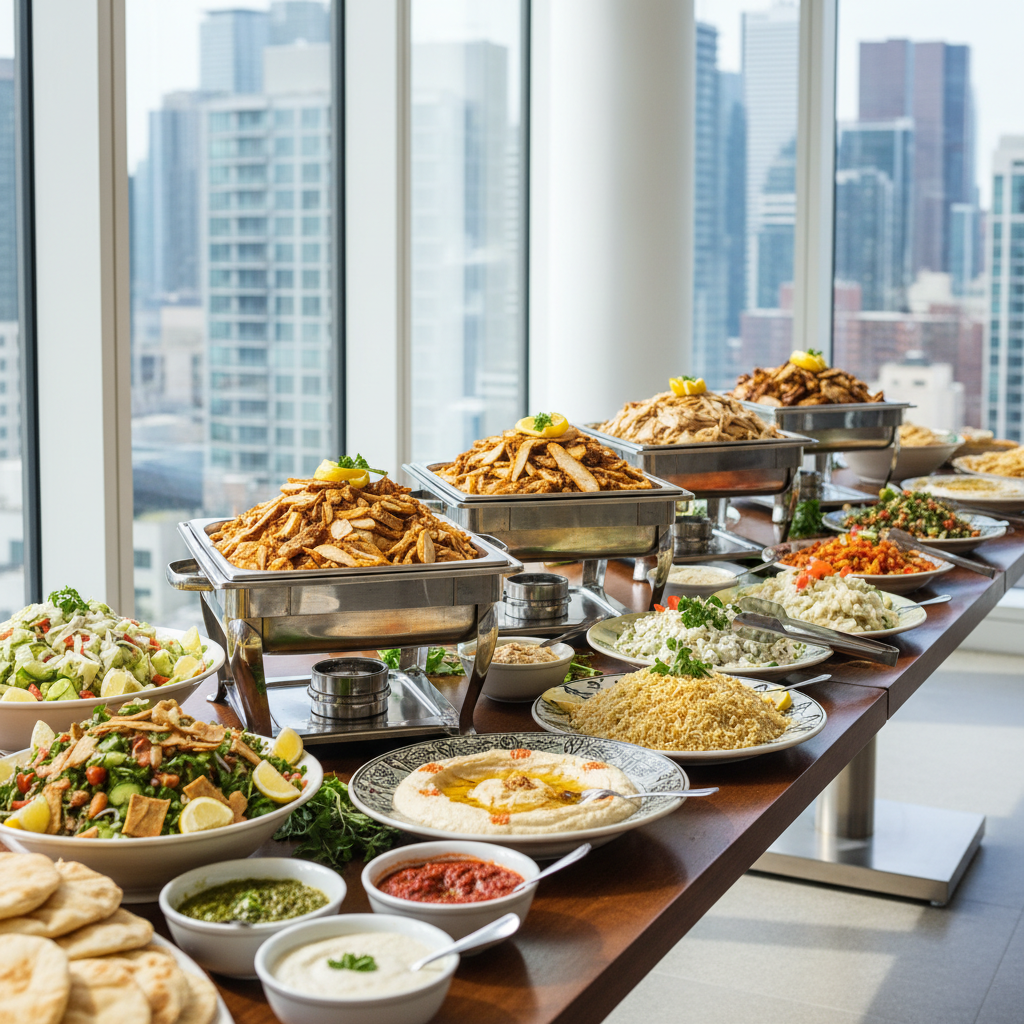
A catering food freshness guide is a practical set of time, temperature, and handling rules that keep catered dishes safe, flavorful, and appealing from kitchen to guest. From our kitchen at 898 College St in Old Toronto, we apply cold-chain and hot-hold controls so shawarma, mezze, and rice arrive vibrant—and safe.
By Shawarma Moose • Last updated: 2026-05-25
Overview and Table of Contents
This guide explains how to keep catered food safe and delicious using clear time and temperature rules, transport safeguards, buffet setup tactics, and simple checklists. You’ll get step-by-step methods, tools we use daily, and Toronto-specific tips you can apply to any meeting, party, or corporate event.
Here’s what you’ll learn and use right away:
- What a freshness program covers: temperatures, timelines, transport, and serving.
- Why freshness impacts safety, taste, and your event’s reputation.
- How controls work from cooking to holding to service.
- Methods that actually hold quality for hot and cold dishes.
- Best practices tuned for Toronto venues and schedules.
- Tools, logs, and a checklist you can copy for your team.
- Mini case studies from real Toronto events.
Table of Contents
- What Is a Catering Food Freshness Guide?
- Why Freshness Matters for Old Toronto Events
- How Freshness Control Works: Kitchen to Buffet
- Methods Caterers Use to Keep Food Fresh
- Best Practices for Toronto Events
- Tools and Resources We Trust
- Case Studies and Examples
- Frequently Asked Questions
- Conclusion and Next Steps
What Is a Catering Food Freshness Guide?
A catering food freshness guide outlines the time, temperature, and handling controls that prevent the “danger zone” and flavor loss. It sets cold-hold at 41°F or below, hot-hold at 135°F or above, safe transport methods, and service timelines so guests enjoy food that’s both safe and at peak taste.
In practice, your guide aligns everyone—kitchen, drivers, and servers—around a shared standard. Clear numbers and simple checklists reduce risk and help teams move fast without guessing. When we prepare chicken shawarma, mezze, and rice for corporate lunches, our freshness rules are the same every time, which shortens setup and improves consistency.
- Defines thresholds: Hot-hold ≥ 135°F; cold-hold ≤ 41°F; reheat to 165°F.
- Specifies timelines: Chill quickly, deliver on schedule, swap pans before temps slip.
- Documents responsibilities: Who temp-checks, who swaps inserts, who logs the readings.
- Standardizes labeling: Production time, allergens, and “use-by” windows prevent mix-ups.
Food safety standards emphasize these exact thresholds. Keeping food out of the 40°F–140°F “danger zone” limits rapid bacterial growth and preserves taste and texture during service.
Why Freshness Matters for Old Toronto Events
Freshness protects guests and your reputation. Tight time/temperature control prevents foodborne illness, keeps shawarma juicy and salads crisp, and ensures reliable catering in Old Toronto’s busy venues. Consistent controls also cut last-minute scrambling and waste, which improves service quality and guest satisfaction.
Events in Old Toronto move quickly—boardroom lunches near Ossington, park gatherings by Dufferin Grove, and late-afternoon team breakouts across the core. Tight schedules mean pans cycle fast. A reliable freshness plan provides guardrails when rooms run warm or meetings run long. When hot food stays ≥ 135°F and cold food stays ≤ 41°F, quality holds alongside safety.
- Safety: The 40°F–140°F “danger zone” accelerates bacterial growth; keeping food out of it limits risk.
- Flavor: Controlled hot-hold keeps proteins juicy; controlled cold-hold keeps greens crisp.
- Reputation: On-time delivery plus correct temps equals fewer complaints and stronger reviews.
- Compliance: Clear logs demonstrate professional care—essential for corporate offices.
How Freshness Control Works: Kitchen to Buffet
Freshness control follows a chain: cook to safe internal temps, hot-hold at ≥ 135°F or chill to ≤ 41°F fast, transport in insulated carriers, verify temperatures on arrival, and maintain holding at the buffet. Logs, labeled pans, and scheduled swaps keep every dish inside safe ranges.
Think of this as a relay. Each step protects the next. If you start with accurate cooking temps and fast chilling, transport is easier to manage. If transit arrives hot/cold, your buffet windows stay open longer. Here’s the high-level flow we execute for office catering and private events around Toronto.
| Step | Target Temp/Time | Action | Why It Matters |
|---|---|---|---|
| Cook | As required; reheat to 165°F | Cook proteins thoroughly; verify with probe | Correct internal temps reduce initial risk |
| Chill or Hold | ≤ 41°F or ≥ 135°F | Move to cold line or hot-holding quickly | Locks in safety and texture |
| Label | Timestamp + “use by” | Label pans and sauces clearly | Prevents time confusion at venue |
| Transport | Insulated carriers | Load hot with hot, cold with cold | Minimizes temp drift in transit |
| Arrival Check | Probe each category | Hot ≥ 135°F; Cold ≤ 41°F | Confirms service readiness |
| Service | Swap on a schedule | Replace pans before temps slip | Maintains safety and quality |
Two practical notes help here. First, open-and-stir checks expose pans to room air; make those quick and purposeful. Second, split bulk batches into smaller, shallower inserts so surface area helps hold the right temperature. We pre-stage backup pans to swap every 30–60 minutes, depending on the room.
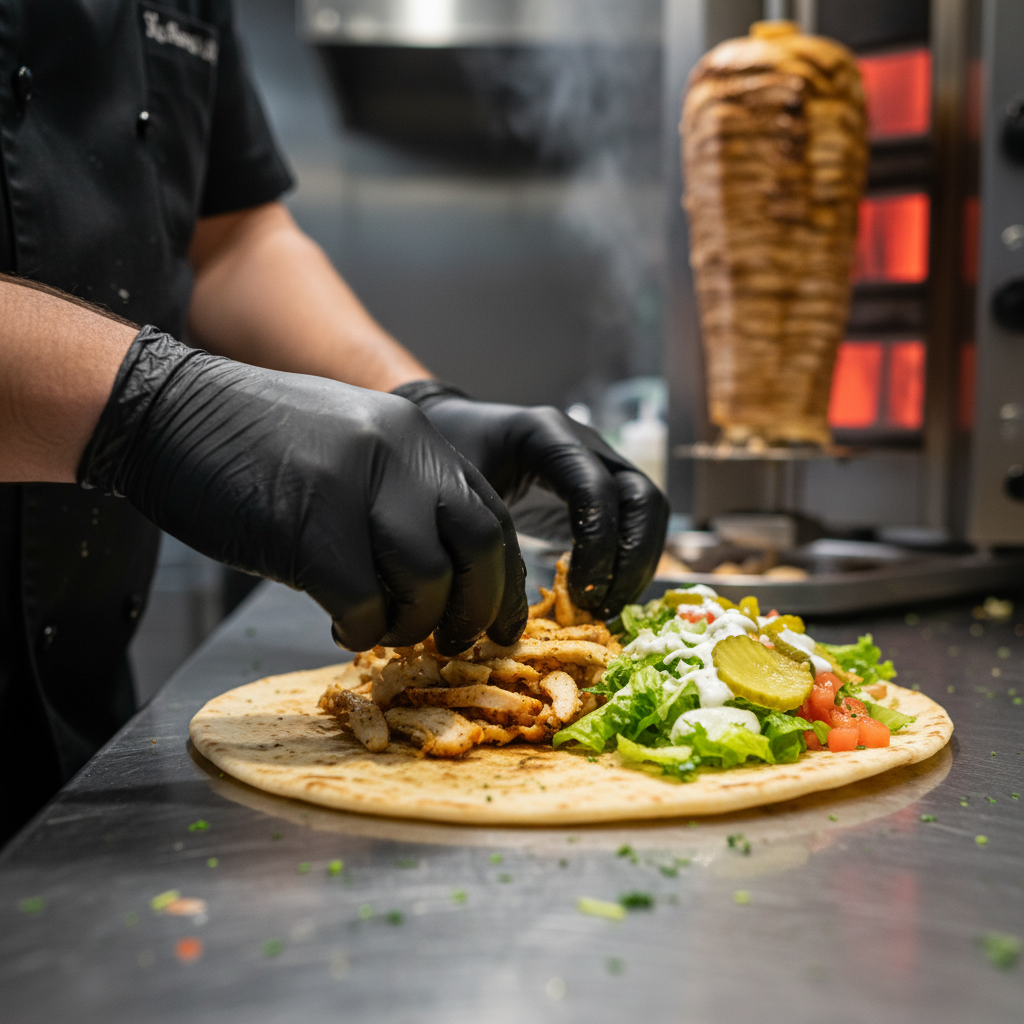
SCU: The safest path to fresh catered food is a repeatable chain: verify cooking temps, move food immediately to hot-hold (≥ 135°F) or cold-hold (≤ 41°F), transport in insulated carriers, temp-check on arrival, then rotate pans before temps drift. With labeled timelines and logs, your buffet stays safe and tastes better.
Methods Caterers Use to Keep Food Fresh
Effective caterers pair hot-holding, cold-holding, rapid chilling, and sealed transport with portioning tactics. Shallow pans, pre-warmed chafers, ice-packed inserts, and timed swaps keep food out of the 40°F–140°F danger zone while preserving texture, color, and aromatics for service.
We match method to menu. Chicken shawarma and rice do best with steady hot-hold and frequent gentle stirring. Tabbouleh, shepherd’s salad, and tzatziki demand firm cold-hold to keep crunch and tang. Warm breads get wrapped to reduce drying. Here’s a practical playbook you can reuse.
- Hot-holding: Preheat chafers; target ≥ 135°F during service. Stir gently to distribute heat without breaking texture.
- Cold-holding: Use shallow pans nested in ice or cooled wells to stay ≤ 41°F. Keep lids on between turns to reduce ambient exposure.
- Cook-chill: Chill bulk sauces fast in shallow containers before transport; this preserves brightness and reduces separation.
- Sealed transport: Insulated carriers separate hot and cold. We dedicate carriers to categories to avoid cross-exposure.
- Batching: Stage backup inserts; swap every 30–60 minutes based on room temp and traffic.
- Finish-at-venue: For wraps, hold meats hot and condiments cold, then assemble just-in-time for peak bite.
- Portioning: For large groups, mini bowls or pre-portioned wraps reduce hold-time per bite and speed service lines.

SCU: The best method mix is simple: preheat chafers, pre-chill cold wells, use shallow pans, and rotate inserts on a visible schedule. Keep hot items ≥ 135°F and cold items ≤ 41°F from kitchen to buffet. Done consistently, these actions preserve safety and the just-cooked experience guests expect.
Best Practices for Toronto Events
Plan for space, timing, and traffic. Confirm power for hot-holding, ice for cold stations, a clear delivery route, and 10–15 minutes for temperature checks. Pre-label pans, map buffet flow, and schedule swaps. These steps keep Toronto events running on time with food that tastes like it just left the kitchen.
Here’s the practical checklist we run for corporate catering, warehouse lunches, and private parties around the city. It fits boardrooms, shared workspaces, and community venues. Layer these steps over your menu and headcount.
- Site readiness: Confirm outlets for chafers; plan an ice source; reserve table space for cold wells.
- Delivery window: Allow a 10–15 minute buffer for setup and verified temp checks before guests arrive.
- Buffet flow: Place plates and cutlery first; proteins at center; condiments near exit to ease movement.
- Swap cadence: Replace hot pans every 30–60 minutes and refresh cold items as condensation builds.
- Labeling: Use clear labels for allergens and dietary notes to reduce back-and-forth.
- Waste prevention: Keep some backup still sealed; only open as traffic builds.
- Team roles: Assign one person to temps and one to line flow so neither gets skipped.
Planning tip: If your event includes build-your-own shawarma, stage meats hot and crisp, hold salads cold and dry, and keep sauces sealed until service. This preserves crunch and aroma so every wrap tastes like the first.
When you want a partner who runs this playbook daily, explore our catering services, try our build-your-own catering format, or review popular office-friendly spreads from our lunch catering guide. These options align with the freshness controls in this article.
Local considerations for Old Toronto
- Rush-hour realities: If your venue is near Ossington, add a transit buffer so hot pans still hit ≥ 135°F on arrival.
- Seasonal swings: Summer rooms run warm; apply the CDC’s 2-hour rule conservatively and tighten swap cadence.
- Park setups: For gatherings by Dufferin Grove Park, bring extra ice and shade for cold wells to hold ≤ 41°F.
SCU: The fastest way to protect freshness at a Toronto event is to reserve power and ice, plan a 10–15 minute pre-service temp check, and rotate pans on a visible schedule. With labeling and clear roles, you reduce lines, maintain safety, and keep every serving as good as the first.
Need a freshness-first partner? Our team builds menus and station plans that protect both flavor and safety. See current options on our catering page or explore our Toronto catering packages.
Tools and Resources We Trust
Use calibrated probe thermometers, insulated carriers, hot-holding chafers, ice-well pans, and simple temperature logs. Back these with FDA/USDA thresholds and CDC timelines. These tools and references create a repeatable system that teams can run under tight event schedules.
We keep our toolset compact so it moves fast across Toronto without losing control of temps and timelines. The goal is speed with certainty—measure accurately, insulate well, and record just enough to adjust on the fly.
- Probe thermometers: Calibrated and sanitized; verify cook temps and holding thresholds.
- Insulated carriers: Dedicated hot and cold units; preload to each temp band before packing.
- Chafers and fuel or electric: Pre-warm lids and inserts; keep hot pans ≥ 135°F.
- Ice-well cold pans: Shallow inserts nested in ice to hold ≤ 41°F during service.
- Sealed sauce bottles: Limit oxygen and temperature fluctuations; open just-in-time.
- Simple logs: Time, temp, initials. One sheet taped under the table keeps everyone honest.
Case Studies and Examples
Freshness is measurable. In our Toronto events, scheduled swaps, insulated transport, and quick temp checks consistently keep hot items ≥ 135°F and cold ≤ 41°F. The result is faster lines, consistent texture, and strong feedback from teams that notice food tastes “just-cooked.”
Real-world snapshots show how simple controls scale.
Boardroom lunch for 35 (Old Toronto)
- Menu: Chicken shawarma, saffron rice, fattoush, hummus, pita.
- Controls: Preheated chafers, labeled pans, cold wells for salads, 10-minute arrival buffer.
- Outcome: Hot-hold logged at 138–142°F; greens stayed crisp; service wrapped in 25 minutes without line buildup.
Warehouse shift meal for 80 (Toronto)
- Menu: Mixed shawarma wraps, garlic potatoes, ezme, tzatziki, pickles.
- Controls: Staggered deliveries, pan swaps every 30 minutes, sealed sauces opened at service.
- Outcome: Hot items ≥ 135°F at each check; cold wells read ≤ 39°F; zero complaints; team requested same plan for next rotation.
Park gathering for 50 (near Dufferin Grove)
- Menu: Build-your-own shawarma station with tabbouleh, shepherd’s salad, tahini, garlic sauce.
- Controls: Extra ice, shade placement, sealed backups to reduce warm exposure.
- Outcome: Cold pans held ≤ 41°F; sauces kept vibrant; line moved smoothly with pre-portioned wraps.
If you’re planning something similar, browse our buffet-style office catering overview or scan our event menu ideas to match formats to your headcount and venue.
SCU: Across office, warehouse, and park events, the winning pattern is consistent: insulated transport, 10–15 minute setup with labeled pans, and scheduled swaps. Those small routines keep hot items safely above 135°F and cold items under 41°F—so every guest gets a peak-quality plate.
Frequently Asked Questions
These quick answers cover the most common freshness questions we hear from Toronto planners—from safe holding times to transport best practices. Use them to brief your team before the event so setup and service run smoothly.
What temperatures should we target for hot and cold holding?
Hold hot food at 135°F or above and cold food at 41°F or below. Reheat to 165°F before hot-holding. These thresholds align with FDA Food Code guidance and keep dishes safely out of the 40°F–140°F danger zone during service.
How long can catered food sit out safely?
Follow the “2-hour rule” for perishable foods (or 1 hour if the room is above 90°F). Keep hot food hot and cold food cold during that window, and swap pans as temperatures drift. When in doubt, refresh from sealed backups rather than stretching time.
What’s the best way to transport hot and cold food together?
Use dedicated insulated carriers—one for hot, one for cold—and load pre-heated or pre-chilled. Keep carriers closed during transit, then perform quick probe checks at arrival before placing items into hot or cold holding on-site.
How do you keep salads and sauces tasting fresh?
Keep salads in shallow, ice-nested pans and sauce bottles sealed until service. Chill fast after prep, dry greens well, and open condiments just-in-time. These steps preserve crunch, color, and the bright flavors guests expect.
Do we need logs for a small office lunch?
A simple one-page log with time, temp, and initials is enough. It keeps the team focused, proves diligence for corporate hosts, and helps you tune swap intervals for future events.
Conclusion and Next Steps
Freshness is a system, not a guess. Set clear hot and cold thresholds, label and log, insulate transport, and rotate pans on a schedule. With those basics, Toronto events run smoother and food tastes like it just left the grill—plate after plate.
Key takeaways
- Use 135°F hot-hold, 41°F cold-hold, and 165°F reheating as non-negotiables.
- Transport hot and cold separately in insulated carriers and verify on arrival.
- Swap pans every 30–60 minutes; keep backups sealed until needed.
- Run a simple log so the plan survives real-world chaos.
Action steps
- Download or sketch a one-page temp log and tape it under the buffet table.
- Walk your venue for power, ice, and table space two days before the event.
- Match menu to method: steady hot-hold for shawarma; firm cold-hold for salads.
- When you’re ready, review our catering options and explore menu ideas.
If you want a freshness-first partner, our team at College and Ossington is ready to help you plan. Explore catering or check company event tips, then tell us your headcount and venue.