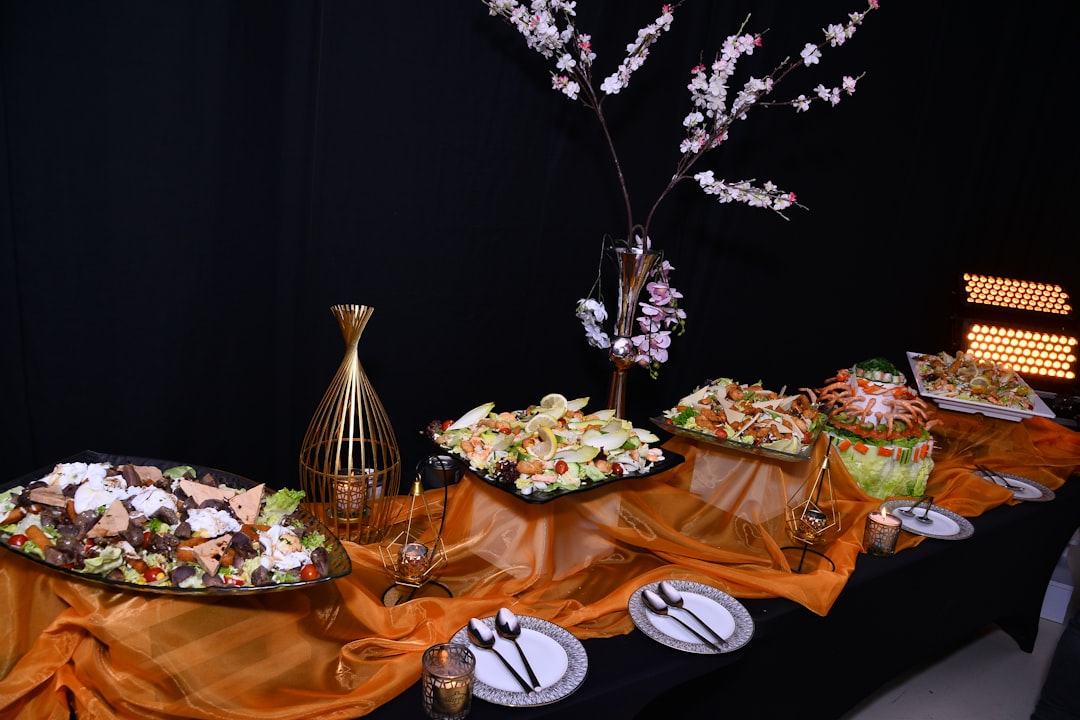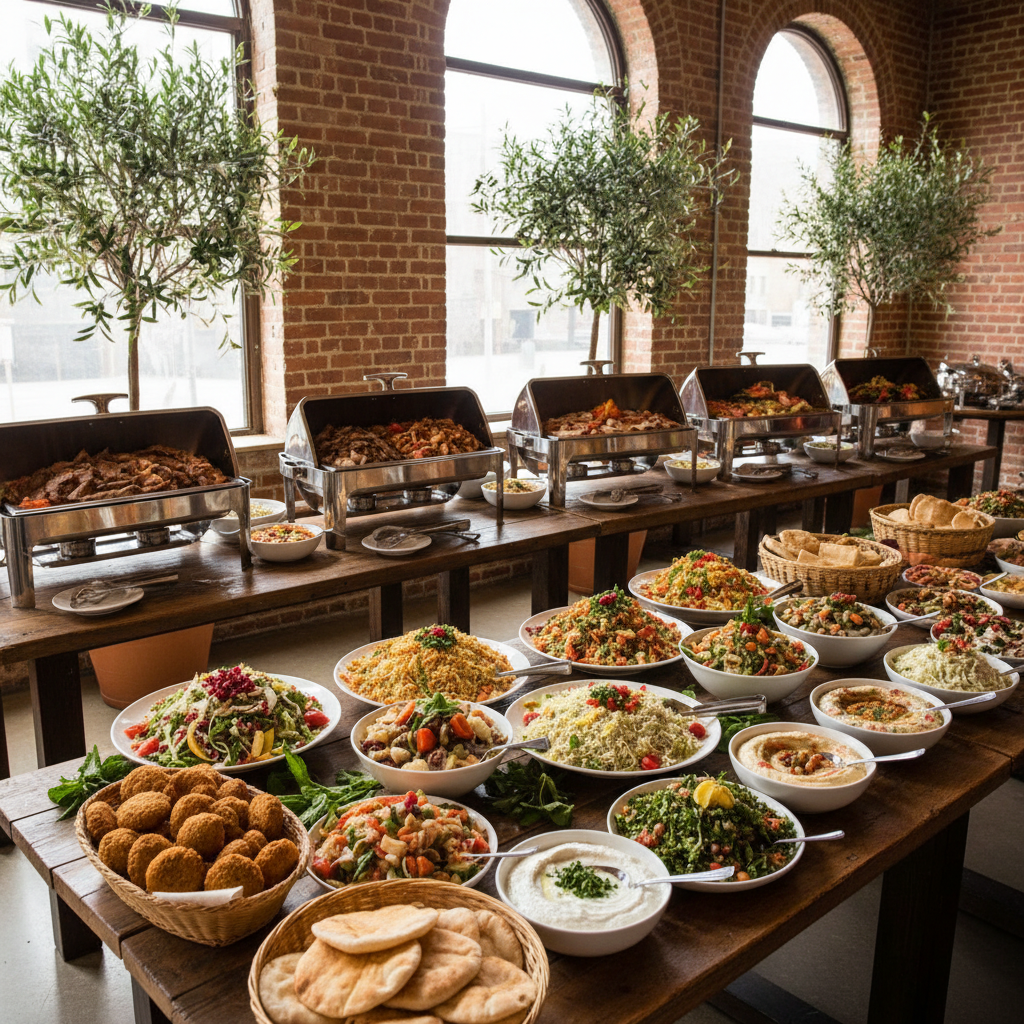
How to pick the right catering package is the process of matching headcount, menu variety, dietary needs, and logistics to your event’s goals. In Toronto, Shawarma Moose at 898 College St offers flexible platters, buffets, and boxed meals with online ordering, delivery, and pickup—making it simple to feed teams and guests well.
By Shawarma Moose • Last updated: May 23, 2026
Overview
Choose a catering package by confirming guest count, dietary needs, and service style, then aligning delivery and setup with your venue’s timeline. In Old Toronto and the wider Toronto metro, reliable providers like Shawarma Moose simplify decisions with customizable shawarma platters, hot buffets, and boxed meals for corporate and private events.
If you’re planning an office lunch, team meeting, or weekend party, the right package keeps guests satisfied and the schedule on track. This guide shows you how to assess attendance, plan portions, and lock logistics so food arrives hot, labeled, and on time. We’ll use Shawarma Moose’s catering options to illustrate practical choices that work locally.
Local considerations for Old Toronto
- Account for weekday traffic and curbside access near Ossington; confirm the building’s preferred delivery entrance and elevator access windows.
- Summer park events (for example, near Dufferin Grove Park) need shade and safe holding for hot and cold items; plan coolers and warming gear.
- Downtown offices often require sign-in and dock scheduling; add a 20–30 minute buffer for security and service elevator timing.
Introduction
The best catering package balances flavor, portions, and service logistics. Start with clear goals—meeting, celebration, or training—then pick menu formats that travel well, label allergens, and scale easily. Reliable Toronto partners offer online ordering, delivery, and pickup to streamline planning.
Here’s what you’ll learn and be able to do by the end of this guide:
- Define event goals and guest profiles in under 15 minutes with a simple checklist.
- Estimate portions (plan roughly 1.25 to 1.5 mains per person) and build a balanced menu.
- Pick between platters, buffets, family-style, and boxed meals based on your venue and schedule.
- Map delivery, setup, and service timing to avoid bottlenecks and cold food.
- Use tools like a headcount tracker, dietary matrix, and a run-of-show timeline.
We’ll reference Shawarma Moose’s shawarma platters, hot trays, and boxed options to show real decisions local teams make every week.
Before You Start (Prerequisites)
Before you compare packages, finalize three essentials: guest count, dietary requirements, and service constraints (room, time, and equipment). With these locked, you can choose formats and sides confidently and prevent last‑minute changes that disrupt delivery windows.
Confirm these inputs to speed up every other decision and reduce waste:
Define the event and goals
- Purpose: team lunch, training, client meeting, offsite, or celebration. A 60-minute lunch benefits from ready-to-serve platters; longer sessions suit buffets.
- Experience target: fast self-serve vs. collaborative meal (family-style). Interactive meals increase social time by roughly 15–20 minutes.
- Venue rules: confirm loading zones, elevators, and any allergen or fragrance policies.
Lock your headcount and dietary needs
- Expected attendance: use RSVP totals and add a 5–10% buffer for no-shows and day-of adds.
- Dietary split: ask about vegetarian, vegan, gluten-free, halal-friendly, and dairy-free. Labeling reduces service-line slowdowns by 20–30 seconds per guest.
- Allergens: collect nut, sesame, and dairy notes and share with your caterer when you book.
Clarify timing and service flow
- Service window: plan 15–20 minutes for setup and 10 minutes for labeling before guests arrive.
- Serving pace: boxed meals move 30–40 guests through in under 5 minutes; buffets require clear signage and two lines for groups over 40.
- Cleanup: budget 10–15 minutes for break-down and waste sorting if your building requires it.
Once these are set, you’ll make faster, better choices across menu, format, and logistics.
Step-by-Step: How to Pick the Right Catering Package
Pick your package in seven steps: define goals, confirm headcount, select service style, build mains, add sides and sauces, plan portions, and schedule delivery/setup. This structured flow prevents shortages, long lines, and cold food.
Step 1 — Define success
Write a one-sentence goal: “Feed 35 staff in 60 minutes with hot, labeled meals that include halal-friendly and vegetarian choices.” Specificity drives the next six steps.
- Time box: limit lunch to 60 minutes; keep speeches to 5 minutes.
- Constraints: elevators, boardroom size, and power outlets shape format choices.
Step 2 — Confirm headcount and diet mix
Use the RSVP list and add a modest buffer. As a planning rule, 1.25 to 1.5 mains per person covers hungry teams without heavy leftovers.
- Dietary matrix: mark vegetarian, vegan, gluten-free, and dairy-free; plan at least two inclusive mains.
- Labeling: pre‑printed item names and symbols reduce questions and speed lines.
Step 3 — Choose the service style
Match the room and agenda to format. Smaller rooms and tight agendas favor boxed meals; open spaces and social goals favor buffets.
- Platters: fast setup, minimal gear, easy refills.
- Buffet: broad variety, self‑serve pacing, two lines for 40+ guests.
- Boxed meals: clean handoff, no lines, ideal for training rooms.
Step 4 — Build mains first
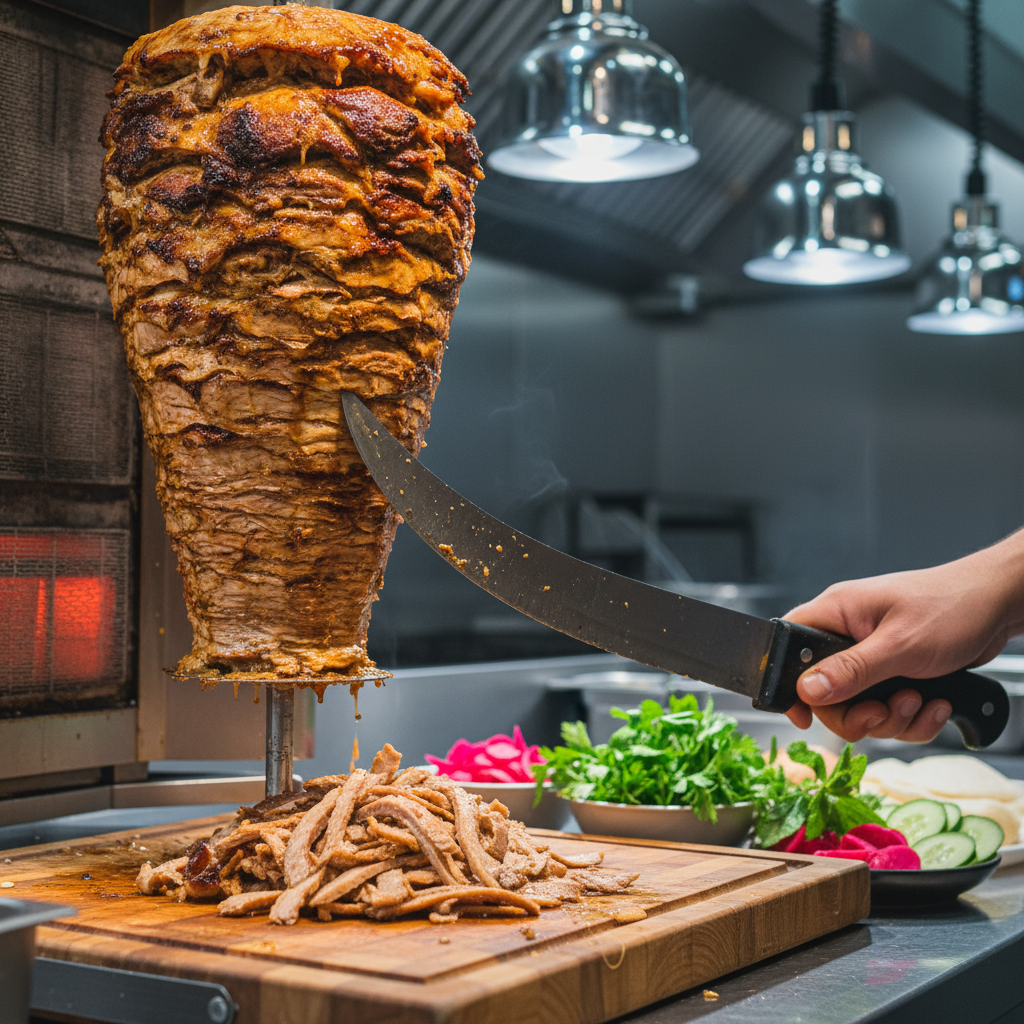
Start with proteins your crowd loves, then add a strong vegetarian or vegan option. For shawarma-focused events, mix chicken and beef and add falafel or grilled veggie mains for inclusivity.
- Balanced mix: aim for at least 30–40% non-meat mains in mixed-audience offices.
- Texture and heat: include sauces at mild, medium, and spicy heat for range.
Step 5 — Add sides, salads, and sauces
Round out plates with starch, fresh crunch, and dips. A balanced tray reduces return trips to the line and keeps conversation moving.
- Starch: seasoned rice or roasted potatoes (plan 4–6 oz per guest).
- Fresh: fattoush, tabbouleh, or chopped salad (3–4 oz per guest).
- Sauces: garlic, tahini, and hot sauce; label heat levels clearly.
Step 6 — Portion planning and equipment
Use simple math. For 30 guests at 1.25 mains each, plan 38 mains. Add 5–10% extra for late arrivals. Hot trays stay safer longer with chafing stands and fuel; cold trays benefit from ice packs.
- Line speed: one buffet line serves ~25–30 people per 10 minutes; add a second line for 40+.
- Holding temps: keep hot foods above 140°F and chilled items below 40°F during service.
Step 7 — Schedule delivery, setup, and labeling
Back-time from the first bite. Delivery 20–30 minutes before service allows setup, labeling, and handwashing. Confirm building access and a contact on-site to receive the order.
- Run sheet: include arrival window, setup tasks, labeling, and a brief menu intro.
- Contingency: add a 10-minute buffer for elevators and badge checks.
Choosing Between Platters, Buffets, Family-Style, and Boxed Meals
Platters are fast and flexible, buffets suit variety and bigger rooms, family-style creates shared moments, and boxed meals maximize speed and cleanliness. Match format to agenda length, space, and dietary complexity.
Use this quick comparison to map format to your event:
| Format | Best for | Pros | Watch-outs |
|---|---|---|---|
| Platters | 30–60 min meetings | Quick setup; easy refills; crowd-pleasing | Label clearly for allergens; add utensils |
| Buffet | 40–150 guests | Variety; self-serve pace; scalable | Two lines for 40+; keep hot above 140°F |
| Family-style | Team socials | Shared dishes; great conversation | Needs table space; moderate supervision |
| Boxed meals | Training rooms, travel | Fast handoff; minimal cleanup | Less customization; plan labels |
For Toronto teams balancing speed and flavor, shawarma platters with salads and sauces often hit the sweet spot. When you need strict portioning and zero-mess, boxed meals are hard to beat.
Tools and Resources You’ll Use
Plan faster with a headcount tracker, dietary matrix, portion calculator, floor plan sketch, and a run-of-show timeline. These lightweight tools reduce waste, shorten lines, and prevent labeling mistakes.
Planning tools
- Headcount tracker: name, RSVP status, diet flags; aim for 100% responses 48 hours out.
- Dietary matrix: columns for vegetarian, vegan, gluten-free, dairy-free, halal-friendly.
- Portion calculator: mains x 1.25–1.5; sides at 3–6 oz per guest; sauces at 1–2 oz.
- Floor plan sketch: mark lines, tables, and trash stations to cut congestion by ~20%.
- Run-of-show: delivery ETA, setup, labeling, speech notes, and cleanup.
Mini Case Studies: What Works in Toronto
Successful Toronto events share three traits: right-sized portions, clearly labeled variety, and delivery aligned to building access. Shawarma Moose’s platters, buffets, and boxed meals adapt to boardrooms, studios, and parks across the city.
Case 1 — 45-person sales kickoff (Old Toronto)
Goal: feed 45 in 60 minutes between sessions. Solution: double-line buffet with chicken and beef shawarma, falafel mains, rice, fattoush, and sauces. Estimated pace was ~50 guests/20 minutes with two lines. Labels and a brief menu intro trimmed questions by half.
- Result: no line longer than 3–4 minutes; warm trays maintained above 140°F with chafing stands.
- Tip: place sauces at both ends of the line to avoid backtracking.
Case 2 — 28-person lunch-and-learn (West end)
Goal: minimize disruption during a 45-minute training. Solution: shawarma boxed meals (chicken/falafel split), individual salads, and sealed sauces. Handoff to seats took under 5 minutes and kept laptops clean.
- Result: engagement stayed high; zero cleanup interruptions.
- Tip: stage trash and recycling by exits to speed dismissal.

Troubleshooting: Common Catering Package Pitfalls
Most issues come from unclear headcounts, under-labeled menus, and late deliveries. Prevent them by locking RSVPs 48 hours out, using simple labels, and adding a 20–30 minute setup buffer.
Problem — Lines move too slowly
- Why it happens: one buffet line for 40+ guests or unlabeled items causing questions.
- Fix: add a second line; place proteins first, then sides; duplicate sauces at both ends.
- Rule of thumb: one line serves ~25–30 people per 10 minutes; plan accordingly.
Problem — Food cools too fast
- Why it happens: long setup, distant room, or late arrival.
- Fix: schedule arrival 20–30 minutes before service; use chafing stands or insulated carriers.
- Safety: keep hot foods above 140°F; replenish with covered trays.
Problem — Allergen concerns at the line
- Why it happens: missing labels or unclear vegetarian/vegan indicators.
- Fix: print large, simple labels; brief the host on where to direct questions.
- Practice: pre-set separate tongs for vegetarian trays to avoid cross-contact.
Advanced Tips (For Smoother Service and Happier Guests)
Small operational tweaks—dual-line buffets, pre-bundled cutlery, and signage—turn good catering into great experiences. Aim for clear flow, inclusive choices, and quick handoffs.
- Dual lines for 40+: mirror trays or split proteins left/right to cut peak waits by up to 50%.
- Pre-bundle cutlery: napkin + fork + knife + wipe packets reduce touchpoints and speed cleanup.
- Label everything: item name + dietary icons (V, GF, DF) save 2–3 seconds per guest.
- Sauce strategy: two heat levels minimum; place garlic and tahini within reach at both ends.
- Map the room: 6–8 feet between lines; trash/recycling near exits, not near food.
Need a second set of eyes? Share your headcount, dietary needs, and schedule. We’ll suggest a right-sized shawarma package and delivery window. Start on our catering options page.
Frequently Asked Questions
Event planners ask about portions, timelines, and dietary labeling. Accurate headcounts, a simple portion formula, and clear labels prevent the most common issues.
How do I estimate how much food to order?
Plan roughly 1.25 to 1.5 mains per guest, 3–6 ounces of sides, and 1–2 ounces of sauces. Add a 5–10% buffer for late arrivals. For mixed diets, include at least one vegetarian or vegan main to cover 30–40% of servings.
When should I schedule delivery?
Aim for delivery 20–30 minutes before service. This allows setup, labeling, and handwashing. In downtown buildings with security checks or service elevators, add a 10-minute buffer.
What format is best for a 60-minute meeting?
Platters or boxed meals. Platters enable fast self-serve with minimal gear; boxed meals offer the quickest handoff and cleanest setup. If you have 40+ guests, consider two platter lines to reduce wait times.
How should I handle dietary labeling?
Print simple labels with item names and icons (V, GF, DF). Position labels before the line starts so guests scan as they approach. Keep vegetarian tongs separate to avoid cross-contact.
Additional Resources
Use menu frameworks, timing templates, and local logistics tips to finalize your order. Clear planning shortens lines, reduces waste, and keeps food properly hot and cold.
For corporate planning inspiration, review this Toronto corporate catering guide. Ready to lock your date? Visit our catering options page.
Conclusion
The right catering package aligns guest count, diet mix, service style, and timing. Lock the fundamentals, then select platters, buffets, family-style, or boxed meals to fit your room and agenda.
- Key Takeaways
- Headcount + diet mix first; format second; timing last.
- Plan 1.25–1.5 mains per person with a 5–10% buffer.
- Use dual lines for 40+ guests and label everything.
- Schedule delivery 20–30 minutes ahead to keep food hot.
Want help translating this into a one-click order? Body images placed above. –>