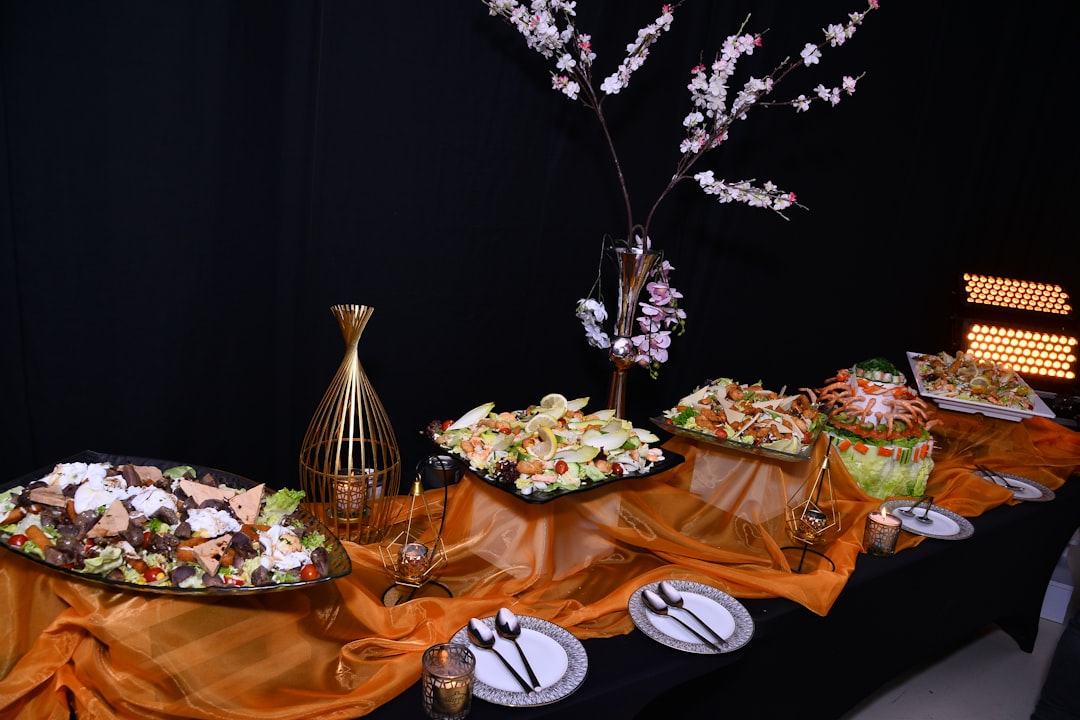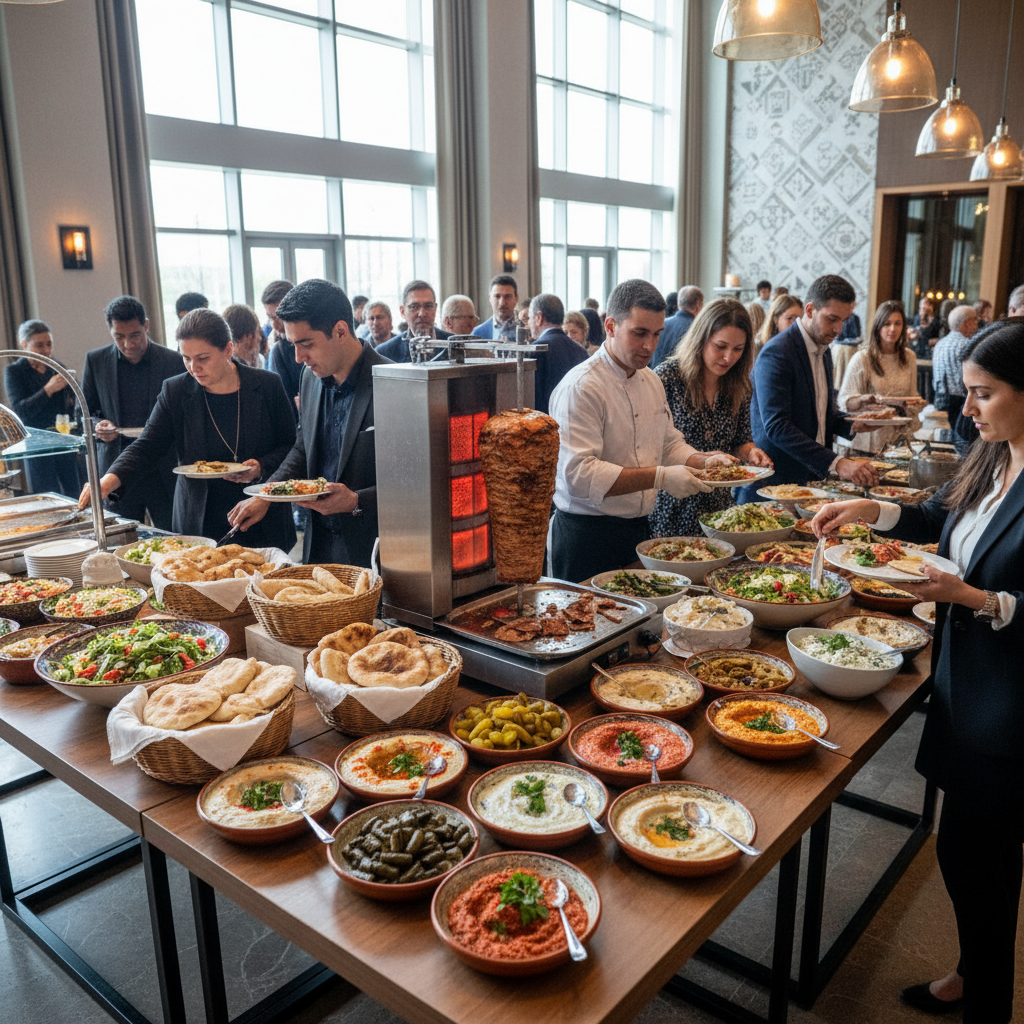
What to include in a catering menu comes down to balance: two crowd-pleasing mains, a plant-based entrée, sides, salads, breads, sauces, beverages, dessert, and labeled service ware. For Toronto events near 898 College St, Shawarma Moose makes this easy with shawarma platters, Turkish meze, and dependable delivery or pickup from Old Toronto across the core.
By Shawarma Moose • Last updated: 2026-05-11
Overview
A complete catering menu includes proteins, a vegetarian/vegan entrée, 2–3 sides, 1 salad, breads/wraps, 3 sauces, beverages, a simple dessert, and labeled service ware. Pair these with smart portioning, clear signage, and timing. Our shawarma-focused menus help Toronto teams serve fast, stay safe, and delight every guest.
Use this guide as your working checklist. It explains the essentials, shows formats that fit different rooms and agendas, and shares portion benchmarks that stop lines from stalling. We also include local tips for Old Toronto deliveries and examples you can duplicate today.
- What to include in a catering menu (the must-haves)
- Why menu design matters for speed, safety, and inclusion
- How planning works from headcount to labeling
- Service formats compared: buffet, platters, boxes, bars
- Best practices for portions, flow, and food safety
- Tools, templates, and real-world case studies
Want a shortcut? Explore Catering and Corporate Catering—we organize headcount, dietary labels, and delivery windows in one smooth plan.
What is a catering menu?
A catering menu is the curated list of dishes, beverages, and service items tailored to a specific event. It balances variety, dietary needs, and logistics so food arrives on time, stays at safe temperatures, and serves quickly. Strong menus think like guests and operate like a kitchen.
In practice, it’s both an experience design and an operations blueprint. You choose flavors that travel well, specify containers and utensils, map out hot/cold holding, and add signage that keeps lines moving. That combination is what makes a spread feel abundant and effortless.
Core components at a glance
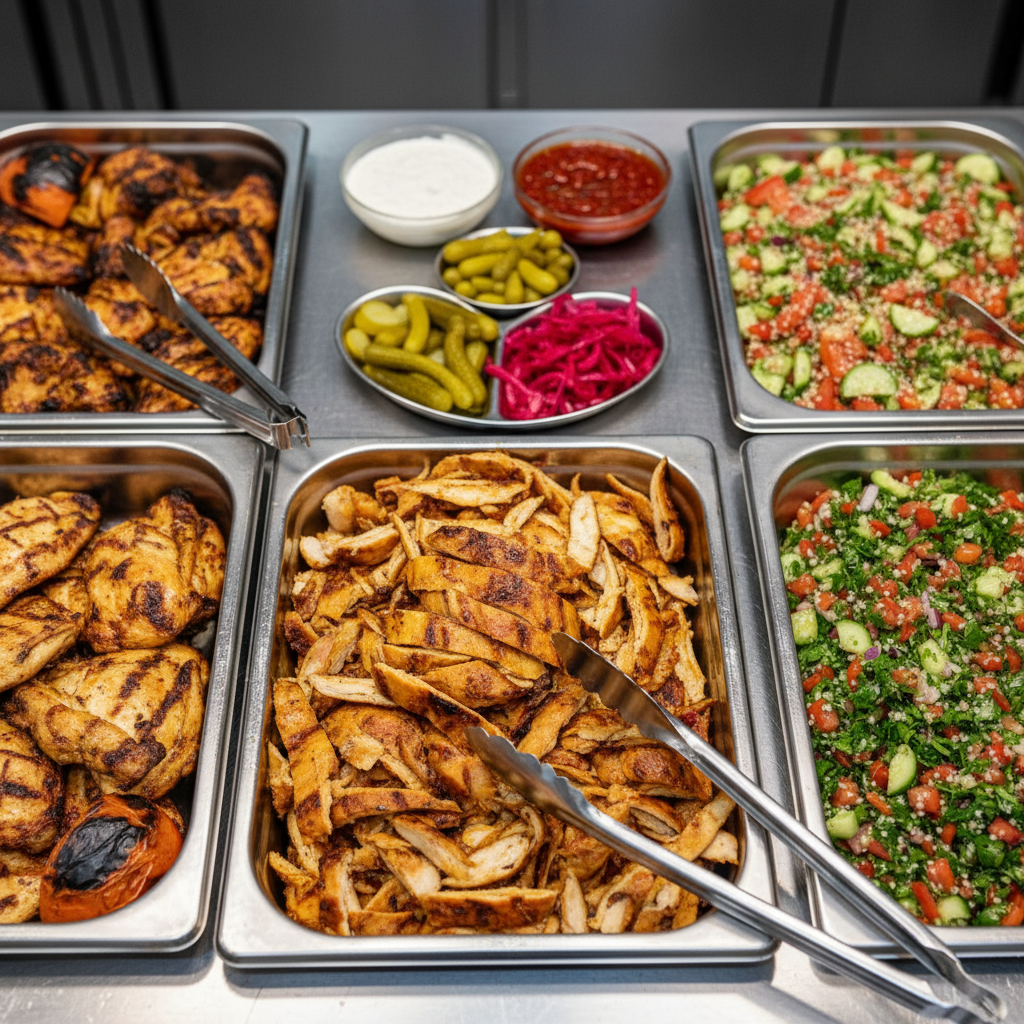
- Proteins: Chicken shawarma, beef shawarma, or doner-style gyro
- Vegetarian/vegan: Falafel, grilled vegetables, lentil-based entrées
- Starches: Turmeric rice, roasted potatoes, bulgur pilaf
- Salads: Shepherd’s salad, fattoush, or tabbouleh
- Breads: Pita and wrap options; gluten-free wraps on request
- Sauces: Garlic sauce, tahini, and a spicy option
- Beverages & dessert: Water, assorted sodas, baklava, or fruit
- Service ware: Plates, cutlery, napkins, serving tongs, labels
At Shawarma Moose, we build menus that hold texture and temperature during transport. See examples on Catering in Toronto.
What to include in a catering menu (the essentials)
Include two proteins, one vegetarian or vegan entrée, two to three sides, one salad, breads/wraps, three sauces, beverages, dessert, and labeled service ware. This simple mix covers most tastes and diets, speeds service, and keeps the focus on eating—not waiting.
Use this copy-and-go checklist to lock the foundation and reduce last-minute decisions:
- Two proteins: Chicken shawarma + beef shawarma or gyro
- Vegetarian/vegan entrée: Falafel tray or roasted vegetable medley
- Two to three sides: Turmeric rice, roasted potatoes, bulgur pilaf
- One salad: Shepherd’s salad, fattoush, or tabbouleh
- Breads: Warm pita and wraps; gluten-free wraps by request
- Sauces: Garlic, tahini, and a spicy option (harissa-style)
- Toppings: Pickled turnips, cucumbers, onions, parsley
- Beverages: Still/sparkling water, assorted sodas
- Dessert: Bite-size baklava or seasonal fruit platter
- Service ware: Plates, cutlery, napkins, tongs, labels
Need flexibility for mixed diets or staggered arrivals? Our Build Your Own format lets you assemble mains, sides, and sauces for any agenda.
Why menu design matters
Menu design controls guest satisfaction, line speed, dietary inclusion, and food safety. Balanced choices minimize waste and waiting, while proper hot/cold holding preserves quality. The best menus are fast to set up, simple to navigate, and memorable for flavor.
Two truths shape every event: people remember the food, and execution makes the memory great. Clear labels prevent hesitation. Separate utensils protect sensitive diets. Dual buffet lines slash wait times. And a plant-forward path ensures everyone eats the same meal—together.
- Speed: Mirrored lines or stations keep queues moving during short breaks.
- Inclusion: A dedicated vegan or gluten-free entrée avoids one-off “special plates.”
- Safety: Keep hot foods hot and cold foods cold; use distinct tongs for allergen-sensitive trays.
- Memory: Bold sauces, fresh herbs, and warm breads make simple menus feel special.
In our experience serving Old Toronto offices, a shawarma + falafel core with three sauces, bright salads, and warm pita satisfies varied tastes while staying operationally lean.
How menu planning works (step-by-step)
Start with headcount and dietary profiles, choose a service style, map portions, and confirm delivery windows and setup flow. Finish with labels and dedicated utensils. This process keeps food on time, safe, and easy to enjoy without crowding or confusion.
- Confirm headcount and profiles: Gather vegetarian, vegan, gluten-free, and top allergens. Aim for at least 10–15% plant-forward entrées for mixed teams.
- Choose a service style: Buffet, shared platters, individually boxed, or build-your-own (see comparison below).
- Outline the menu: Two proteins, one plant entrée, two to three sides, salad, breads, sauces, beverages, dessert.
- Plan portions: Use per-person benchmarks so first and last guests get the same plate.
- Map logistics: Entry, elevators, table space, staging area, and trash/recycling.
- Time delivery: Land 30–45 minutes before service for setup and checks.
- Label and separate: Simple dish names + allergens; distinct tongs for vegan/gluten-free.
Local considerations for Old Toronto
- Plan delivery windows around subway and streetcar rush near Ossington to keep hot food precisely on schedule.
- Winter tip: Cold snaps chill trays fast—stage indoors and use chafers for reliable heat.
- Venue nuance: Office towers near Dufferin Mall may require loading-dock check-ins—share access notes with our driver.
If you’d like us to handle the checklist, our Catering team coordinates headcount, labels, and timing in one plan.
Types and service methods
Pick buffet lines for speed and variety, shared platters for collaborative tables, boxed meals for frictionless distribution, or build-your-own bars for customization. Match the format to headcount, agenda, and room layout to keep lines short and plates consistent.
Popular formats for Toronto teams
- Buffet line: Fast service and high variety. Ideal for 25–200+. Add a second line past 60 guests.
- Shared platters: Family-style trays shine in boardrooms and workshops of 8–20 per room.
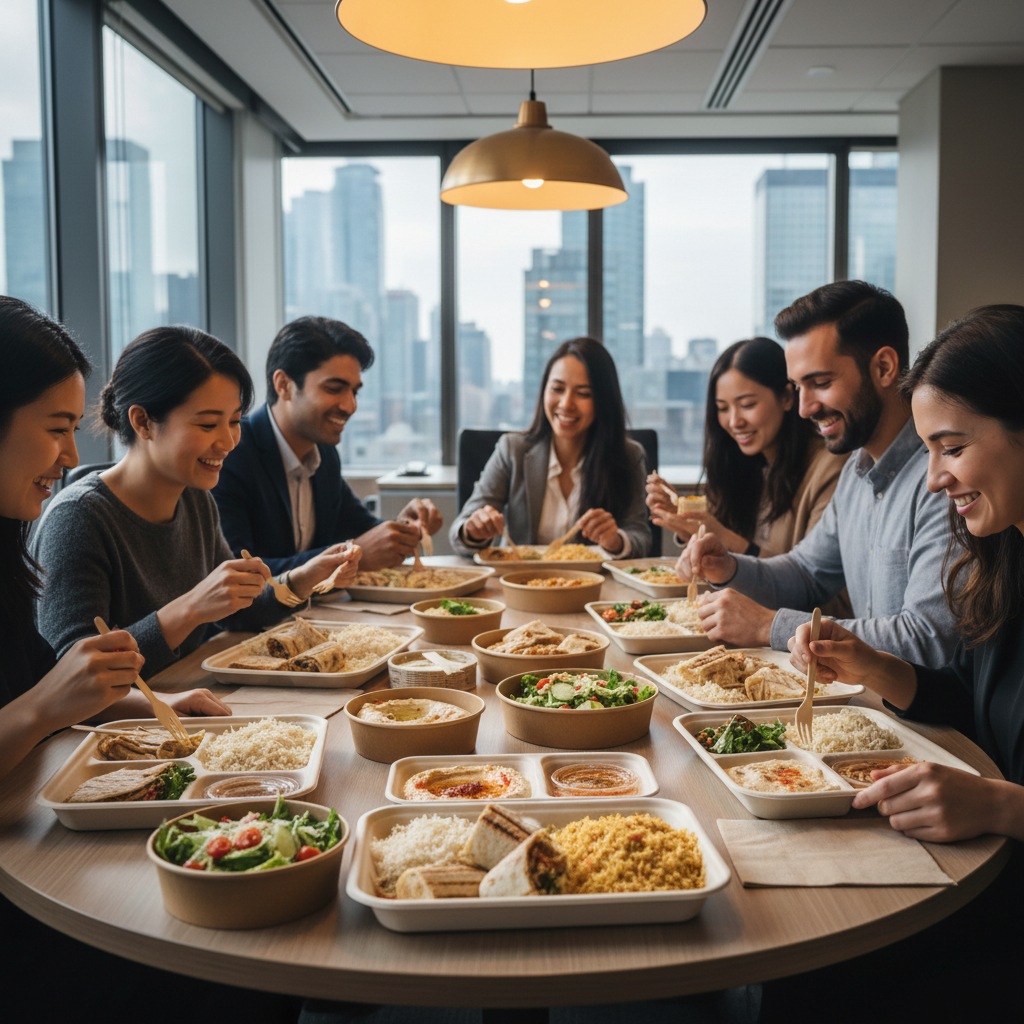
- Individually boxed: Easiest distribution and dietary separation. Great for trainings and off-sites.
- Build-your-own bar: Guests assemble wraps or bowls. Perfect for mixed diets and longer service windows.
| Format | Best for | Speed | Dietary control | Room needs |
|---|---|---|---|---|
| Buffet | Large groups (25–200+) | Fast with 2 lines | Moderate (labeling) | Two 6–8 ft tables |
| Shared platters | Boardrooms, workshops | Moderate | Moderate | Center table space |
| Boxed meals | Trainings, off-sites | Very fast | High (pre-labeled) | Minimal |
| Build-your-own | Mixed diets, long windows | Fast | High (self-selected) | Stations and flow |
See formats and menu templates on Buffet-Style Office Catering and our adaptable Individual Catering options.
Best practices for portions, labeling, and safety
Right-size portions, label allergens clearly, and protect hot/cold thresholds. Use dual buffet lines past 60 guests, separate vegan/gluten-free tools, and stage sauces at the end. These habits prevent bottlenecks and keep food safe during long service windows.
Portioning benchmarks (per person)
- Proteins: 5–6 oz cooked for entrées; 3–4 oz in wraps
- Starches: 4–6 oz rice/potatoes/bulgur
- Salads: 3–4 oz chopped/leafy
- Breads: 1–2 pita or wraps
- Sauces: 2–3 oz combined (garlic, tahini, spicy)
- Desserts: 1–2 pieces baklava or equivalent fruit servings
Labeling and flow
- Place dish name + key allergens on each tray in large, legible print.
- Stage sauces and toppings at the end to speed decisions mid-line.
- Use two mirrored lines for 60+ guests to cut wait times in half.
Food safety quick rules
- Keep hot foods above 135°F and cold foods at 41°F or below.
- Assign dedicated tongs for vegan and gluten-free trays to avoid cross-contact.
- Schedule delivery within 60 minutes of service start for best temperature control.
Prefer a guided plan? Our Catering in Toronto packages include labeling and portion guidance built in.
Planning a lunch this week? We’ll help you finalize headcount, portions, and delivery timing in minutes. Explore Catering or connect with our Corporate Catering team.
Tools and resources you can use
Use a headcount/portion calculator, a labeled dish list, and a room-and-delivery checklist. Pair these with national guidance on temperatures, allergens, and healthy patterns to boost confidence. The result: on-time, safe, and stress-free service.
Copy-and-use planning checklist
- Headcount by type: vegan, vegetarian, gluten-free, halal-friendly
- Menu outline: 2 proteins, 1 plant entrée, 2–3 sides, salad, breads, sauces, dessert
- Service style: buffet, platters, boxes, or build-your-own
- Logistics: access, elevators, parking/loading, table count, trash/recycling
- Safety: hot ≥135°F, cold ≤41°F; dedicated tongs for allergens
- Labels: dish names + allergens; separate vegan/gluten-free areas
- Timing: delivery window, setup time, service start/end, cleanup
Case studies: real menus that worked
In Old Toronto and across the Toronto core, teams love shawarma-forward menus with bright salads, warm breads, and clear vegan/gluten-free paths. These scenarios show how small choices—like mirrored lines or sauce stations—cut waits and keep food hot.
1) 45-person product workshop (Ossington corridor)
- Format: Dual-line buffet to seat everyone within 15 minutes.
- Menu: Chicken shawarma, falafel trays, turmeric rice, roasted potatoes, shepherd’s salad, pita, garlic/tahini/spicy sauces, pickles, baklava, drinks.
- Result: Lines stayed under 6 minutes. Vegan guests used a dedicated falafel station with separate tongs.
2) Board meeting lunch (Old Toronto, 12 attendees)
- Format: Shared platters in a conference room.
- Menu: Beef shawarma, grilled vegetables, bulgur pilaf, tabbouleh, gluten-free wraps, sauces.
- Result: Minimal cleanup and easy seconds without leaving the room.
3) Team training day (near Dufferin Grove Park, 30 attendees)
- Format: Individually boxed wraps for tight schedules.
- Menu: Chicken or falafel wrap boxes with salad cups and fruit.
- Result: Distribution finished in 4 minutes; no shared utensils needed.
To duplicate these, browse Catering in Toronto for presets, or adapt with Build Your Own.
Frequently Asked Questions
These quick answers cover quantities, formats, allergies, and timing so you can finalize your menu confidently for Toronto events and meetings.
How many entrée options should I offer?
Offer two proteins plus one vegetarian or vegan entrée. That mix covers varied tastes without slowing lines. For large groups, add variety with an extra side or sauce rather than a third protein.
What’s the best format for office lunches?
For speed and flexibility, buffet or build-your-own bars work well for 25–200 guests. For trainings or tight schedules, individually boxed meals distribute in minutes and keep dietary orders clear.
How do I handle food allergies at the buffet?
Collect allergy info with headcount, label each dish with key allergens, and dedicate separate tongs for vegan and gluten-free trays. Keep sauces at the end of the line to avoid accidental mixing early.
When should I finalize the menu and delivery time?
Lock headcount and menu 48–72 hours in advance. Target delivery 30–45 minutes before service to allow setup, labeling, and final temperature checks without rushing.
How do we keep food hot or cold at the office?
Use insulated carriers and chafers for hot trays and place cold items on ice packs. Set up indoors away from drafts. Begin service shortly after setup to maintain safe and tasty temperatures.
Conclusion: your next steps
Anchor your plan with two proteins, a plant-based entrée, two to three sides, breads, sauces, beverages, dessert, and clear labels. Choose the right service style, stage the room, and time delivery to protect temperature and flow.
Key takeaways
- Balance flavor with logistics: variety, timing, labels, and tools
- Right-size with per-person benchmarks to reduce waste and waiting
- Protect hot/cold thresholds and separate utensils for sensitive diets
- Pick formats that fit your headcount and agenda
Ready to plan a menu everyone loves? Start with Catering, customize with Build Your Own, or explore Individual Catering for fast distribution. We deliver across the Toronto core from Old Toronto to nearby offices—on your schedule.