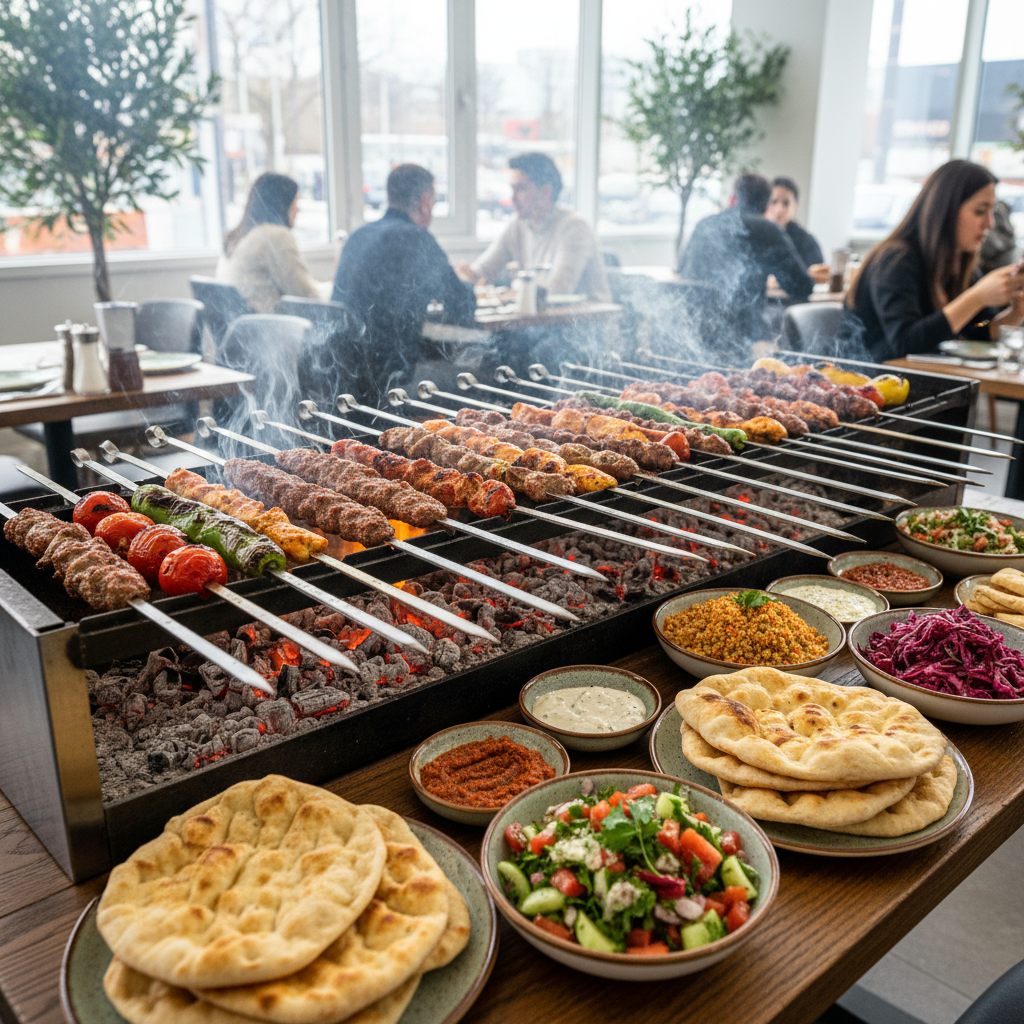
Turkish grilled meats cooking methods are charcoal-fired mangal techniques, skewer shapes (like Adana and shish), and heat management steps that lock in juice and smoky aroma. They use flat metal skewers, high-heat searing, and balanced marinades of spices, yogurt, and olive oil to produce tender, flame-kissed kebabs every time.
By Shawarma Moose • Last updated: April 18, 2026 • Toronto, ON
Above the Fold: Hook & Table of Contents
Master Turkish grilled meats by combining charcoal heat, smart skewering, and simple marinades. This guide breaks down Adana and shish kebab shaping, mangal setup, doner-style roasting principles, and timing for juicy results at home or for events. You’ll also see how Shawarma Moose supports delivery, pickup, and catering in Toronto.
- Hook: Want kebabs that stay juicy, never dry out, and taste like a summer night on Istanbul’s Bosphorus?
- What you’ll learn:
- Essential Turkish grilled meats cooking methods for consistent, restaurant-quality results
- How to choose fuel, skewers, and marinades that enhance flavor and texture
- Exact doneness cues and safe internal temperatures for beef, lamb, and chicken
- Make-ahead strategies for parties, office lunches, and outdoor events
- Table of Contents:
Quick Answer
Turkish grilled meats cooking methods use charcoal heat, flat skewers, and balanced marinades to sear quickly and stay moist. If you’re near 898 College St in Toronto, Shawarma Moose brings those flavors to your door with online ordering for delivery or pickup, and event-ready catering for teams.
Quick Summary
Set up a hot charcoal bed, thread meat on flat skewers, and season simply. Cook close to the coals for fast sears, then shift to indirect heat to finish. Aim for safe internal temperatures and brief rests. For events, prep components ahead and finish fast on a hot grill.
- Core idea: High, even heat + flat skewers = steady cooking and fewer flare-ups.
- Fuel: Natural lump charcoal reaches 900°F+; briquettes hold steady heat longer.
- Timing: Adana/kofta style kebabs typically cook in 8–10 minutes over direct heat.
- Safety: Poultry to 165°F; ground meats to 160°F; whole lamb/beef to 145°F with rest (per USDA guidance).
- Events: Pre-shape skewers, chill, and grill-to-order for fresh, juicy service within minutes.
Local Tips
- Tip 1: Hosting near College Street or Trinity Bellwoods Park? Arrange a grill zone upwind and keep a cooler for marinated meats; Toronto breezes can change quickly along Ossington/College.
- Tip 2: Summer weekends fill fast across the downtown core. For office lunches along the TTC streetcar routes on College, plan pickups before noon to avoid rush lines.
- Tip 3: For corporate teams in the West End, stagger delivery windows so sides arrive first and grills fire right before guests meet—this mirrors how Shawarma Moose stages catering.
IMPORTANT: These tips match Shawarma Moose’s everyday delivery, pickup, and catering playbook in Toronto.
What Are Turkish Grilled Meats Cooking Methods?
They are the traditional techniques behind Turkish kebabs: managing charcoal on a mangal, skewering meat to maximize surface area, and seasoning simply so smoke and fat create flavor. Flat skewers stabilize meat, while two-zone fires finish kebabs gently without drying.
- Mangal setup: A long, shallow charcoal grill that concentrates radiant heat for even browning.
- Skewer logic:
- Flat skewers prevent spinning and expose more surface to heat.
- Wide spacing lets hot air circulate and drives Maillard browning at 300°F+.
- Seasoning approach: Salt, pepper, Aleppo or Urfa pepper, sumac, garlic, yogurt, and olive oil—kept balanced to highlight meat.
- Moisture strategy: Quick sear near coals, then finish slightly higher to avoid fat flare-ups.
- Restaurant-to-home bridge: The same rules guide shawarma trimming and spit-roasting, informing juicy wraps and plates you can order for beef shawarma wraps.
According to Turkey’s culinary tradition, kebabs prioritize texture as much as flavor. In our kitchen, we find 1-inch cube spacing on skewers cooks evenly in about 9–12 minutes over a steady coal bed, producing a rosy center and char-fringed edges that guests love.
Why These Methods Matter (Home Cooks, Event Planners, and Teams)
These techniques deliver reliable juiciness, faster service times, and scalable prep. For busy households and corporate teams, method-driven grilling reduces waste, keeps portions consistent, and ensures food safety. The result is flavorful kebabs that travel well for delivery, pickup, and catered events.
- Consistency: Flat skewers and two-zone heat repeat results across 5 or 500 portions.
- Speed: Pre-shaped Adana kebabs grill in under 10 minutes, supporting tight lunch windows.
- Food safety: Hitting 165°F for poultry and 160°F for ground meats prevents guesswork.
- Flavor integrity: Yogurt- and spice-forward marinades tenderize while resisting burn.
- Operational fit: Matches Shawarma Moose’s dual model—everyday online orders plus corporate/event catering across Toronto.
For corporate lunches, we’ve found a 30-minute stagger—sides first, skewers second—keeps lines moving. Portioning 6–8 ounces of cooked protein per guest typically balances satisfaction with minimal leftovers for downtown teams.
How Turkish Grilling Works: Heat, Time, and Texture
Start with a hot bed of charcoal, then calibrate distance and timing. Sear kebabs 2–3 inches from the coals for color, then raise or slide to indirect heat to finish. Rest briefly so juices redistribute, and serve immediately to preserve crust and aroma.
- Heat sources:
- Radiant heat from glowing coals builds crust quickly.
- Convective heat in the dome/hood finishes thicker cuts without scorching.
- Distances that matter: 2–3 inches for sear; 4–6 inches to finish—adjust if fats flare.
- Timing cues: Beads of juice on the surface signal near-doneness for lamb/beef cubes.
- Carryover cooking: Expect 3–5°F rise after pulling, especially on thicker skewers.
- Rest window: 2–4 minutes on a warm tray maintains moisture without cooling.
We track crust formation visually: a deep brown with micro blistering appears around minute 5–7 for chicken shish on a hot mangal. Turning every 45–60 seconds evens out color while preventing one-side burn, which is especially helpful during windy Toronto evenings.
Types, Methods, and Approaches (From Adana to Doner)
Turkish grilling spans minced-meat Adana, cubed-meat shish, and spit-roasted doner. Each uses distinct shaping, fat ratios, and heat zones. Adana relies on flat skewers and quick sears; shish thrives on even cubes; doner requires layered marination and steady vertical heat.
- Adana (minced, on flat skewers):
- Meat blend often 70–80% lamb with 20–30% beef for balance.
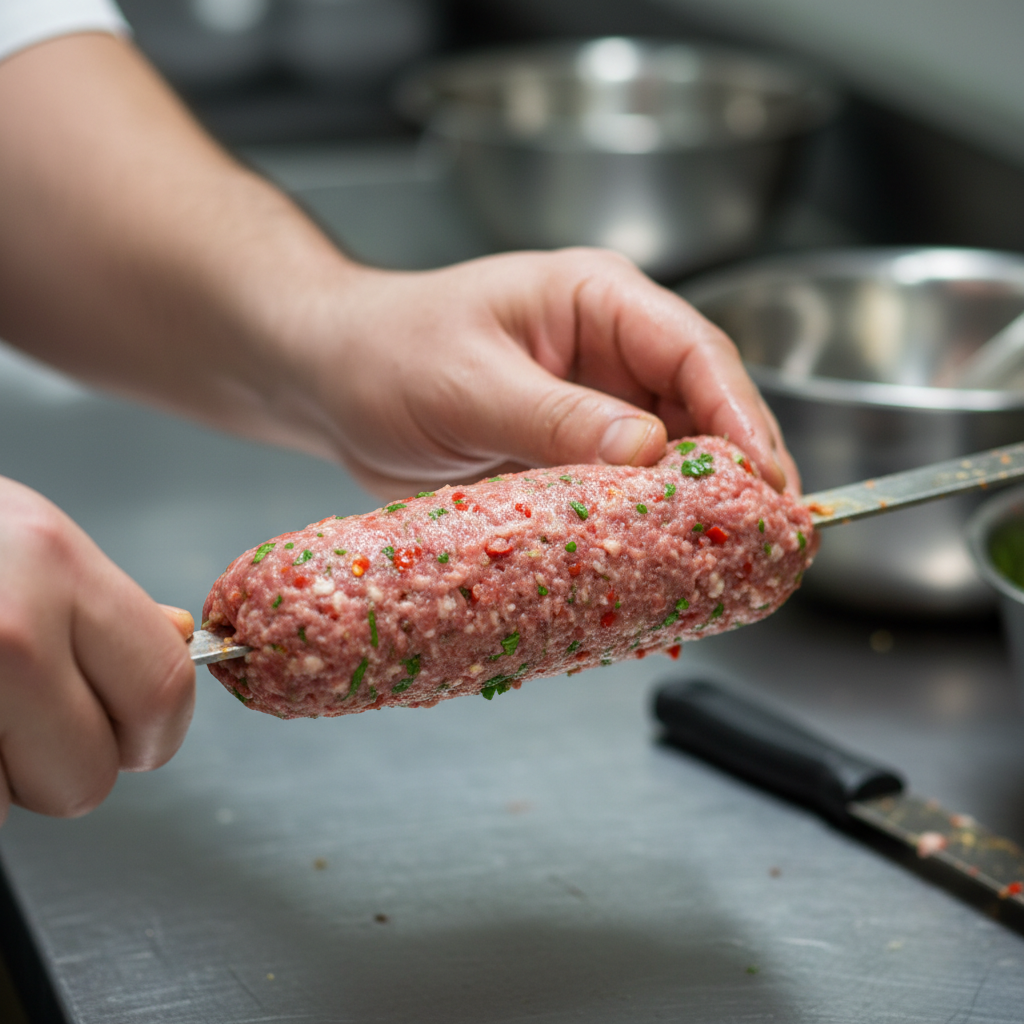
- Hand-mixed with salt, red pepper, and sometimes onion/parsley.
- Pressed onto wide skewers for maximum surface and stability.
- Shish (cubed lamb, beef, or chicken):
- Uniform 1-inch cubes for even heat penetration in 9–12 minutes.
- Marinades: yogurt + lemon for chicken; olive oil + sumac for lamb/beef.
- Vegetable spacers (onion, pepper) tame heat spikes and add aroma.
- Doner (vertical spit):
- Layered, marinated slices rotated for self-basting over radiant burners.
- Trimming and stacking patterns affect texture of each shave.
- Informs the juicy wraps and plates available via mix shawarma.
- Regional accents:
- Urfa style: milder pepper, softer heat for a gentler sear.
- Gaziantep style: bolder spice, closer coal distance for pronounced char.
Take a cue from Istanbul grill streets: alternate fatty lamb with leaner beef for built-in basting during a 10–12 minute cook. This blend reduces dryness by leveraging melting fat as a heat buffer and natural flavor carrier.
Best Practices (Restaurant-Tested, Home-Proven)
Keep marinades simple, manage a two-zone fire, and use flat skewers. Salt early for cubes, later for minced kebabs. Turn frequently for even color, and finish on indirect heat. Rest briefly, then serve hot with warmed flatbreads and bright, acidic sides.
- Marinade math:
- Chicken: yogurt + lemon + garlic + paprika for 2–4 hours (not overnight).
- Lamb/beef: olive oil + sumac + pepper + thyme for 1–2 hours.
- Ground mixes: season closer to cook time to avoid protein “tightening.”
- Fire control: Build a direct zone (sear) and an indirect zone (finish). Add fresh coals every 30–40 minutes during long sessions.
- Skewer spacing: Leave 1/4–1/2 inch between strands of Adana for heat flow.
- Finishing move: Brush with a paprika-oil blend in the last 60 seconds for sheen and spice bloom.
- Serve smart: Pair with sumac onions, pickles, and herbs to balance richness and smoke.
We’ve clocked chicken shish reaching 160°F in about 8–9 minutes over direct heat on a hot mangal, finishing to 165°F on the cool side in 1–2 minutes. Those minutes matter—pulling late by even 60 seconds can dehydrate thin pieces.
Tools and Resources (From Skewers to Thermometers)
Use flat steel skewers, a sturdy charcoal mangal, and an instant-read thermometer. Lump charcoal provides intense heat; briquettes offer longer stability. Heat-resistant gloves and a wire brush keep service safe and fast for both home cooks and catering teams.
- Skewers:
- Flat, 3/8–1/2 inch wide for Adana and shish stability.
- Long handles to keep hands away from 700–900°F zones.
- Fuel:
- Lump charcoal: higher peak heat for faster sears.
- Briquettes: predictable burn for 60–90 minutes.
- Thermometry: Instant-read probe for poultry and ground meats, leave-in probe for thicker lamb/beef.
- Fire tools: Chimney starter, tongs, heat-proof tray, basting brush, and foil for rest tents.
- Food safety: Separate raw and cooked zones; sanitize boards and tongs between batches.
In our experience on College Street, a chimney starter lights a full basket of lump charcoal in 15–18 minutes even on windy days—critical when the lunchtime rush is stacked with pickup orders and riders waiting at the curb.
Gas vs Charcoal vs Broiler: Quick Comparison
| Method | Heat Profile | Best Use | Pros | Watch-outs |
|---|---|---|---|---|
| Charcoal (Mangal) | Radiant + convective, 700–900°F peaks | Adana, shish, quick sears | Authentic smoke, fast crust | Needs ash management and flare-up control |
| Gas Grill | Even, controllable, 500–650°F | Weeknight kebabs, steady batches | Simple control, clean | Less smoke, add wood chunk for aroma |
| Oven Broiler | Top-down radiant, 500–550°F | Apartment-friendly kebabs | Weather-proof, consistent | Flip often; tray height is critical |
Case Studies and Real-World Examples (Toronto)
Stagger prep, reserve a hot zone, and finish fast. Toronto teams see the best results when skewers are pre-shaped and chilled, sides arrive first, and finishing sears happen moments before service. This sequence protects texture during delivery and large-format plating.
- Office lunch on College Street (40 guests):
- Prep: 60 Adana skewers formed the evening prior; chilled on trays.
- Cook: 8–10 minute grills in waves of 10–12 skewers; rest 2 minutes.
- Service: Sumac onions and pickles laid out 10 minutes early; wraps assembled to order.
- Park gathering near Trinity Bellwoods (25 guests):
- Fuel: Lump charcoal with a small briquette buffer for steady heat over 90 minutes.
- Menu: Chicken shish (165°F), lamb shish (145°F + rest), grilled peppers.
- Timing: 5-minute sear + 3–4-minute finish per batch; sides pre-packed.
- Corporate happy hour (downtown, 80 guests):
- Flow: Sides and breads arrive first; grills light upon arrival for fresh kebabs.
- Scaling: Two grills running parallel reduce wait times by ~30%.
- Outcome: Consistent texture and temperature across 150+ portions.
For make-at-home inspiration, our chef tips guide on kebab texture explores fat ratios, hand-mixing, and rest windows; it pairs well with our chef tips guide and a broader primer on regional flavors in this authentic flavors you’ll love article.
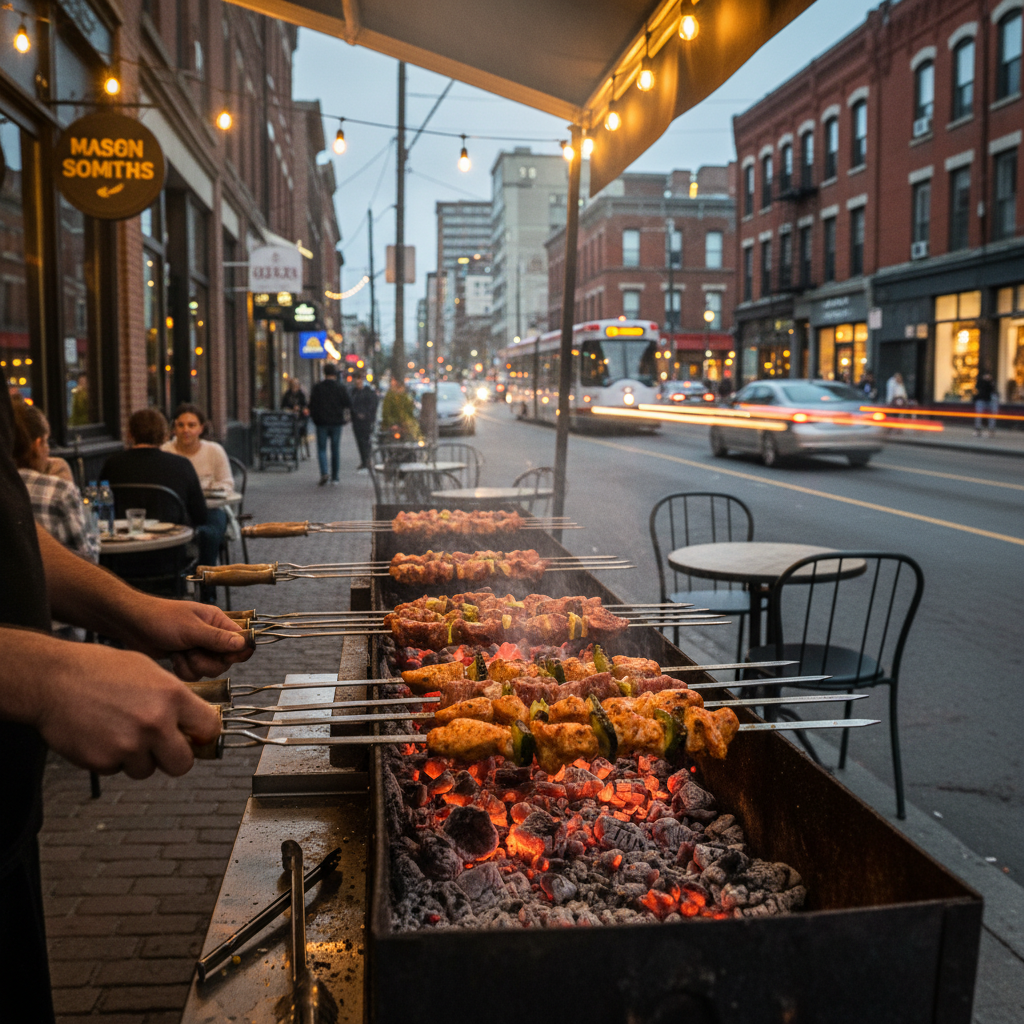
Planning an event?
- Tell us headcount, dietary notes, and timing.
- We’ll stage sides first, then finish skewers moments before you serve.
- Prefer simple? Order wraps and plates for delivery or pickup from 898 College St.
Explore our menu favorites like the beef shawarma wrap or the hearty mix shawarma plate and build your spread around them.
FAQ
Keep skewers flat, heat high, and marinades balanced. Cook poultry to 165°F and ground meats to 160°F. Rest 2–4 minutes before serving. For events, pre-shape and chill skewers, then grill-to-order in waves so each platter tastes freshly made.
How do I keep kebabs from falling off the skewer?
Use flat skewers for better grip. For Adana-style, press the mixture firmly with wet hands and create small ridges so heat penetrates evenly. Chill formed skewers 30–60 minutes before grilling. Turn gently every 45–60 seconds and finish on a cooler zone to set the structure.
What’s the best marinade time for chicken shish?
Aim for 2–4 hours in a yogurt, lemon, garlic, and paprika blend. Longer marinades can over-tenderize the exterior. Thread uniformly sized cubes to cook in 8–10 minutes over high heat, finishing to 165°F. Rest a couple of minutes before serving with sumac onions and herbs.
Can I get authentic results on a gas grill?
Yes. Preheat to high (500–650°F). Use a wood chunk wrapped in foil for added smoke, and create a two-zone setup by leaving one burner low. Sear 2–3 minutes per side near the hot zone, then finish on the cooler side to target internal temperatures without scorching.
What are safe internal temperatures for kebabs?
Follow USDA guidance: poultry at 165°F; ground beef/lamb at 160°F; whole cuts of lamb/beef at 145°F with a brief rest. Use an instant-read thermometer and remember carryover can rise 3–5°F after you pull the kebabs from the grill.
How do I scale for a corporate lunch?
Pre-shape and chill skewers on trays, then grill in waves of 10–12. Stage sides and breads first. Keep a hot zone reserved for finishing. We’ve seen two grills cut service times by ~30% for groups of 60–80 when delivery and plating are coordinated ahead.
Conclusion + Key Takeaways
Great Turkish grilling comes from hot coals, flat skewers, simple marinades, and disciplined finishing. Control heat, watch doneness, and rest briefly. For Toronto teams, the same system scales to fast, flavorful catering and reliable delivery or pickup from a trusted local kitchen.
- Key Takeaways:
- Prioritize a two-zone fire and flat skewers for control and consistency.
- Use yogurt-based marinades for chicken; olive oil and sumac for lamb/beef.
- Target 165°F (poultry), 160°F (ground), and 145°F + rest (whole cuts).
- For events, pre-shape, chill, and finish fast for just-grilled texture.
- In Toronto, leverage Shawarma Moose for delivery, pickup, or catered spreads.
- Next steps:
- Practice Adana shaping on flat skewers and time a 9–10 minute cook.
- Test a two-zone setup and record grill distances that work for you.
- Plan an office tasting flight with lamb, beef, and chicken shish.
Want a deeper regional dive? Browse our Toronto-focused guide to dishes and flavors for context you can taste in every bite found in our comprehensive Toronto guide and explore pantry building in our Mediterranean shawarma ingredients overview.
Related Articles (What to Read Next)
- Choosing cuts for kebabs: lamb shoulder vs leg and how fat influences sear.
- Building a spice pantry: sumac, Urfa pepper, Aleppo pepper, thyme, and more.
- Delivery-proof sides: salads and dips that hold texture from kitchen to office.