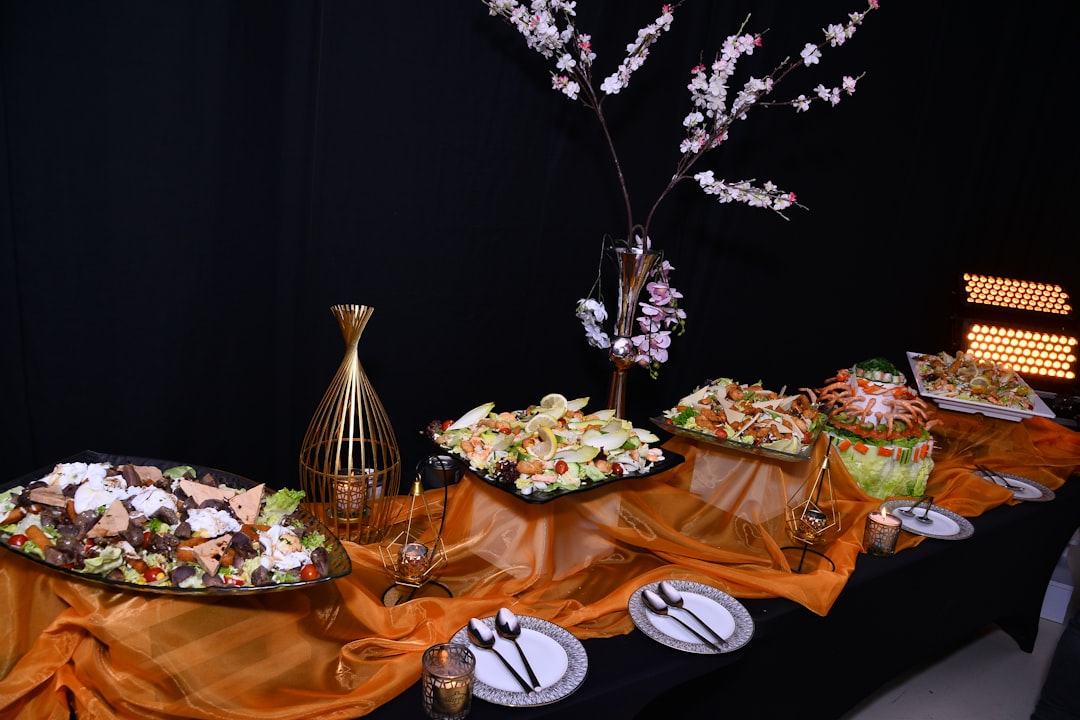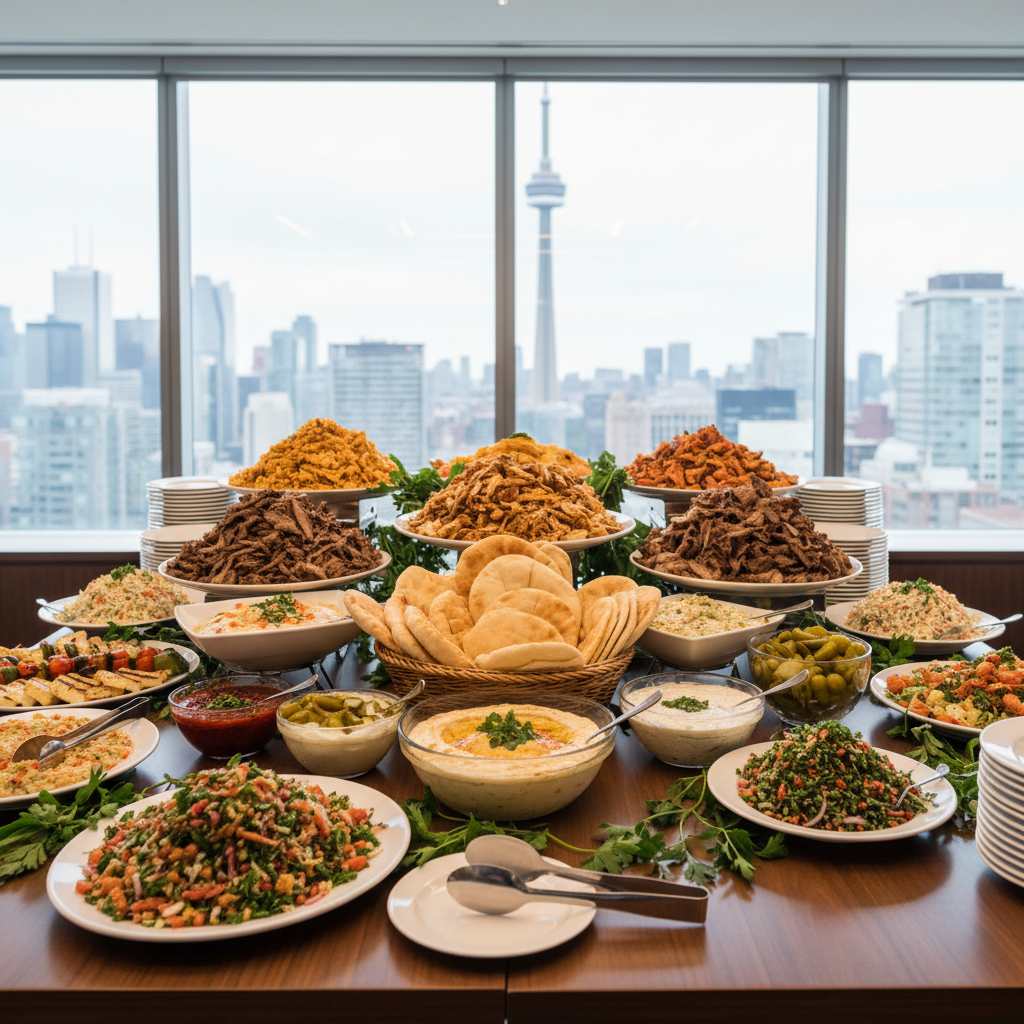
How to order catering for corporate events is a clear, repeatable process: set objectives, confirm headcount and dietary needs, choose a service style, lock menus, schedule delivery or pickup, and assign onsite roles. This approach ensures food arrives hot, lines move fast, and your team eats well without disrupting the agenda.
By Shawarma Moose • Last updated: 2026-04-17
Quick Summary
Order corporate catering by clarifying the event goal, confirming the guest count, capturing dietary needs, selecting the right service style (buffet, boxed, or build-your-own), finalizing the menu, and coordinating delivery and setup details. Document roles, label food clearly, and schedule buffer time to avoid delays.
- What you’ll learn: A practical, step-by-step way to plan corporate catering with zero guesswork.
- Why it matters: Well-run meals keep agendas on track and boost attendee satisfaction.
- Use case: Toronto teams ordering shawarma and Turkish cuisine from Shawarma Moose for meetings or offsites.
- Deliverables: Checklists, menu planning tips, logistics guidance, and troubleshooting playbooks.
Quick Answer
To order catering for corporate events in Toronto, confirm headcount and dietary needs, pick a service style, and schedule delivery to your venue. Shawarma Moose (898 College St) offers online ordering for delivery or pickup with shawarma and Turkish cuisine that suits mixed teams and busy agendas.
Local Tips
- Tip 1: If your venue is along King Street or near the PATH, add 15–20 minutes for courier access during rush hour; loading zones fill fast.
- Tip 2: For winter events, request insulated carriers and confirm onsite warming space; Toronto weather can slow arrivals and cool food quickly.
- Tip 3: Booking near Queen West or College Street? Share entry codes and elevator instructions in advance—streamlines handoff and keeps the agenda on time.
IMPORTANT: These tips reflect how Toronto venues operate and align with Shawarma Moose’s delivery and pickup services.
Introduction
Corporate catering succeeds when it’s planned like a mini project: define goals, size the crowd, respect dietary needs, choose a service style, and lock delivery details. This reduces wait times, prevents food waste, and keeps speakers and sessions running on schedule.
We’ve supported office lunches, sales kickoffs, and multi-room trainings across Toronto. The same playbook works every time:
- Clear objectives to right-size portions and timing.
- Headcount + dietary data to plan inclusive menus.
- Service style alignment with your agenda and space.
- Delivery logistics that match venue access and rush-hour realities.
- Labeling and flow so people eat quickly and happily.
In our experience, catered meals that start on time help events hit their KPIs—attendance, engagement, and session completion—without scrambling the schedule.
Before You Start (Prerequisites)
Gather essentials before placing your order: event goal, firm headcount, dietary needs, service style preference, delivery window, and venue access instructions. With this data, your caterer can size portions, route drivers, and prepare a balanced menu that fits your agenda.
Lock these details first:
- Event objective: Client impress, employee appreciation, all-hands, training, or workshop.
- Headcount: Confirm a realistic range and freeze 24–48 hours prior.
- Dietary needs: Halal, vegetarian, vegan, gluten-sensitive, nut-free; collect via RSVP or calendar poll.
- Service style: Buffet, boxed, or build-your-own (shawarma bar).
- Timing: Lunch, late-afternoon break, or dinner; include buffer for intros and Q&A.
- Delivery or pickup: Share loading dock, parking, buzzer codes, and elevator access.
- Onsite equipment: Tables, power for warmers, garbage/recycling plan.
Example (Toronto office lunch): A tech team near Spadina and College locks 60 attendees, notes 12 vegetarian and 4 gluten-sensitive guests, chooses a build-your-own shawarma bar, and sets delivery 30 minutes before lunch.
Why this matters: Clear inputs prevent under/over-ordering and avoid allergen risks. Toronto Public Health guidance emphasizes hot-holding and labeling—better planning makes compliance simple.
Step-by-Step: How to Order Catering for Corporate Events
Follow eight steps: define the goal, confirm headcount, capture dietary needs, choose service style, design the menu, schedule delivery or pickup, prepare the room, and assign hosts. This sequence keeps food hot, lines moving, and meetings on time.
1) Define the event goal
- Decide the vibe: Fast working lunch, celebratory spread, or client-facing showcase.
- Outcome first: If networking is key, choose handhelds and dispersed stations.
- Menu tie-in: Turkish mezze encourages mingling; boxed meals suit heads-down training.
Action: Write a one-line goal (e.g., “Feed 80 in 25 minutes between sessions”). Share it with your caterer.
2) Confirm headcount and portions
- Collect RSVPs and close 48 hours before.
- Portion planning: Build-your-own bars reduce waste; people take what they want.
- Buffer: Add 5–10% for walk-ins and bigger appetites.
Action: Provide final numbers and any late adds the morning before delivery.
3) Capture dietary needs early
- Halal-friendly proteins: Chicken and beef shawarma.
- Vegetarian/vegan: Falafel, roasted vegetables, hummus, tabbouleh.
- Gluten-sensitive: Lettuce wraps and rice in place of pita.
Action: Ask invitees to note restrictions in the calendar RSVP; aggregate in a simple sheet.
4) Choose a service style
- Buffet: Fast throughput, great variety. Works for rooms with space to queue.
- Boxed meals: Zero setup, ideal for training rooms or staggered arrivals.
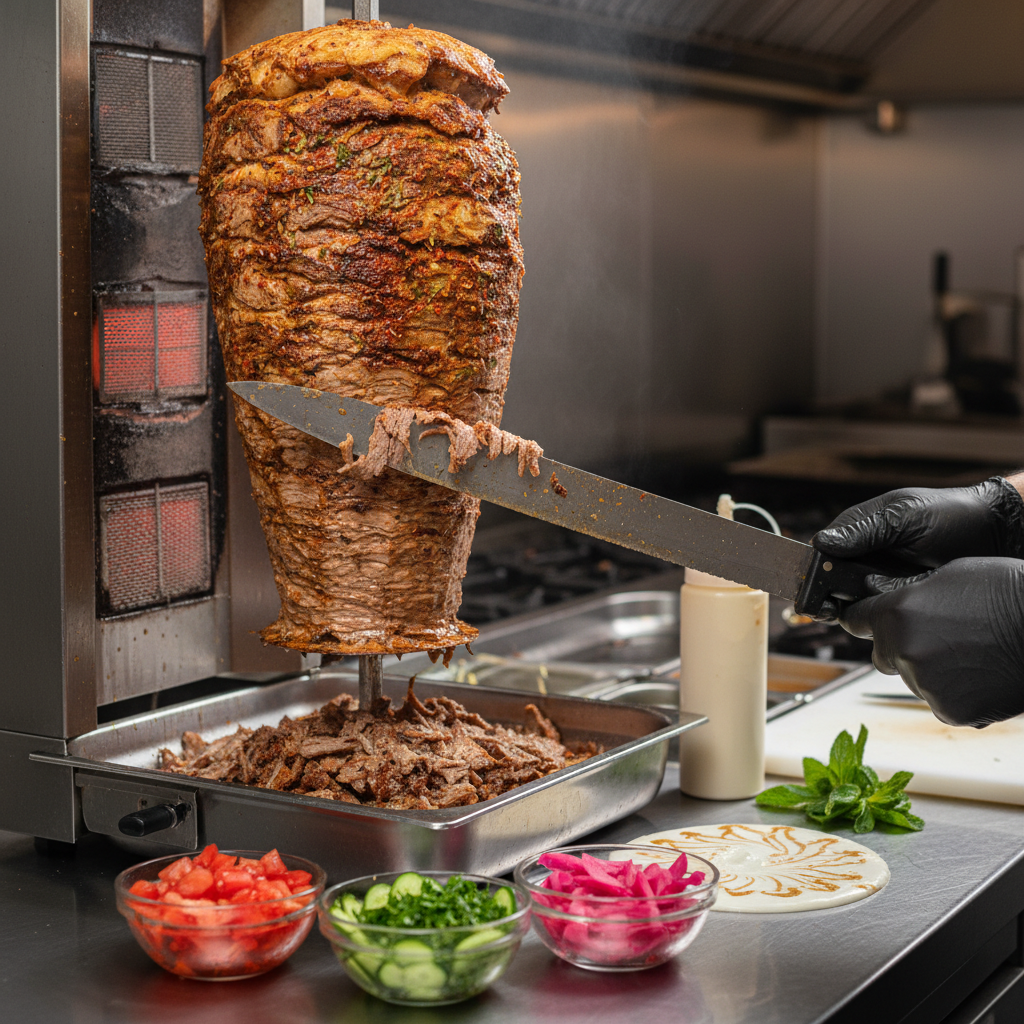
- Build-your-own shawarma bar: High engagement and dietary flexibility.
Action: Match style to agenda and room layout. If time is tight, favor boxed or mixed styles.
5) Design the menu
- Core proteins: Chicken shawarma, beef shawarma, and doner kebab.
- Veg options: Falafel, grilled veg, hearty salads.
- Sides and sauces: Rice, fries, pickles, tahini, garlic sauce, hot sauce.
- Balance: Aim for color, texture, and a mix of rich and fresh (mezze and salads).
Action: Use a simple ratio: two proteins, one vegetarian, three sides, two salads, and two sauces.
6) Schedule delivery or pickup
- Timing window: Target arrival 20–30 minutes before the meal start.
- Access instructions: Buzzer codes, loading docks, elevators, parking spots.
- Contact onsite: Name and phone for quick handoff.
Action: Share floor plans or photos if room access is tricky; it speeds unloading.
7) Prepare the room and flow
- Table placement: Separate plates, mains, salads, and beverages to reduce bottlenecks.
- Signage and labeling: Clear labels near each tray (veg, contains nuts, spicy).
- Traffic plan: One-way lines reduce congestion; set utensil stations at exits.
Action: Assign a host to keep lines moving and restock napkins and cutlery.
8) Confirm cleanup and leftovers
- Waste stations: Recycling, organics, and landfill bins near exits.
- Leftovers: Have containers ready; offer take-home to reduce waste.
- Feedback loop: Capture quick notes for next time (popular items, timing).
Action: Snap photos of setup that worked; reuse the layout next event.
Planner’s note: For groups of 50–150, we’ve found a single, well-labeled buffet line with a separate salad table moves faster than two cramped parallel lines. Labeling reduces questions and speeds choices.
Comparison: Buffet, Boxed, or Build-Your-Own?
Pick buffet for variety and speed in open rooms, boxed for tight timelines and minimal setup, and build-your-own for engagement and dietary flexibility. Many Toronto teams mix styles—boxed for speakers and a shawarma bar for attendees—to keep schedules tight and morale high.
| Service Style | Best For | Pros | Watchouts |
|---|---|---|---|
| Buffet | Open rooms, 40–200 guests | High variety, fast throughput, easy refills | Needs space; organize flow to avoid bottlenecks |
| Boxed Meals | Training rooms, staggered arrivals | Minimal setup, easy headcount control | Less customization; manage labels clearly |
| Build-Your-Own Shawarma Bar | Mixed dietary needs, engagement | Flexible, fun, reduces waste | Requires surface area; label allergens |
For client meetings, we often pair a compact mezze spread (hummus, baba ghanoush, salads) with individually wrapped shawarma for a clean, professional look.
Pricing Considerations (No Dollar Amounts)
Plan value, not just volume. Pricing typically reflects headcount, protein mix, sides, packaging, service style, delivery window, and any onsite setup. Align menu choices with objectives so you pay for impact—speed, variety, or flexibility—not extras you don’t need.
- Headcount tiers: Portioning scales with guest count and appetite patterns.
- Protein choices: Mixed proteins affect prep time and packaging.
- Service style: Boxed vs buffet vs build-your-own influences labor and materials.
- Delivery window: Peak-hour handoffs can require additional coordination.
- Dietary accommodations: Dedicated vegetarian/vegan trays simplify labeling and reduce cross-contact.
- Sustainability options: Eco trays and compostables can be requested.
Here’s the thing: ordering precisely to your agenda saves waste. We help you match serving formats to your meeting flow so every tray works hard for your goals.
Logistics: Delivery, Setup, and Food Safety
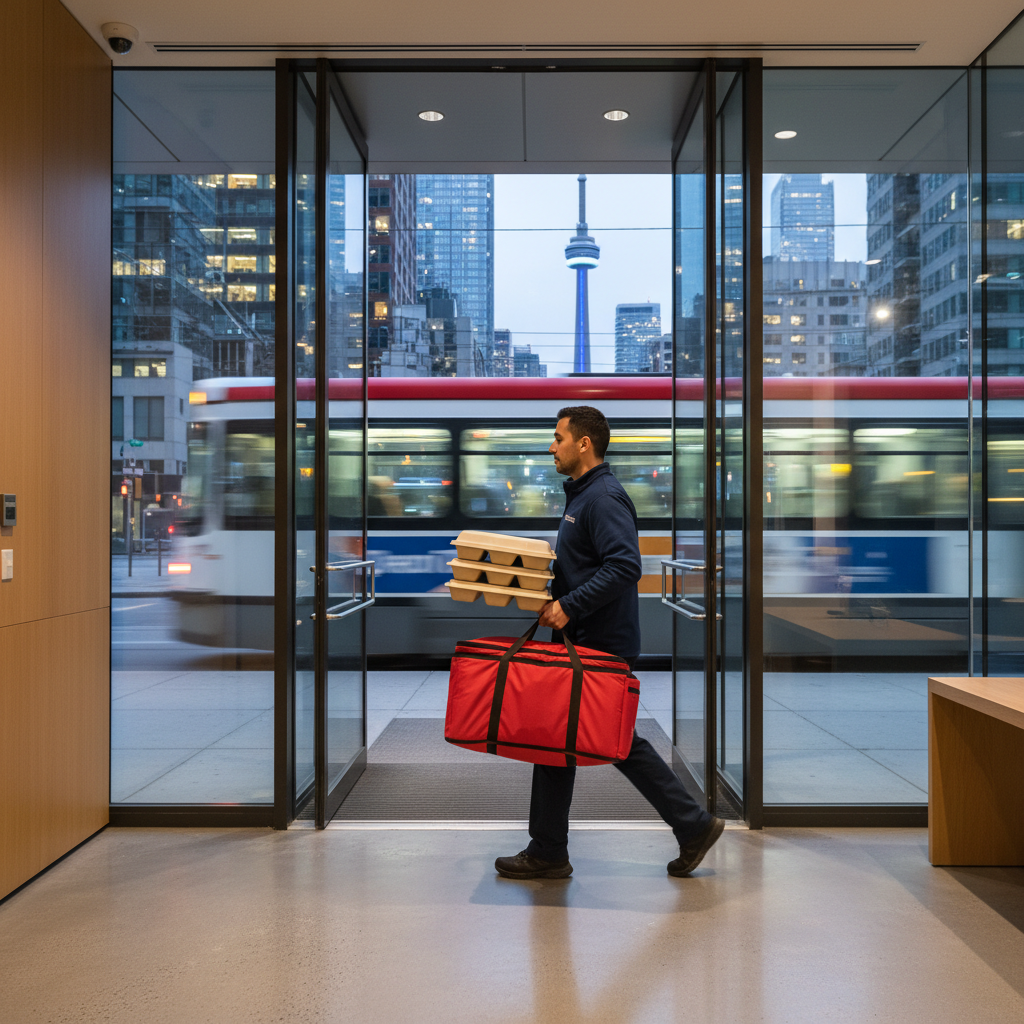
Great catering pairs timing with temperature control. Aim for arrival 20–30 minutes early, share clear access notes, and maintain safe holding temperatures. Assign a host to monitor lines and restock essentials so sessions restart on time.
- Delivery planning: For downtown addresses, provide loading zones and elevator access; rush-hour adds buffer.
- Food safety basics: Hot items should be held at roughly 140°F (60°C) or above; cold salads stay chilled.
- Setup flow: Separate proteins from salads; utensils and napkins at the end of the line.
- Labeling: Clear tags for vegan, vegetarian, halal, and contains-nuts.
We routinely stage deliveries near Queen West, King Street, and the Financial District. Sharing a contact phone and floor details reduces handoff time dramatically.
Menu Planning with Shawarma Moose (Examples)
Design inclusive menus by pairing two shawarma proteins with a strong vegetarian option, plus salads and dips. This balances flavor and dietary needs while keeping lines quick. Add rice or fries for heartiness and choose sauces to match spice tolerance.
- Example 1: Working lunch (40–60): Chicken shawarma, falafel, rice, fattoush, hummus, pickles, tahini, garlic sauce.
- Example 2: Client demo (20–30): Individually wrapped chicken and beef shawarma, mezze salads, baklava bites.
- Example 3: All-hands (80–120): Build-your-own shawarma bar with veg tray, tabbouleh, rice, mixed greens, assorted sauces.
- Example 4: Training day: Boxed bowls with chicken or falafel, rice, salad, pickles, and tahini; labeled lids.
- Example 5: Mixed dietary needs: Falafel-forward spread with grilled veggies, multiple salads, and lettuce-wrap station.
- Example 6: Evening meetup: Hearty proteins, warm sides, and extra sauces for late appetites.
Want help tailoring a spread to your team? Explore our corporate catering options and Toronto catering menu.
Request a 10-minute planning chat
Share headcount, dietary needs, and timing. We’ll suggest the fastest, most inclusive setup and confirm delivery/pickup windows that suit your venue.
Troubleshooting Common Issues
When plans change, protect the agenda. Keep backup utensils and serving space, label clearly, and have a point person for dietary questions. If attendance spikes, prioritize protein portions and add extra salad bowls to stretch servings without slowing the line.
- Late arrivals: Hold back a portion of mains for stragglers; restock salads midway.
- Higher turnout than expected: Shift to smaller portions; add extra salad bowls to keep plates full.
- Allergen concerns: Use dedicated veg and gluten-sensitive trays; keep tongs separate.
- Room bottlenecks: Split lines by protein; move beverages away from the main queue.
- Schedule slips: Keep lids on hot trays and assign a runner to coordinate with speakers.
We’ve found that a single, empowered host can recover 5–10 minutes of schedule time by directing flow and answering quick questions.
Advanced Tips (Optional)
Elevate the experience with place-and-go layouts, staggered drops for long agendas, and labeled “cheat sheets” for hosts. For client-facing events, combine a compact mezze display with neatly wrapped shawarma to balance polish with speed.
- Place-and-go staging: We deliver labeled trays that are arranged for minimal handling—great for tight agendas.
- Staggered drops: For multi-hour sessions, schedule two small deliveries instead of one large one.
- Host cheat sheet: A one-pager listing contents, allergens, and suggested flow saves announcements.
- Photography-friendly layout: Colorful salads up front, warm trays centered, sauces flanking for easy access.
- Speaker priority: Provide boxed meals for presenters so they can eat and reset the room on time.
These small touches can lift satisfaction scores significantly, especially for external-facing meetings where first impressions matter.
FAQ
These quick answers cover ordering timelines, dietary accommodations, delivery logistics, setup options, and how to keep food hot and lines moving. Share them with your planning team so everyone follows the same playbook.
How far in advance should I order corporate catering?
For typical weekday lunches, placing your order 48–72 hours in advance is ideal. Larger all-hands or multi-room events benefit from a week of lead time. If you’re close to the date, call us—same-day solutions are sometimes possible with simplified menus and pickup.
Can you accommodate halal, vegetarian, vegan, and gluten-sensitive guests?
Yes. Our shawarma proteins are halal-friendly, and we offer robust vegetarian and vegan options like falafel, salads, and mezze. For gluten-sensitive guests, we recommend lettuce wraps and rice in place of pita. We label trays clearly to help guests make quick, safe choices.
What information helps deliveries run on time?
Provide loading zone or parking details, buzzer and elevator instructions, floor plans for setup, and a contact phone. If your address is on a busy corridor like King Street or near the PATH, add a 15–20 minute buffer for courier access during peak traffic.
Do you set up buffet lines, or is it drop-off only?
We primarily offer efficient drop-off with clear labeling and an easy-flow layout. For larger events, we can advise on table placement, signage, and host assignments so your team can set up quickly and keep lines moving.
What’s the best way to keep food hot during schedule delays?
Keep lids on hot trays until the line is ready to move and stage salads first if there’s a delay. If your event extends over several hours, consider staggered drops so fresh trays arrive as needed.
Conclusion
Ordering catering for corporate events is straightforward when you lead with objectives, data, and logistics. Pick a service style that fits your space, label well, and build in buffer time. Your reward is a smooth agenda and a well-fed, focused team.
- Define success and plan food to serve that outcome.
- Document headcount and diets to build inclusive menus.
- Match service style to room and timeline.
- Share access notes and assign an onsite host.
- Iterate with quick feedback for next time.
Additional Resources
Use these resources to plan smarter: sample menus, service style guides, and logistics checklists. Combine them with your venue’s access details to cut setup time and start on schedule.
- Menu inspiration from our corporate catering and Toronto catering pages.
- Ideas for Mediterranean spreads in this short read on Mediterranean catering services.
- Planning insights on why local teams love Turkish cuisine for events—see our story on Toronto business preferences.
- Toronto scheduling tip: avoid deliveries at the top of the hour around the Financial District when elevators peak.