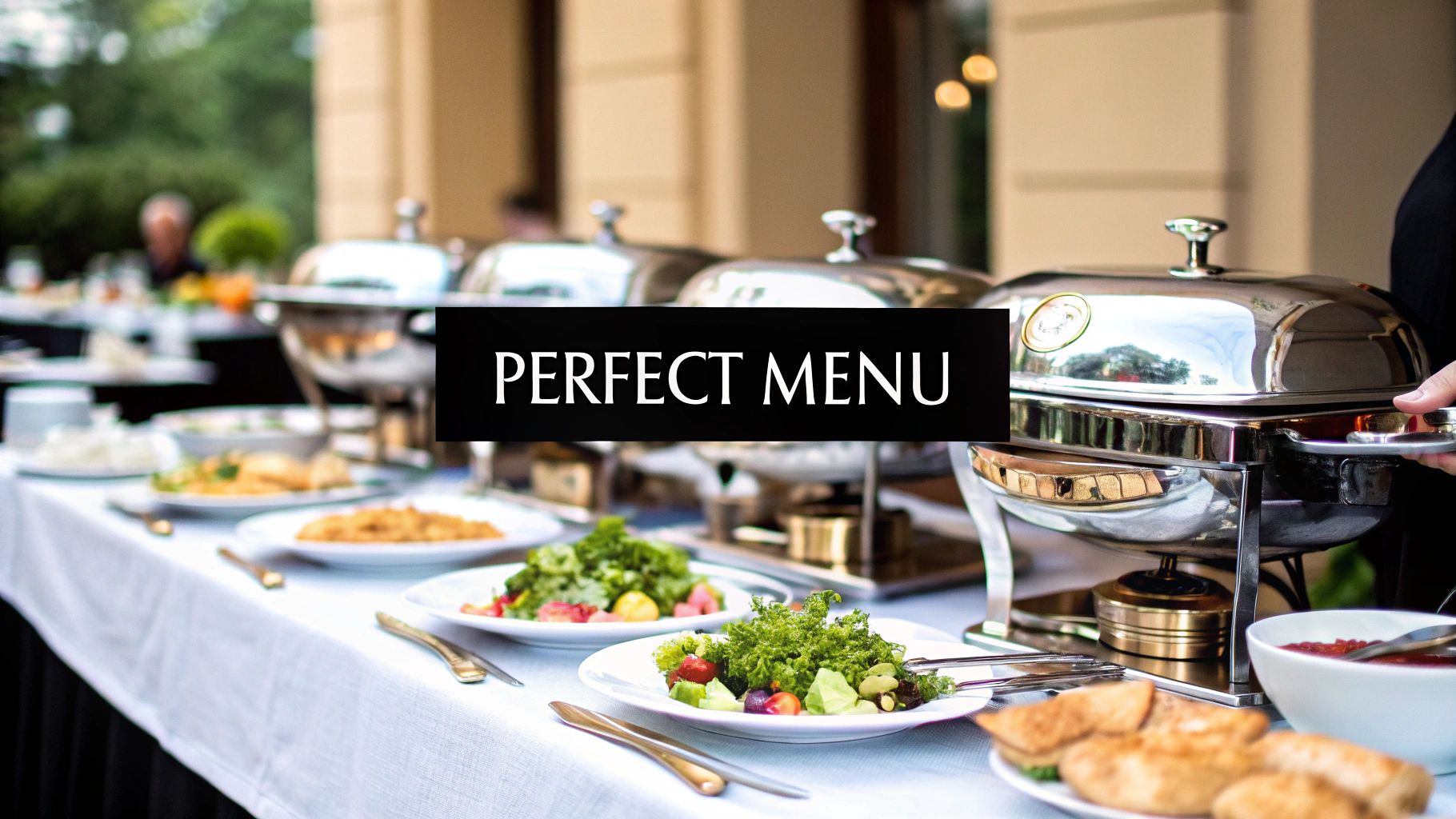
A well-planned menu is the heart of any great corporate event. It's so much more than just fuel; it's a direct line to your guests' experience, shaping their perception of the entire day and, by extension, your company.
Why Your Event Menu Is More Than Just Food
Think of your catering menu as the event’s unspoken language. A tired, generic spread can quietly suggest your company is out of touch. On the other hand, a vibrant, creative menu sends a powerful message—it speaks to your attention to detail, your commitment to quality, and how much you value the people in the room.
Food is almost always one of the most memorable parts of a gathering, for better or worse. That makes it a critical piece of your event strategy, turning a simple meal into a branding opportunity. Every dish, from the first canapé to the last bite of dessert, helps tell the story of your event and your company culture. It’s an investment that pays back in spades through goodwill and positive buzz.
Setting the Tone for Your Event
The menu is your first and best chance to establish the atmosphere you're going for. Is this a sophisticated, black-tie gala or a relaxed, roll-up-your-sleeves workshop? Your food choices need to line up with that vision.
- Formal and Elegant: Think plated, multi-course dinners with refined ingredients and thoughtful wine pairings. This instantly creates a sense of prestige, perfect for an awards night or a key client appreciation dinner.
- Casual and Collaborative: Interactive food stations are brilliant for this. A build-your-own taco bar or a gourmet sandwich buffet naturally gets people moving, mingling, and talking. It’s a great fit for team-building events and casual networking sessions.
- Fast-Paced and Efficient: For those working lunches or packed conference schedules, convenience is key. Quality boxed lunches or well-stocked grab-and-go stations signal that you respect everyone's time while still providing a great meal.
When the menu style clicks with the event's purpose, the food becomes a seamless part of the experience. It feels right. Getting this alignment down is crucial for making a real impact.
A Reflection of Company Values
Beyond just setting a mood, your menu is a fantastic—and often overlooked—way to put your company values on display. It’s a chance to show guests you care not only about their enjoyment but also about bigger ideas like wellness, sustainability, and inclusivity.
A menu that thoughtfully accommodates different dietary needs sends a crystal-clear message: everyone here is welcome and valued. This simple act of inclusivity can do wonders for your company’s reputation and make attendees feel a true sense of belonging.
For instance, featuring locally sourced, farm-to-table ingredients shows you support your community and care about sustainability. Offering a generous selection of delicious plant-based, healthy, and allergen-free options puts employee well-being front and centre. Each choice is a chance to reinforce who you are as a brand, turning a meal into a meaningful statement without you ever having to say a word.
Structuring Your Menu for Different Corporate Events
Picking the right menu for a corporate event is about so much more than just the food. It’s about choosing a service style that actually fits the vibe and purpose of your gathering. The way you serve the meal sets the tone—it influences how people interact, how the schedule flows, and the overall atmosphere. Get it wrong, and you can throw off the whole rhythm of the event. Get it right, and it feels seamless.
Think about it: a fast-paced morning training session has completely different catering needs than a black-tie awards gala. One requires quick, no-fuss efficiency, while the other is all about elegance and a more relaxed pace. Understanding these differences is the secret to building a menu that not only tastes amazing but also helps you hit your event goals.
This infographic breaks down just how much your menu choices can impact key outcomes like brand perception, networking, and team morale.
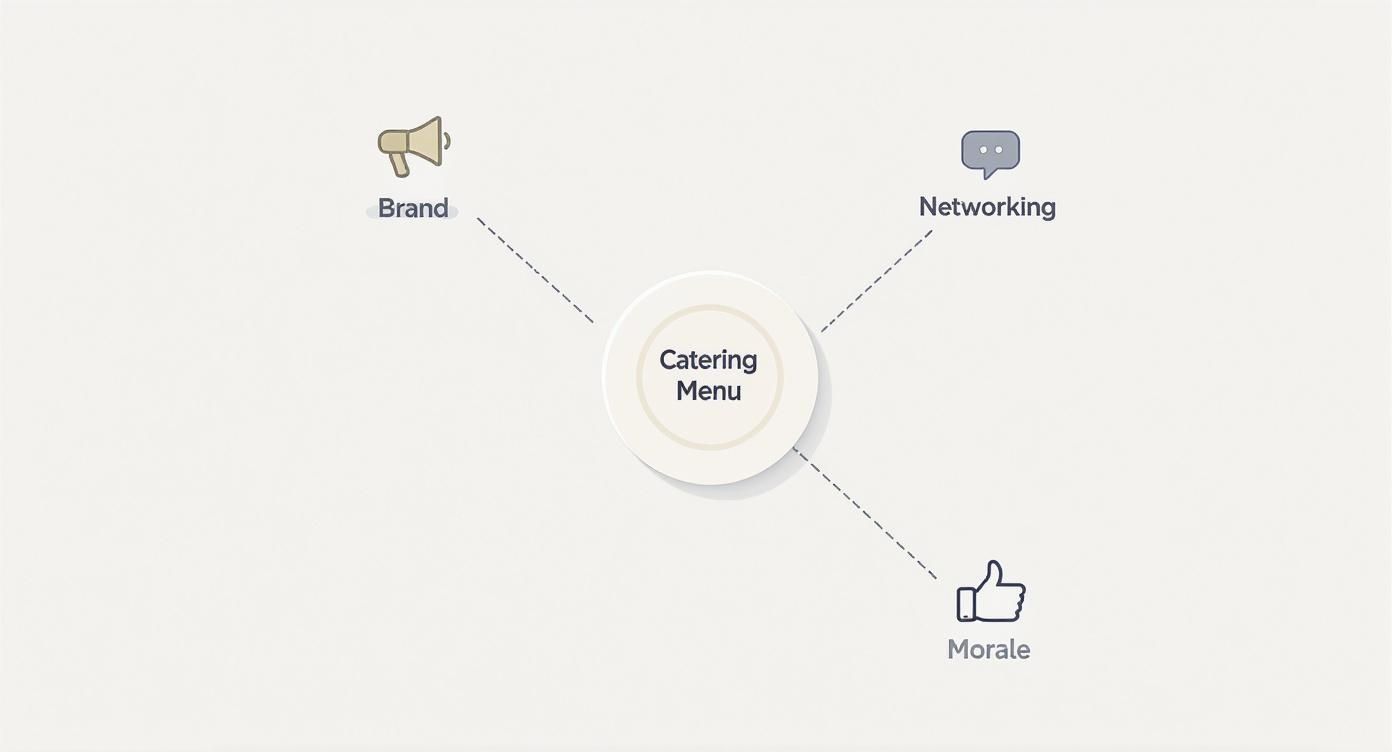
As you can see, every little detail adds up to create the bigger picture. Your menu is a surprisingly powerful tool for making your event a true success.
Matching the Format to the Function
Before you even think about food, think about your event’s main goal. Are you trying to educate, celebrate, get people collaborating, or impress a few key clients? Your answer is the key that unlocks the perfect catering format.
-
Buffets for Flexibility and Variety: Buffets are a brilliant option for events with a diverse crowd and a more laid-back feel, like a company-wide lunch or a team-building day. They get people up, moving, and mingling, all while offering a wide range of choices to keep everyone happy.
-
Plated Dinners for Formality and Focus: When you need a touch of class—say, for an annual awards dinner or a formal client meeting—a plated dinner is the way to go. It creates a structured timeline with minimal distractions, which is perfect if you have speeches or presentations planned.
-
Food Stations for Interaction and Engagement: If you want to create a buzzing, social atmosphere, nothing beats interactive food stations. Picture a build-your-own shawarma bar or a colourful mezze station. This approach turns the meal into a fun experience, sparking conversations as guests build their own perfect plate.
The best corporate events are the ones where the food feels like a natural part of the day, not an interruption. Choosing the right format makes sure the meal supports your event’s purpose instead of competing with it.
This kind of strategic thinking is becoming more and more crucial. The United States catering market is set to grow at a compound annual growth rate of 6.20% between 2025 and 2034. A huge part of that is driven by corporate demand in places like California's Far West region, where the tech and entertainment industries keep caterers busy.
Logistical Considerations for Each Style
Now, let's get practical. Beyond the atmosphere, you have to think about logistics. How long is your event? What’s the venue like? What does your schedule look like?
To help you decide, here’s a quick comparison of the most popular formats.
Catering Format Comparison for Corporate Events
Choosing the right service style is a critical decision. This table breaks down the most common formats to help you match the catering to your event's specific needs, outlining the best-case scenarios, benefits, and potential drawbacks of each.
| Catering Format | Best For | Advantages | Considerations |
|---|---|---|---|
| Boxed Lunch | Working lunches, tight conference schedules, large-scale events needing quick service. | Extremely efficient, built-in portion control, easy cleanup, simplifies dietary needs. | Can feel less formal; potential for more packaging waste. |
| Buffet Style | Company-wide lunches, team-building days, events with diverse dietary needs. | Offers great variety and flexibility, encourages mingling and networking. | Can lead to queues; requires more space than other formats. |
| Plated Dinner | Awards ceremonies, executive dinners, formal client meetings, holiday parties. | Elegant and formal, controlled service timeline, feels like a special occasion. | Less choice for guests, requires more service staff, need dietary info in advance. |
| Food Stations | Networking events, product launches, receptions where interaction is key. | Highly interactive and engaging, sparks conversation, allows for creative themes. | Can be more complex to set up; may require more space for guest flow. |
Each of these styles has its time and place. A boxed lunch might be the hero of a packed all-day seminar, while a plated dinner is what makes a gala feel truly special. Thinking through these options ensures your catering choice enhances the entire event experience.
For a deeper look into one of the most popular formats, our guide on buffet-style office catering has all the tips you need to pull it off perfectly.
Managing Dietary Needs and Allergen Safety
Let's be frank: successfully navigating dietary restrictions is no longer a simple courtesy in corporate catering—it's an absolute must. A truly great menu is one where every single guest feels seen, respected, and, most importantly, safe. Getting this wrong doesn't just pose a health risk; it sends a clear message that your company isn't as inclusive as it claims to be.
Think of it like building an accessibility ramp next to a staircase. The stairs work for most people, but the ramp ensures everyone can get into the building. In the same way, providing clear, safe, and delicious dietary options ensures everyone can fully participate in the event you've worked so hard to plan.
Gathering Information Proactively
The single best thing you can do to manage dietary needs is to ask about them well in advance. Scrambling on the day of the event is a recipe for stress—for you, your caterer, and your guests. A little proactivity goes a long way.
The easiest time to do this is during the RSVP process. Just add a simple, clear field to your registration form or email invite where attendees can list their requirements. This tiny step gives your caterer the critical information they need to plan properly from the get-go.
Common Dietary Needs to Plan For:
- Vegetarian & Vegan: Guests who don't eat meat, and in the case of vegans, any animal by-products like dairy, eggs, or honey.
- Gluten-Free / Celiac: This requires avoiding wheat, barley, and rye. For those with celiac disease, cross-contamination is a serious health concern.
- Dairy-Free / Lactose Intolerant: Anyone avoiding milk, cheese, yogurt, and other dairy products.
- Nut Allergies: These can range from mild to life-threatening, often requiring a completely nut-free preparation environment.
- Halal: Food prepared according to Islamic dietary law.
This information is the bedrock of a successful catering plan. It’s the difference between thoughtful preparation and last-minute, reactive fixes.
Clear Communication and On-Site Labelling
Once you have the dietary info, the next crucial step is communicating it clearly—first to your caterer, and then to your guests. Never assume. Have a detailed conversation with your catering partner about how they handle allergens. What are their processes?
On the day of the event, clear and accurate labelling is non-negotiable. Every dish on a buffet line or at a food station needs a label that lists its name and highlights common allergens. This simple act empowers guests to make informed choices for themselves, which reduces their anxiety and prevents potential health scares.
Your job isn't just to provide the options, but to make them easy to find and understand. Proper labelling shows a high level of care and professionalism, letting your guests know their well-being is a top priority.
For instance, a simple label reading "Lemon Herb Roasted Chicken (Gluten-Free, Dairy-Free)" makes a world of difference. It gives a guest with dietary needs the confidence to enjoy their meal without worry.
Preventing Cross-Contamination
For guests with severe allergies, especially to things like gluten or nuts, cross-contamination is a major risk. This is what happens when tiny amounts of an allergen get accidentally transferred from one food to another.
Talk to your caterer about these prevention strategies:
- Separate Preparation Areas: Ask if they can prepare allergen-free dishes in a dedicated space using separate utensils and cutting boards.
- Serving Utensils: Make sure every single dish on a buffet has its own spoon or tongs. This stops guests from cross-contaminating dishes by mistake.
- Strategic Buffet Placement: Place the allergen-free dishes at the beginning of the buffet line. This reduces the risk of other foods getting dropped into them as people move down the line.
These behind-the-scenes details are what create a genuinely safe dining experience for everyone.
The Power of Customizable Food Stations
One of the best and most engaging ways to handle a wide range of dietary needs is with customizable food stations. A "build-your-own" concept naturally puts guests in control of what goes on their plate, making accommodations feel seamless.
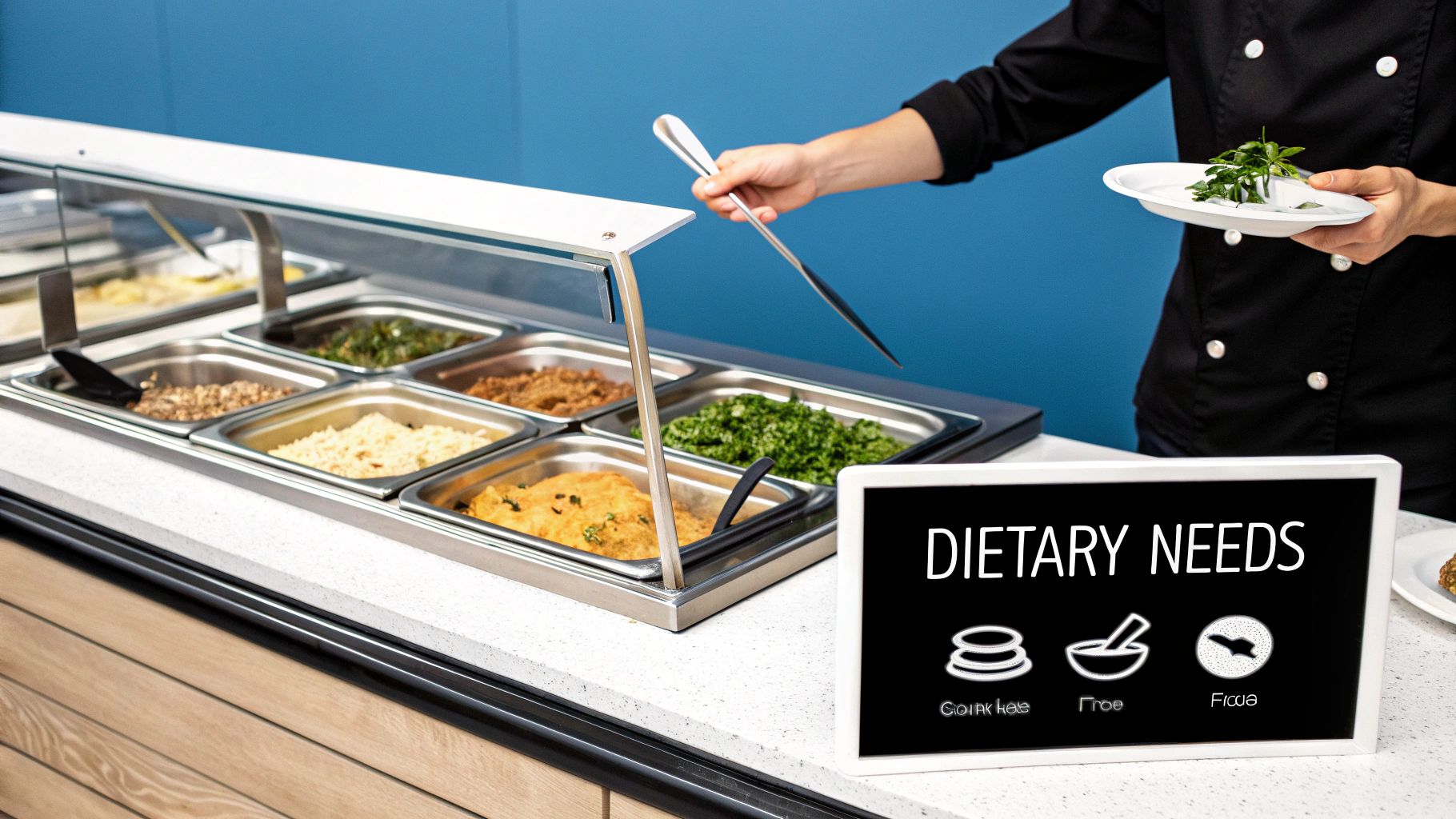
Picture a taco bar. Guests can choose their base (corn or flour tortillas), protein (spiced beef, grilled chicken, black beans), and an array of toppings. Someone who is gluten-free and vegan can easily build a delicious meal without feeling like they're getting a lesser, "special" option. This approach not only solves the dietary puzzle but also makes the whole dining experience more interactive and fun.
For those wanting total control, a custom-built bowl for dietary restrictions is a fantastic way to ensure every need is met with both precision and flavour.
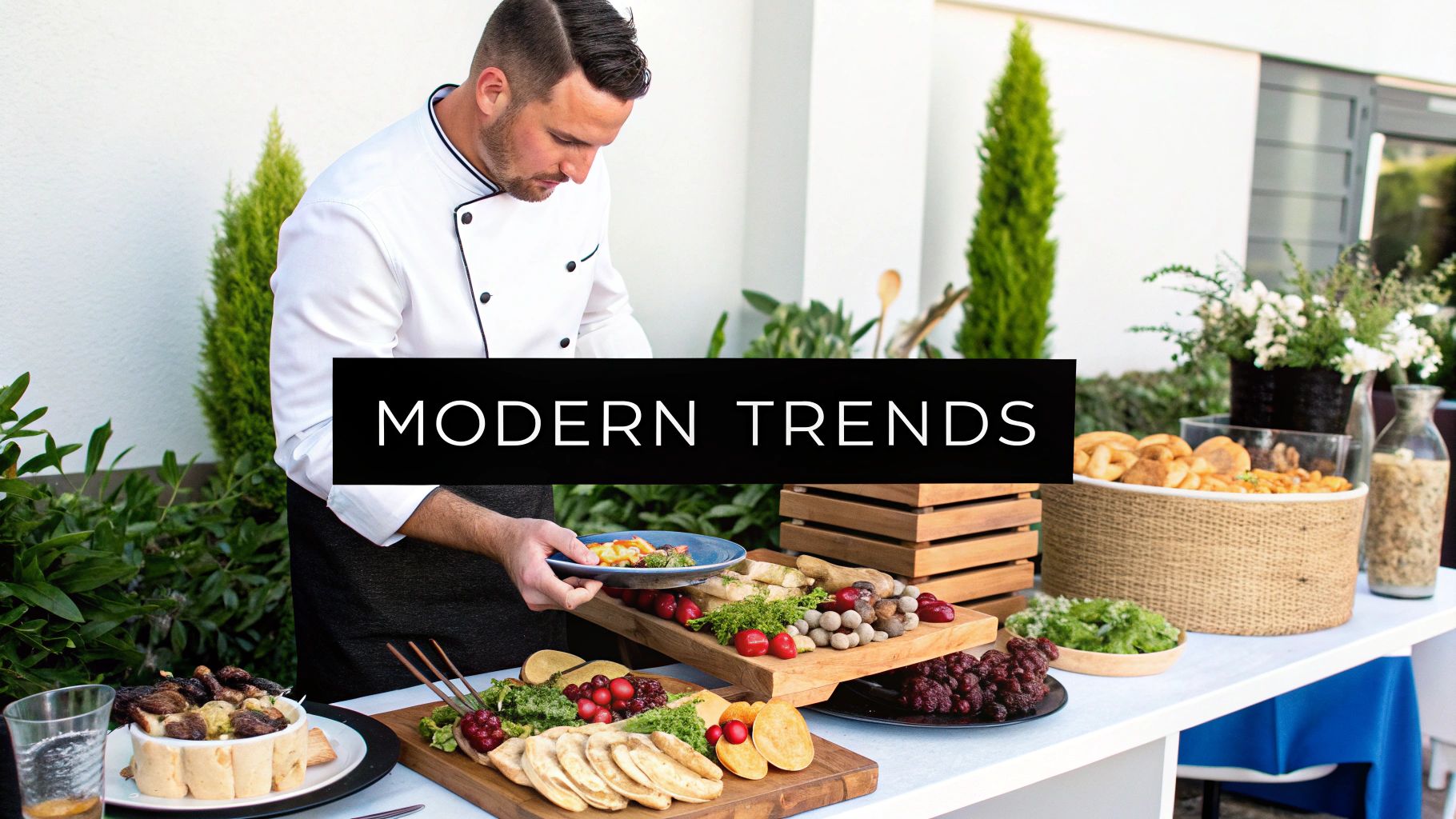
Exploring Modern Trends in Corporate Catering
Let's be honest, the days of sad sandwich platters and a lukewarm coffee urn are over. Or at least, they should be. Today, a truly modern menu in catering is all about creating an experience. It’s a way for companies to show they're in touch, thoughtful, and genuinely care about quality—and it turns a simple corporate lunch into something people actually look forward to.
This isn't just about swapping out old recipes for new ones. It’s a total shift in thinking. The focus is now on food that not only tastes incredible but also tells a story, whether that’s about championing local farmers or embracing bold, international flavours.
From Local Farms to the Boardroom Table
One of the biggest shifts I’ve seen is the demand for sustainable and locally sourced ingredients. The whole "farm-to-table" idea isn't just for fancy restaurants anymore; corporate clients are now asking where their food comes from, putting a real premium on freshness and supporting the community.
When you choose a caterer who works with local suppliers, you’re doing more than just getting better-tasting food. You're sending a clear message about your company's commitment to sustainability. It’s a small detail that speaks volumes to employees and clients, showing your values are baked into everything you do.
A World of Flavours on a Single Menu
Corporate palates have definitely gotten more adventurous. The demand for globally inspired cuisines has exploded, pushing out tired, predictable menus in favour of something more exciting. This is where you can add a real touch of sophistication and fun to any event.
Here are a few options that always get people talking:
- Middle Eastern Mezze: Think vibrant platters overflowing with hummus, baba ghanoush, crispy falafel, and warm pita. It’s inherently social and delicious.
- Asian Fusion Bowls: These are a huge hit. A base of rice or noodles, a choice of protein like teriyaki chicken or tofu, and a rainbow of fresh vegetables make for a healthy, customizable meal.
- Latin American Flavours: Things like ceviche cups, savoury empanadas, or a gourmet taco bar can instantly bring a fun, zesty energy to the room.
Approaching the menu in catering this way turns a meal into an opportunity for discovery, introducing your team to new tastes they might not have tried before.
The Rise of Experiential and Social Dining
Food is no longer just a break in the schedule; it’s becoming an active part of the event itself. This move toward experiential dining is all about creating memorable, interactive moments that get people mingling and talking.
An interactive food station does more than serve a meal; it creates a natural hub for conversation. When attendees are building their own dish or watching a chef in action, they are more likely to connect with one another in a relaxed, informal setting.
Think about it: chef-attended carving stations, build-your-own-bowl bars, or even menus themed around the event’s purpose transform lunch from a passive activity into something dynamic. It’s a brilliant way to break the ice and re-energize the room for the rest of the day.
Grazing Tables and Artful Presentations
These days, presentation is everything. We eat with our eyes first, after all. The traditional buffet line is getting a serious upgrade with more elegant and social setups, like grazing tables and charcuterie boards. They’re designed to be a feast for the eyes, creating an instant "wow" factor the moment people walk in.
This trend is especially popular here in California. Contemporary catering menus often feature elaborate charcuterie boards and grazing tables as versatile, high-impact options. With artfully arranged cured meats, gourmet cheeses, fresh fruits, nuts, and dips, they offer an elegant yet casual experience that's perfect for networking. You can see more examples of these top corporate catering trends on lunchboxexpresscatering.com. It encourages a more fluid, relaxed style of eating that’s ideal for getting people to socialize.
Budgeting and Pricing Your Catering Menu
https://www.youtube.com/embed/dq__JjrN09s
Figuring out the financial side of a menu in catering can feel a bit like reading a foreign language at first. But once you get the hang of it, you’ll see it’s all about knowing how caterers structure their prices. The real trick is learning to spot hidden costs and understand what’s included in a quote, so you can host a memorable event without any nasty budget surprises.
With a clear plan, you can look at different proposals and know exactly what you’re getting for your money. This confidence lets you make smart choices, balancing your budget with the kind of experience you want to create for your guests.
Understanding Common Pricing Models
When a catering quote lands in your inbox, the numbers are usually laid out in one of two ways. Getting familiar with these models is your first step to making a true apples-to-apples comparison.
Here are the two most common approaches you'll see:
- Per-Person Pricing: This is as straightforward as it gets. The caterer sets a flat price for each guest, which almost always covers the food and sometimes basic service. It makes budgeting super predictable—just multiply the rate by your final guest count, and you’ve got your number.
- Tiered Package Deals: Many caterers streamline things by offering packages at different price points, often named something like Bronze, Silver, and Gold. Each tier comes with a set menu and level of service, making it easy to pick a pre-designed option that fits your budget and event style.
While the catering industry is definitely growing, it helps to know what's happening behind the scenes. Food delivery and catering services have seen a solid uptick, especially as workplace habits have changed. That said, current growth rates are still a bit below the long-term industry average of 5% to 6%. This tells us that while demand is there, wider economic factors are keeping things in check. This climate makes smart, transparent pricing more important than ever for both caterers and their clients.
What to Look for in a Catering Quote
A truly professional caterer will give you a quote that’s crystal clear. Vague proposals are a major red flag; you want a detailed breakdown of every single cost so there are no shocks when the final bill arrives.
A good quote should clearly itemize these four things:
- Food Costs: The main event. This is usually listed per person or by the platter.
- Staffing Fees: This covers the chefs, servers, and bartenders who make your event run smoothly. Sometimes it’s baked into the per-person price, but often it’s a separate line item.
- Rental Charges: Need tables, linens, plates, or glassware? If the venue isn't providing them, the caterer will, and those costs will be listed here.
- Service Charges or Gratuity: This is a standard, mandatory fee (usually 18-22%) that covers the caterer's operational costs for the event. It’s almost never a direct tip for the staff.
Always ask if the service charge is paid out to the staff or if it goes back to the company. Knowing this helps you decide whether you want to add an extra tip for a team that really went above and beyond.
Smart Strategies for a Budget-Friendly Menu
Putting together an incredible menu in catering doesn't mean you need a bottomless budget. A few clever choices can bring your costs down significantly, and your guests will be none the wiser. It’s all about focusing on high-impact decisions that don’t compromise on quality.
For instance, building your menu around seasonal ingredients is a win-win. Not only do they taste far better, but they’re also cheaper because they’re abundant. The same goes for your proteins—choosing delicious options like chicken or creative plant-based dishes instead of prime beef can make a massive difference to your bottom line. If you're organizing an event in Toronto, checking out pre-set corporate catering packages is a fantastic way to keep costs under control.
For businesses that order catering regularly, using digital tools with a loyalty feature around menu price lists can be another savvy move for managing expenses over the long term. And don't forget the service style! A buffet is often much more budget-friendly than a plated dinner simply because it requires fewer staff to execute.
Your Top Catering Menu Questions, Answered
Even the most seasoned event planner has questions when it comes to the menu. It's the heart of the guest experience, after all. Getting these details right is what separates a good event from a great one. Let's tackle some of the most common questions that pop up during the planning process.
Think of this as a quick-start guide to bridging the gap between your vision and what your caterer can deliver. It’s all about creating a partnership that results in a flawless, delicious experience for your guests.
How Far in Advance Should I Finalize My Catering Menu?
For most corporate events, the sweet spot for finalizing your menu is 3-4 weeks out. This gives your caterer enough breathing room to source the best ingredients, lock in orders with their suppliers, and schedule their kitchen and service teams without a last-minute scramble.
That said, if you're planning a massive event (think over 200 guests) or your menu features highly specialized or custom dishes, your caterer will likely need more lead time. In these cases, expect to lock everything in 6-8 weeks in advance. It's always a good idea to bring this up in your very first conversation to avoid any surprises down the road.
What Is a Safe Ratio for Meat and Vegetarian Options?
A great rule of thumb for a typical corporate crowd is the 70/30 split: 70% of your entrées featuring meat or fish, and 30% dedicated to vegetarian or vegan options. This ratio usually covers your bases quite well.
Of course, the best plan is one based on actual data. If you can collect dietary preferences with your RSVPs, do it! If you're flying blind, it's always smart to err on the side of caution and slightly overestimate the demand for vegetarian and vegan dishes. You'll find many meat-eaters will happily choose a delicious plant-based meal, which ensures everyone leaves happy and well-fed.
By planning for a few extra plant-based meals, you create a natural buffer. It accommodates a wider range of preferences and any surprise dietary needs, all while minimizing the risk of anyone going hungry.
How Do I Handle Last-Minute Dietary Requests?
The trick here is to be proactive. Before you even sign a contract, ask caterers directly about their policy for handling unexpected or day-of dietary requests. This isn't a curveball question; any experienced caterer has a system for this.
Most professional caterers keep versatile, allergen-free ingredients on hand specifically for this purpose. They can often whip up something simple but flavourful on the fly, like grilled vegetables served with quinoa. It's an elegant solution that meets the guest's needs without throwing a wrench in the main service.
Should the Menu Be Different for a Multi-Day Event?
Yes, absolutely! For any event that lasts more than a day, like a conference or corporate retreat, menu variety is non-negotiable. Serving the same type of food over and over leads to "palate fatigue," and you'll see your attendees' enthusiasm drop with each meal.
Work with your caterer to plan a diverse culinary journey. If day one's lunch has a Mediterranean flair, maybe go for a vibrant Mexican or Southeast Asian theme for day two. This kind of thoughtful rotation makes each meal feel like a distinct and enjoyable experience. For a deeper dive into the business side of food service, a complete guide to starting a catering business offers some fantastic insights.
At Shawarma Moose, we make planning your corporate catering simple and delicious. We handle all the details, from dietary accommodations to diverse menu planning, so you can focus on your event. Explore our catering options and get a free quote today!