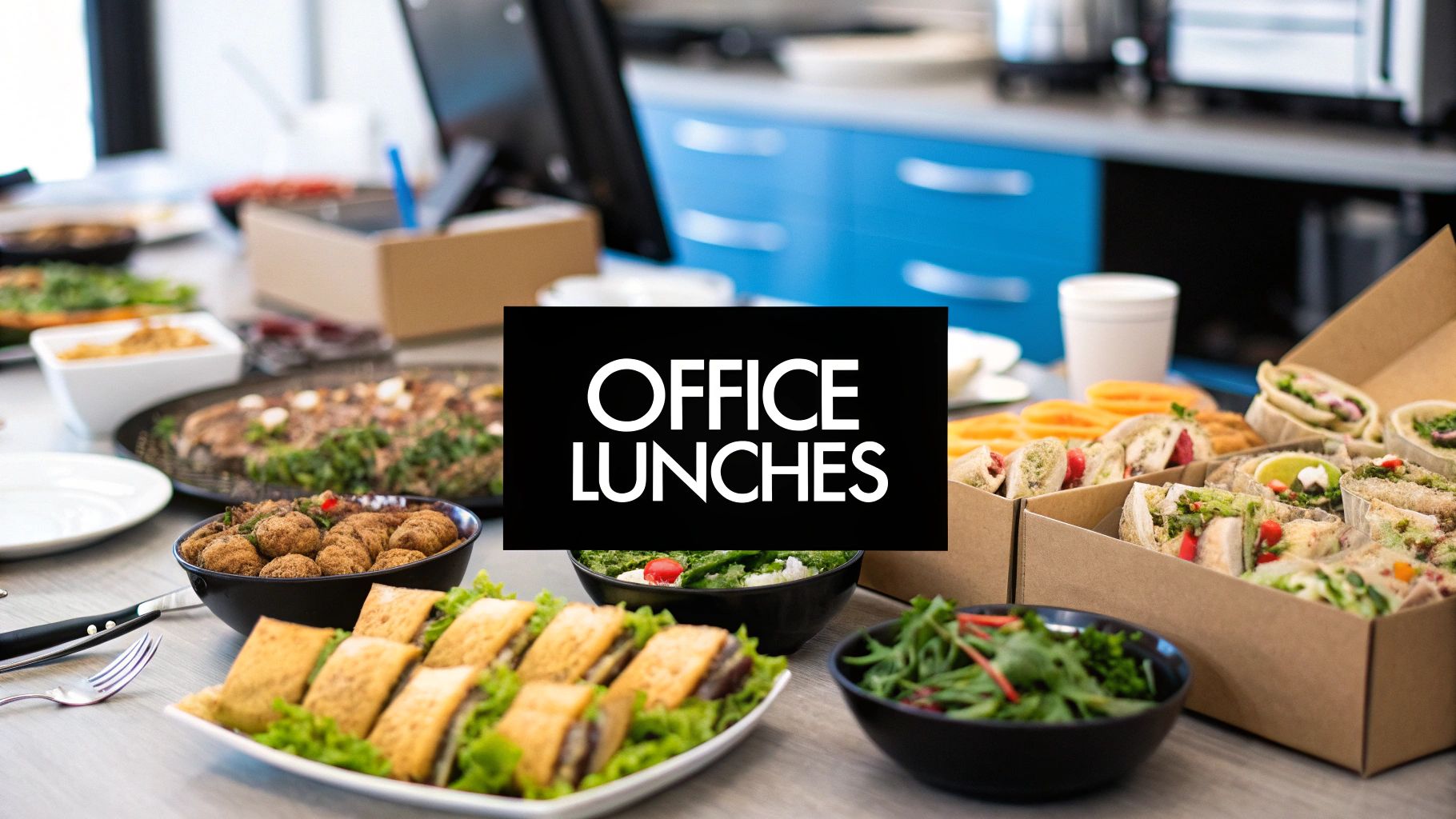
Providing lunch for your team is much more than just ordering food. It's a service that handles everything from crafting a menu to coordinating delivery, all designed to make mealtime in the office simple and efficient. Whether it's for a small team meeting or a massive company-wide event, catering takes the logistical headache off your plate.
Your Blueprint for a Flawless Office Lunch
Organizing an office lunch can feel like a major project, but it doesn't have to be a source of stress. The secret to a smooth experience is having a solid plan in place before you even start looking at menus. Think of it like drawing up a blueprint for a house—a good plan from the start prevents costly and frustrating problems down the road.
The demand for these kinds of organized meal solutions is clearly on the rise. The catering industry in the U.S. was valued at around USD 72.67 billion and is expected to grow by 6.2% each year through 2034. This boom is largely thanks to the return of in-person corporate events and the need for flexible food options that suit hybrid work schedules. You can discover more insights into the U.S. catering market here.
Nail Down the Purpose of Your Event
First things first, you need to be crystal clear on the "why" behind the lunch. Your goal will shape every other decision, from the style of food you choose to how much you spend. Is this a casual working lunch? A formal pitch to a new client? Or maybe a fun celebration for a team achievement? Each scenario calls for a completely different vibe and, by extension, a different catering setup.
For instance, a fast-paced, collaborative team meeting works perfectly with something quick and easy, like individual boxed lunches. On the other hand, a company-wide party might be better suited to a buffet that gets people up, moving, and chatting with each other.
When you align the catering with the event's purpose, you're not just feeding people. You're using food as a strategic tool to create the right atmosphere and help you hit your business goals.
Lock in Your Headcount and Budget
Once you know your "why," it's time to figure out the "how many" and "how much." A firm headcount and a realistic budget are the two pillars that will support all your catering decisions. Getting an accurate number of guests is crucial—it helps you avoid ordering way too much food or, even worse, not having enough for everyone.
Your budget is what will really narrow down your options. Knowing your spending limit from the get-go helps you focus on caterers and menus that are actually within reach, saving you time and preventing any budget-related surprises. As you map everything out, keep these key details front and centre:
- Event Goal: Is it for a training session, a celebration, or a client meeting?
- Final Headcount: Get a confirmed number of attendees locked in.
- Total Budget: Figure out your all-in spending cap, making sure to account for any extra fees or taxes.
Navigating Catering Costs and Budgets
Let's talk money. Setting a clear budget is step one for any successful catered lunch, but it's easy to get caught off guard. The final bill is almost always more than just the food cost per person. To avoid any last-minute surprises, you need to understand what actually goes into the total price.
Think of it like buying a concert ticket. You see the ticket price, but then there are service fees, facility charges, and taxes that get added on top. Catering works in a very similar way.
Deconstructing a Catering Quote
When you get a quote from a caterer, don't just skim to the bottom line. A good, transparent caterer will give you an itemized breakdown, so you can see exactly where every dollar is going.
Here’s what you should expect to see:
- Food Cost: This is the base price for the meal per person.
- Delivery Fees: This isn’t just for gas. It covers the driver's time, vehicle wear-and-tear, and the logistics of getting the food to you on time. It often changes based on how far you are from the restaurant.
- Service Charges: This one often causes confusion. Typically 15-22% of the food total, this is an administrative fee that covers the caterer's overhead—the time spent planning your order, coordinating staff, and other back-end work. It is not a tip.
- Taxes: Your standard, unavoidable provincial and federal sales taxes.
- Gratuity: A tip for the team who delivers and sets up your meal. Sometimes it's included automatically, and other times it's left to your discretion.
This infographic breaks down the three main things you'll be juggling throughout the planning process.

Finding the sweet spot between your event's goal, your guest count, and your budget is what leads to a successful, stress-free lunch.
Building a Realistic Lunch Budget
Now that you know about the extra costs, you can put together a much more accurate budget. Start with what you want to spend on food per person, then pad it to account for everything else.
Let's say you have 50 people and want to spend $20 per head on food. That’s $1,000 right there. But after you add an 18% service charge, delivery, and taxes, your real-world budget should probably be closer to $1,300.
To help you visualize this, here's a sample breakdown of what a budget might look like.
Sample Lunch Catering Budget Breakdown
| Expense Category | Estimated Cost | Percentage of Budget | Notes |
|---|---|---|---|
| Food & Beverage | $1,000.00 | ~77% | Based on $20/person for 50 people. |
| Service Charge (18%) | $180.00 | ~14% | Covers administrative & planning overhead. |
| Delivery Fee | $40.00 | ~3% | Varies based on distance and order size. |
| HST (13%) | $158.60 | ~12% | Calculated on the subtotal of all other costs. |
| Estimated Total | $1,378.60 | 100% | This is the "all-in" cost to budget for. |
This table shows how quickly the "extras" add up, turning a $1,000 food budget into a nearly $1,400 total expense. Planning for these from the start makes all the difference.
It’s also worth remembering that caterers are businesses facing their own rising costs for ingredients, labour, and rent. These market pressures inevitably find their way into menu pricing.
Pro Tip: Always, always ask for a full, itemized quote before you commit. Comparing the true "all-in" cost from different caterers is the only way to do an apples-to-apples comparison and save yourself a major headache later.
If you're looking for a straightforward way to keep costs in check, check out pre-designed catering packages for your office. They bundle everything together at a set price, which takes a lot of the guesswork out of budgeting and ordering.
Crafting a Menu That Delights Everyone

The heart of any great catered lunch is a menu that gets your team excited and makes everyone feel included. Choosing the right food is about more than just what tastes good; it’s about picking a service style that fits the vibe of your event and thoughtfully considering the dietary needs of all your colleagues. This is your chance to turn a simple meal into a genuinely memorable experience.
The format you choose is just as important as the food itself. A classic buffet is fantastic for getting people to mingle and chat, making it a perfect fit for a social or celebratory lunch. On the other hand, individually packaged meals are the champions of convenience and safety, ideal for those busy working sessions where every minute counts.
The goal isn't just to feed your team, but to provide an inclusive dining experience. A well-planned menu communicates that every employee's needs are seen and valued, which is a powerful message to send.
Prioritizing Dietary Accommodations
In any modern workplace, you're going to have a wide range of dietary needs. These can stem from allergies, intolerances, or personal and religious choices. Great catering means making these accommodations a priority, not an afterthought. Getting this wrong can leave people feeling left out or, even worse, create a serious health risk.
Making your menu inclusive is actually pretty straightforward with a bit of forward-thinking. The easiest first step is to simply ask your team about their dietary needs ahead of time. A quick survey can work wonders.
Here are the big ones to plan for:
- Vegan/Vegetarian: Don't just offer a side salad. Think substantial, flavourful mains like falafel wraps, hearty grain bowls, or a rich vegetable curry.
- Gluten-Free: It's critical to have certified gluten-free options to prevent cross-contamination. This could mean rice bowls, salads with GF dressings, or specially prepared sandwiches.
- Common Allergies: Always be aware of top allergens like nuts, dairy, and shellfish. Clear, easy-to-read labelling isn't just helpful—it's essential for keeping everyone safe.
Once you have this information, communicate it clearly to your caterer. A good, professional service will walk you through their options and explain exactly how they prepare and label allergy-friendly meals to avoid any mix-ups. This simple step ensures everyone can relax and enjoy their lunch without any stress.
Popular Catering Styles for Office Lunches
The style of service you pick has a huge impact on the overall atmosphere of the lunch. Let's look at the pros and cons of the most common formats to see what might work best for you.
Buffet-Style Catering
- Pros: This setup is great for encouraging interaction. It also gives people a wide variety of choices so they can build their own perfect plate. For larger groups, it's often the most cost-effective option.
- Cons: Buffets can sometimes lead to long lines and a bit of food waste. You also need a careful setup to manage portion sizes and avoid cross-contamination between different dishes.
Individually Packaged Meals
- Pros: This is the ultimate choice for convenience, hygiene, and dietary safety. Every meal is pre-portioned and can be clearly labelled, making handout quick and efficient.
- Cons: It can feel a little less communal than a shared buffet. It can also generate more packaging waste, though many caterers now offer eco-friendly containers.
At the end of the day, the best menu is one that balances delicious flavours with thoughtful inclusivity. Crowd-pleasers like shawarma, falafel, and fresh salads are fantastic because they can be easily customized for different diets. You can explore a diverse https://www.shawarmamoose.ca/menu that works perfectly for office catering. And if you're looking to really elevate the experience, don't forget the drinks! You can find some of the top places to buy specialty coffee beans to offer a truly premium beverage alongside the meal.
Mastering Catering Logistics and Delivery

Once you've sorted out the menu, the real heavy lifting begins: logistics. Even the most incredible food can be ruined by a late delivery or a messy setup. Honestly, getting the operational side of catering for lunches right is what separates a forgettable meal from a fantastic one.
Think of your caterer less like a vendor and more like a crucial partner for your event. Their reliability is every bit as important as the flavour of their food. This is especially true in a crowded market. With over 13,000 catering businesses in California and the industry growing by 5.5% annually, you have plenty of options. That's why asking the right questions from the get-go is the best way to find someone you can count on.
Vetting Your Catering Partner
Before you even think about signing a contract, you need to be sure a potential caterer can actually handle what you need. Think of it as a quick interview—a way to avoid any nasty surprises on the day of the lunch.
You should have a list of must-ask questions ready to go:
- Delivery Window: Can they promise a specific arrival time, like 11:45 AM to 12:00 PM? A vague "around noon" just won't cut it.
- Included Equipment: Does the price include all the essentials? I'm talking serving spoons, plates, cutlery, and napkins.
- Setup and Cleanup: What exactly will they do when they arrive? Is it just a drop-off, or will they actually set up the food buffet-style?
- Contingency Plans: What's their plan B? Ask them how they handle things like bad traffic or last-minute changes to the order.
A true pro will have clear, confident answers for all of this. If you get vague replies or they seem hesitant to commit to details, that's a massive red flag.
Creating a Day-Of Delivery Checklist
On the day of the lunch, a simple checklist can make the handoff completely painless. This isn't about micromanaging your caterer; it's about being prepared so you can actually enjoy the event with your team.
Here are a few things your checklist should definitely cover:
- Designate a Point Person: Choose one person to be the main contact for the delivery driver. Make sure the caterer has their name and phone number.
- Confirm the Location: Be crystal clear. Is the food going to the front desk, the fifth floor, or a back loading dock? Give them precise instructions.
- Prepare the Space: Have the table or counter for the food cleared off and ready to go before the delivery is scheduled to arrive.
- Plan for Leftovers: Figure out what you'll do with any extra food ahead of time. Having a plan, and even some handy collapsible silicone food containers, makes dealing with leftovers quick and easy.
Taking care of these details beforehand means you can relax. You’re setting the stage for a stress-free experience where the focus stays right where it should be: on great food that brings everyone together.
Choosing the Right Catering Service Style
Figuring out how to serve the food is just as important as deciding what to serve. The right service style can turn a standard lunch into a memorable team-building event that hits all the right notes for your company's goals. Think of it this way: each format is a different tool in your toolbox, and you need to pick the one that fits the job.
The choice you make really sets the tone. Are you looking for a lively, informal atmosphere where people can mix and mingle? Or is this a heads-down working lunch where speed and efficiency are everything? Knowing your objective is the first step in picking the perfect setup for your catering for lunches.
Boxed Lunches for Ultimate Convenience
When you're up against the clock during training days, all-day workshops, or packed meetings, individually boxed lunches are a lifesaver. Everything is self-contained, portioned out, and clearly labelled, which makes handing them out a breeze.
This approach completely cuts out the queue and minimizes any potential mess, letting your team grab their food and get right back to the task at hand. It's also the best way to handle a long list of dietary requirements—each box is customized and marked, so there's no risk of mix-ups or cross-contamination.
Buffet Style for Social Interaction
If your main goal is to get people talking and connecting, a buffet is your best bet. It naturally encourages everyone to get up, move around, and chat with colleagues they might not see every day. It's a simple way to foster a more social and collaborative vibe.
Plus, a buffet spread gives people the freedom to pick and choose exactly what they want, which is a huge win when you're trying to please a crowd with different tastes.
A well-planned buffet does more than just feed your team—it creates a shared experience. It shifts the focus from just eating to connecting, which can do wonders for morale and company culture.
If you’re leaning towards a more interactive meal, check out this complete guide on planning the perfect buffet-style office catering to make sure it’s a hit.
Interactive Food Stations
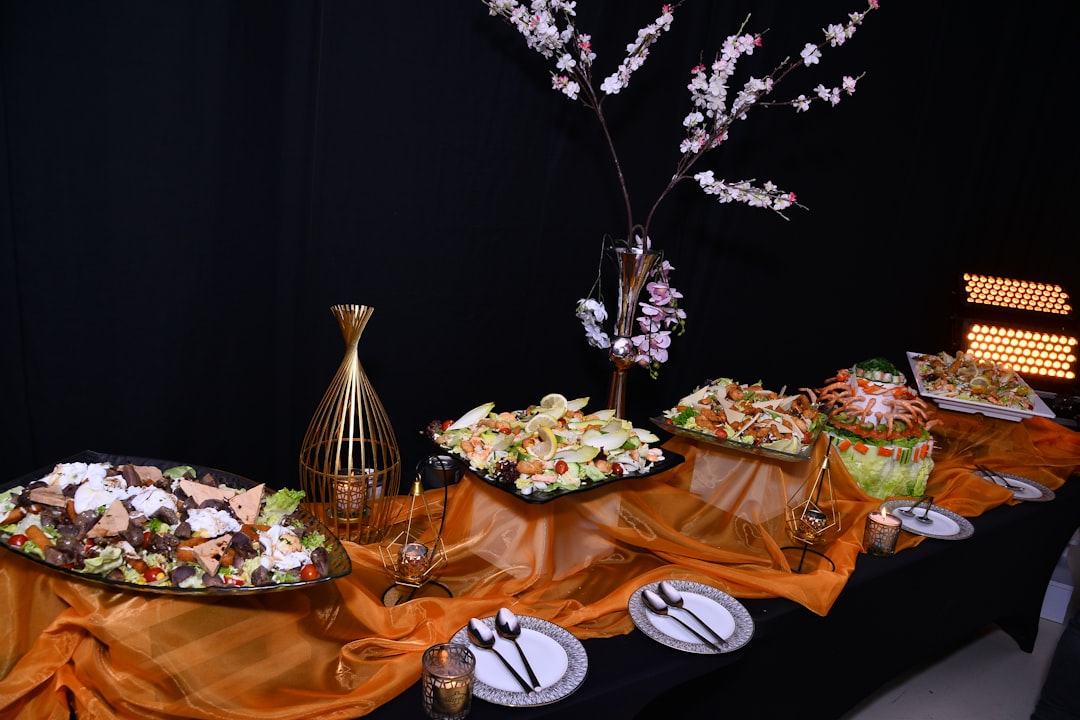
Want to make a real impression? Interactive food stations are the way to go. Imagine a build-your-own shawarma bar or a gourmet salad station where everyone can create their own masterpiece. This turns lunch from something passive into a fun, hands-on activity.
Food stations are fantastic icebreakers and bring a modern, energetic feel to company parties, client meetings, or special milestone celebrations. They give you the variety of a buffet but with a more engaging and personalized twist, making everyone feel like their meal was made just for them.
Comparison of Lunch Catering Service Styles
To help you decide, here’s a quick breakdown of how each service style stacks up. Think about your event's purpose, your schedule, and the overall atmosphere you want to create.
| Service Style | Best For | Pros | Cons |
|---|---|---|---|
| Boxed Lunches | Working lunches, training seminars, large groups with tight schedules. | Fast, efficient, excellent for managing dietary needs, minimal cleanup. | Less social interaction, limited last-minute choices for attendees. |
| Buffet Style | Team-building events, holiday parties, fostering social interaction. | Encourages mingling, offers variety, accommodates diverse tastes. | Can create queues, potential for food waste if not planned well. |
| Food Stations | Special events, client entertainment, creating a memorable experience. | Highly engaging and interactive, personalized meals, great conversation starter. | Higher cost, requires more space and potentially more staff to manage. |
Ultimately, the best choice depends entirely on your specific needs. A boxed lunch might be perfect for a Tuesday workshop, while interactive food stations could be the star of your annual company celebration.
Answering Your Final Office Catering Questions
Even with the best-laid plans, a few last-minute questions always seem to surface before you hit "confirm" on a catering order. Getting these details ironed out is the final step, and it’s what separates a good office lunch from a great one. This is where you shift from planning to doing, and the right information makes all the difference.
Think of it like a pre-flight check. You've planned the route (the menu), checked the weather (the budget), and accounted for all the passengers (your team). Now it's time to double-check the small but critical details that ensure a smooth journey from the caterer's kitchen to your boardroom.
How Far in Advance Should I Book Catering?
This is probably the most common question I get, and the honest answer is: it depends on your team's size. The more lead time you can give, the better your chances are of securing your preferred menu and delivery slot.
- Small teams (under 20 people): You can usually get away with 48-72 hours' notice for standard orders.
- Medium events (20-100 people): I’d recommend booking at least one to two weeks in advance. This gives the caterer enough breathing room to order fresh ingredients and schedule staff.
- Large or custom events (100+ people): For these, you'll want to lock things in four to six weeks out, especially if your lunch falls during a busy time of year like the holidays.
Giving your caterer plenty of notice isn't just a courtesy; it ensures they have the resources to give your order the attention it deserves, which always translates to better food and service.
How Do I Figure Out How Much Food to Order?
The classic catering dilemma: you don't want to run out of food, but you don't want a mountain of wasteful leftovers either. The best approach here is to lean on your caterer's experience. Just give them a solid headcount, mention how long the lunch will last, and offer a general sense of your team’s appetite (e.g., "we've got a hungry crew").
A seasoned caterer knows portioning inside and out. A good rule of thumb is to plan for one main protein and two sides per person. For buffets, professionals usually build in a 10% buffer to accommodate heartier eaters without going overboard.
Always give your caterer the final headcount at least 72 hours before the event. This one simple step is the single best way to avoid ordering too much or, even worse, not enough.
What’s Actually Included in a Catering Quote?
A quote is more than just the price of the food, so it’s crucial to read the fine print. To avoid any budget surprises, always ask for a fully itemized quote that breaks down every single cost.
While every caterer is different, a standard quote for catering for lunches will often break out these costs separately:
- The base cost of the food itself.
- Delivery fees (covering transport and driver time).
- Service charges (usually 15-22%), which cover the admin and coordination behind the scenes.
- Applicable taxes (like HST).
- Extras like disposable plates, cutlery, and napkins, which aren't always included.
Never assume something is part of the package. A quick question upfront can save you from an awkward conversation about the final invoice later.
What Should We Do with Leftover Food?
Having a game plan for leftovers is both responsible and a nice perk for your team. First things first, check with your caterer about their food safety policies. Due to health regulations, some can't permit you to keep leftover food that has been sitting out.
If you get the green light, have a strategy. Clear a dedicated spot in the office fridge and keep some take-home containers handy for staff—they'll appreciate it! If you have a lot left over, consider partnering with a local food recovery organization. It's a fantastic way to minimize waste and give back to the community.
Ready to make your next office lunch simple and delicious? The team at Shawarma Moose is here to handle all the details. We offer a wide range of authentic, halal-certified Middle Eastern dishes that can be customized for any dietary need or budget. Explore our stress-free catering options and get a quote today at https://shawarmamoose.ca/catering.